
Chwaszczyno: Church, Chapel and Pilgrimage
Accommodation in Chwaszczyno
Chwaszczyno can be explored through three distinct traces of its local history: a church with a medieval history, a roadside chapel more than a hundred years old, and a monument donated by residents. If you choose a destination for its cultural themes, you will find connections here to architectural history, pilgrimage, and local remembrance.
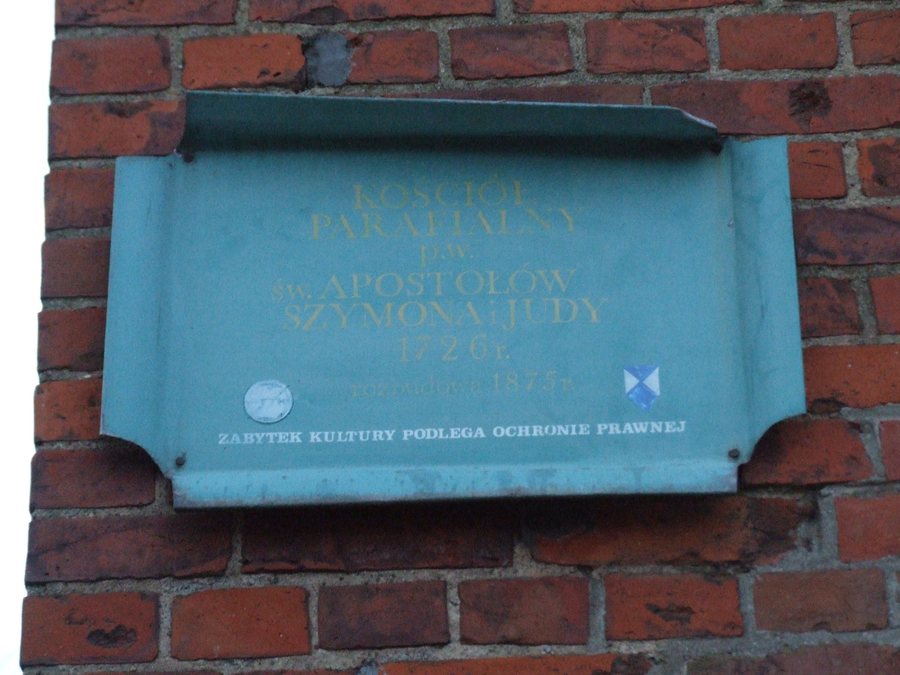 File:Chwaszczyno - Kościół parafialny pw. św. Apostołów Szymona i Judy - 011.JPG
Photo: Joymaster via Source, Public domain
Chwaszczyno at a glance
- The Church of Saints Apostles Simon and Jude Thaddeus, together with its cemetery, is first mentioned in the 13th century.
- A wooden predecessor church was built in 1283 by Cistercians from Oliwa.
- The roadside chapel on ul. Dobrzewińska near Lisie Błota was built in 1908 at the initiative of its founder, Jan Lidzbarski.
- Every year, residents prepare at the chapel for the pilgrimage from Żukowo to Wejherowo for the indulgence feast on the Feast of the Ascension.
- A monument donated by residents of Chwaszczyno commemorates the “Polaków z Gromady Chwaszczyno.”
What does the church’s architectural history tell us?
Two details are important for establishing the timeline: the wooden predecessor church was built in 1283 by Cistercians from Oliwa. The Church of Saints Apostles Simon and Jude Thaddeus is first mentioned in the 13th century. The date 1283 therefore refers to the predecessor building; it is not the date of the present church building described here.
The church is a small, single-nave building. Its exterior is plastered, except for the western section added in 1875. “Single-nave” describes a church with one main nave and helps convey the traditional architectural form in a concise way. Taken together, the description and dates provide an overview of different aspects: the early mention of the church complex, the older wooden building, and a later architectural addition. Anyone interested in local history can consider historical context and architecture as separate but related topics.
What distinguishes the roadside chapel from the monument?
The roadside chapel on ul. Dobrzewińska near Lisie Błota has stood there for more than 100 years. It was built in 1908 at the initiative of its founder, Jan Lidzbarski. Its documented building history thus differs from that of the church: for the chapel, the specific year of construction and the founder’s initiative are given, while the church is placed in context through a much earlier mention and a wooden predecessor building.
The monument has a different focus. It was donated by residents of Chwaszczyno and commemorates the “Polaków z Gromady Chwaszczyno.” While the church and chapel are religious buildings, the monument centers on remembrance of the named group. This distinction makes it easier to decide what you would particularly like to focus on in the local history: architectural forms and dates, religious tradition, or collective remembrance.
What tradition is associated with the chapel?
Every year, residents of the surrounding area gather at the chapel, decorate it, and prepare it for the pilgrimage from Żukowo to Wejherowo. The occasion is the indulgence feast on the Feast of the Ascension. Residents welcome and bid farewell to the pilgrims both on their way there and on their return.
This tradition adds a recurring community event to the chapel’s architectural history. It links the preparation of the building with a pilgrimage whose named destinations are Żukowo and Wejherowo. This also gives you a clear sense of timing for planning your trip: the custom described takes place every year on the Feast of the Ascension. The details tell of the residents’ role and the events surrounding the pilgrims; they also make the chapel a subject in its own right, alongside the older church history and the monument.
How can Chwaszczyno’s local history be put into context?
The three themes offer different ways to explore Chwaszczyno without treating them as interchangeable. The church’s first mention, the wooden building of 1283, and the western section added in 1875 are central to its story. The chapel links its construction in 1908 with a pilgrimage tradition that recurs each year. The monument, in turn, commemorates a form of local remembrance initiated by residents.
If you are looking for hotels in Chwaszczyno, you can use these themes to help choose your destination: are you most interested in the historical development of a church building, a tradition associated with a chapel, or remembrance of a local group? This gives you a specific cultural point of reference for your decision, without reducing the three distinct stories to a single attraction.
FAQ
When was the wooden predecessor church built?
The wooden predecessor church was built in 1283 by Cistercians from Oliwa.
What are the characteristics of the Church of Saints Apostles Simon and Jude Thaddeus?
It is a small, single-nave building with a plastered exterior, except for the western section added in 1875.
What happens at the roadside chapel on the Feast of the Ascension?
Every year, residents prepare there for the pilgrimage from Żukowo to Wejherowo for the indulgence feast, and welcome and bid farewell to pilgrims on their way there and back.
For the broader travel overview: Miszewko.

