
Ręboszewo: Waterways and Viewpoints
Accommodation in Ręboszewo
Ręboszewo can be explored through a tourist driving route, a waterway and two viewpoints on Góra Sobótka hill. These offer different starting points for your plans: a road route, a waterscape and views.
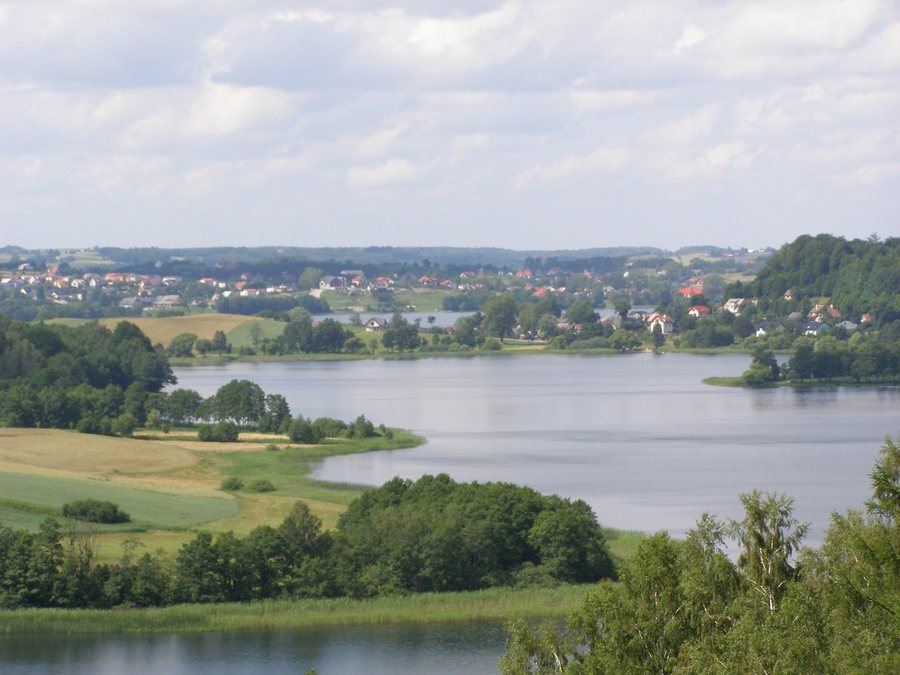
Ręboszewo: key facts
- The Droga Kaszubska tourist driving route passes through Łapalice, Chmielno and Ręboszewo on its way to the Złota Góra viewpoint.
- The Kółko Raduńskie waterway runs through Ręboszewo.
- There are two viewpoints on Góra Sobótka; one leads to a Koźlak windmill building.
- The Radunia crosses Lake Wielkie Brodno and forms a kayaking route there that is about 37 km long.
Which routes define Ręboszewo?
The Droga Kaszubska is a tourist driving route. It passes through Łapalice, Chmielno and Ręboszewo on its way to the Złota Góra viewpoint. This sequence of places provides a concrete frame of reference if you want to explore the area along this driving route.
The Kółko Raduńskie, by contrast, is a waterway that runs through Ręboszewo. This distinction is useful when planning: the Droga Kaszubska is a tourist driving route, while the Kółko Raduńskie is a waterway. They are therefore two different route options, not two versions of the same route.
What do Góra Sobótka and Wielkie Brodno offer?
There are two viewpoints on Góra Sobótka hill in Ręboszewo. One of them leads to a Koźlak windmill building. This connects the hilltop viewpoint with another point of interest shaped by its architecture. The two viewpoints and the windmill building offer different ways to explore the hill.
The Radunia flows through Lake Wielkie Brodno. There, the river forms a kayaking route that is about 37 km long. This distance gives a concrete sense of the route’s length; as a planning measure, it differs considerably from the viewpoints on Góra Sobótka.
What cultural attractions are there in the wider Karthaus destination?
In the wider Karthaus destination, Kartuzy has its own cultural focus. Its Gothic collegiate church dates from the 14th century. It is one of Pomerania’s most valuable historic buildings, unique on a national scale and a testament to the work of the Carthusian Order. A distinctive feature is its Baroque roof, shaped like a coffin lid: it symbolizes the Carthusian monks’ monastic way of life and the words “memento mori” — “remember that you must die.”
Another cultural destination in Kartuzy is the Franciszek Treder Kashubian Museum. It presents Kashubian cultural heritage through subjects such as literature, material culture, language, regional history and traditions. The exhibits are housed in eight galleries in the main building. They include Bazyli’s forge, the exhibition “Kaszubska współczesność z korzeni wyrasta” and temporary exhibitions. This allows you to explore both architectural history and different aspects of Kashubian culture in the wider Karthaus destination.
What routes and nature attractions are there in the wider Karthaus destination?
In the wider Karthaus destination, the Promenada Asesora in Kartuzy is a walking and cycling route along the shore of Lake Jezioro Karczemne. It is connected to Ławka Asesora, a viewpoint in Kartuzy. Another promenade was created in 2020 at Lake Jezioro Klasztorne Małe in Kartuzy. These routes offer a different way to explore the area from its church architecture and museum.
The Arboretum Leśników Kartuskich is located on the northwestern outskirts of Kartuzy. It covers 4.03 hectares of a working forest that is over 100 years old, with 23 species and varieties of woody plants as well as more than 150 species of herbaceous plants and shrubs. A nature trail about 1 km long runs through the arboretum. The figures for its area, plant collection and trail length give a concrete impression of this botanical attraction in the wider Karthaus destination.
Discover more destinations: Długi Kierz, Borowo, Kamienicki Mlyn, Lemany, Starkowa Huta, Sznurki, Sianowska Huta and Zukowo.
FAQ
Which driving route passes through Ręboszewo?
The Droga Kaszubska tourist driving route passes through Łapalice, Chmielno and Ręboszewo on its way to the Złota Góra viewpoint.
How many viewpoints are there on Góra Sobótka?
There are two viewpoints on the hill in Ręboszewo. One leads to a Koźlak windmill building.
What cultural attractions are in the wider Karthaus destination?
Kartuzy is home to the Gothic collegiate church and the Franciszek Treder Kashubian Museum. The church dates from the 14th century; the museum presents literature, material culture, language, as well as regional history and traditions.
Go to the wider destination overview: Karthaus.

