
Stare Pole
Accommodation in Stare Pole
Stare Pole brings together a historic church complex, traces of the sugar factory, and cycling routes to nearby towns. If you are looking for accommodation, exploring these different aspects of the town can help you decide what you would like to see on your trip.
Stare Pole at a glance
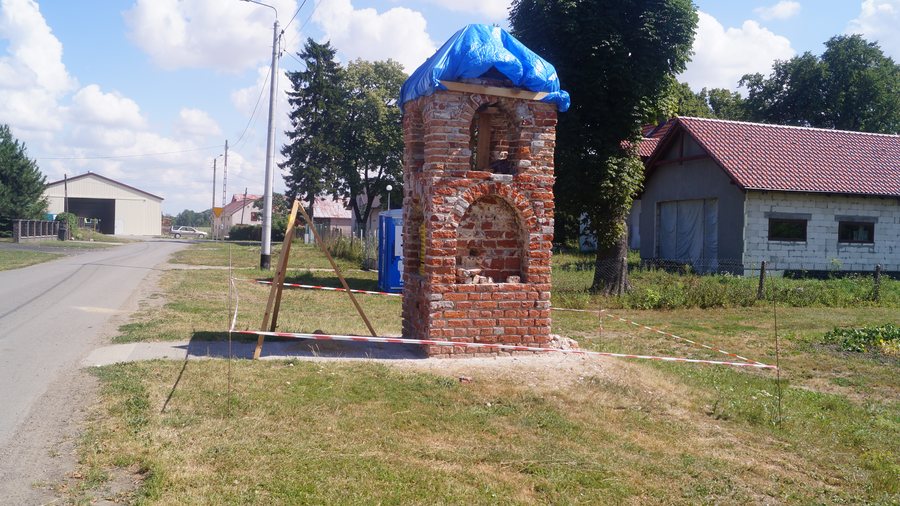
Among the best-preserved historic structures are the filial Church of Our Lady Queen of Poland and its cemetery, with its surviving tall trees, a chapel, and a bell tower. The filial church was Protestant and is now Roman Catholic; it was built in 1879. The town’s development is also connected with a sugar factory complex, established in 1880 as an investment by a joint-stock company. Three cycling routes link Stare Pole with Ząbrowo and Kraszewo; together, they are 6.5 km long.
What traces of the town’s history can you discover?
The church complex brings together several elements: the church, cemetery, chapel, bell tower, and surviving tall trees. This means the church can be viewed not only as a building in its own right; the associated cemetery and its planting are also among the town’s best-preserved historic structures. The church’s historical transition from Protestant to Roman Catholic use, and its 1879 construction date, give the building a clear historical and denominational context.
The sugar factory is another chapter in the town’s history. Its complex was established from 1880 as an investment by a joint-stock company and influenced the development of Stare Pole in the 19th century. At first, it extended the town westward, where production and auxiliary buildings were added. The town then grew northward with housing for workers employed on a permanent or seasonal basis. The different types of buildings thus point to the complex’s various functions and its role in the town’s development.
The post office building can also be placed in this historical context. Located at ul. Sienkiewicza 3, it was built in the last quarter of the 19th century, after the Eastern Railway line had been routed through the town. The church, sugar factory, and post office building represent different aspects of Stare Pole’s history: religious life, industrial development, and the infrastructure of the town at the time.
What do the cycling routes and trees have to offer?
Three cycling routes connect Stare Pole with Ząbrowo and Kraszewo. Their combined length is 6.5 km; as well as providing connections, they serve recreation and tourism. If you would like to include cycling in your trip, their total length provides a concrete reference for planning. This figure is for all three routes together, not for each route individually.
Trees also shape some of the town’s historic areas. The tall trees at the parish cemetery are protected as a historic monument. Stare Pole also has several trees, mainly English oaks, designated as natural monuments. This adds natural monuments to the town’s built heritage; these trees should not be confused with the protected trees at the parish cemetery.
What other reasons are there to visit?
The Żuławskie Targi Rolne (Żuławy Agricultural Fair) celebrates the region’s agriculture and village life and has been considered its festival for years. The event held on June 20 and 21, 2026, included an exhibition of farm animals. The specialist exhibition Ogólnopolski Młodzieżowy Czempionat Koni Sztumskich was also held there for the tenth time. It showcased Sztum horses bred in six voivodeships. This particular edition took place in June 2026; the listed program items refer to this event.
For rail travel planning, the fare information is also relevant: since December 15, 2024, the “Taryfa Pomorska” offer has also applied to the railway section between Stare Pole and Elbląg, toward the Warmian-Masurian Voivodeship. If you want to expand your search beyond Stare Pole, Malbork is another town page to compare.
FAQ
How long are the cycling routes combined?
The three cycling routes between Stare Pole, Ząbrowo, and Kraszewo are 6.5 km long combined.
When did the Żuławskie Targi Rolne take place in 2026?
The event took place in Stare Pole on June 20 and 21, 2026.
When was the filial church built?
The former Protestant, now Roman Catholic, filial church was built in 1879.
For the main travel overview: Malbork.

