
Smoldzino: Hiking Trails, Nature and Culture
Accommodation in Smoldzino
When planning a trip to Smoldzino, you can choose from several themes: hiking and cycling routes, natural history, and the history of the church and technology. The routes vary in length and course. You can first consider which experiences you want to shape your stay, then tailor your accommodation search accordingly.
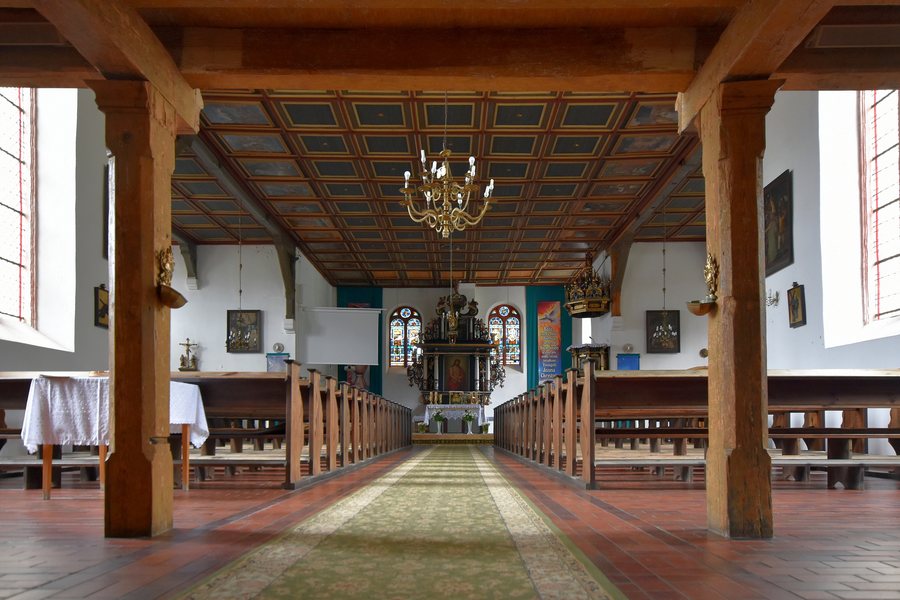 File:Smołdzino, kościół Św. Trójcy (HB5).jpg
Photo: Henryk Bielamowicz via Wikimedia Commons, CC BY-SA 4.0
Smoldzino at a glance
- The “Rowokół” nature trail is 5 km long; the stated duration is about 2.5 to 3 hours, including a group’s climb up the observation tower.
- The southern yellow hiking trail runs 39 km from Łeba Żarnowska to Gardna Wielka.
- The “Złote Piaski” cycling route is about 25 km long, forms part of the international R-10 route, and starts and ends in Smołdzino.
- The natural history museum covers the ecosystems of Słowiński National Park; the Holy Trinity Church was built in 1632.
Which routes can you plan to take in Smoldzino?
Hikers can choose from routes of different lengths and courses. The 39 km southern yellow hiking trail runs from Łeba Żarnowska via Gać, Izbica and Kluki to Smołdzino, along the Rowokół hill and onward to Gardna Wielka. The route details make clear that it connects several places and requires different planning from the shorter nature trail.
The 5 km “Rowokół” nature trail starts in the square in front of the Słowiński National Park Directorate building. From there, it follows Lipowa and Kościuszki streets through Smołdzino, along the Łupawa and through forest communities to the summit of Rowokół and its observation tower. The stated duration is about 2.5 to 3 hours, including a group’s climb up the tower. Another, 6 km black connecting trail links Smołdzino with Słowiński National Park.
There is also a specific cycling option: the approximately 25 km “Złote Piaski” cycling route starts and ends in Smołdzino and passes through Łokciowe and Smołdziński Las. It is part of the international R-10 route. Near Przybynin, the route offers a view of the shifting dunes. Its length and course give you a point of reference for distinguishing this cycling route from the hiking trails described, without conflating the different routes.
What can you learn about nature and the landscape?
The nature trail leads to Rowokół, a hill 115 m high in the vicinity of Smołdzino. An observation tower stands at its summit. The route thus connects several of the landscape features mentioned: the Łupawa River, forest communities, the hill and the tower. The Słowiński National Park Directorate is located at Bohaterów Warszawy 1A in Smołdzino; the square in front of its building is also the starting point of the nature trail.
The Słowiński National Park Natural History Museum in Smołdzino presents the natural features of the park’s main ecosystems. Its exhibition is divided into the sections Beach, Dunes, Lakes and Forests. These themes give the natural history displays a clear structure and cover landscape types that also feature in the routes described. The museum also has an audiovisual classroom for small-group activities, multimedia presentations and screenings of nature films. The museum has been housed in its current building since 1974.
What is there to discover about cultural and technological history?
The Holy Trinity Church in Smołdzino was built in 1632 and founded by Duchess Anna de Croy, the daughter of Duke Bogislaw XIII. Inside, an altar with rich carved decoration is considered early Baroque. It features portraits of Anna and her son Ernest Bogislaw, depicted as a twelve-year-old boy. The year of construction, the patron and the altar offer different points of interest if you are interested in the town’s history and its sacred art.
Another historical landmark is the Smołdzino hydroelectric power plant on the Łupawa. It was built in 1935 near the Łupawa’s mouth at Lake Gardno. The power plant is one of five hydroelectric plants on the Łupawa and is part of the Hydrotechnical Monuments Trail in the Pomeranian Voivodeship. Alongside natural and church history, Smoldzino therefore also offers technical structures and their place on a regional themed trail.
How can you connect these themes with your accommodation search?
If you are looking for hotels for a trip to Smoldzino, you can start by deciding what you are most interested in. For cyclists, the length and course of “Złote Piaski” are described; the “Rowokół” nature trail offers a shorter hike with a stated duration. The museum, church and hydroelectric power plant provide other perspectives on nature, art and the history of technology.
Discover more destinations: Stara Dabrowa K Slupska, Witkowo, Objazda, Komiłowo, Dębina, Bydlino, Losino, Retowo.
FAQ
How long is the “Rowokół” nature trail?
The nature trail is 5 km long. Its stated duration is about 2.5 to 3 hours and includes a group’s climb up the observation tower.
Which route is described for cyclists?
The “Złote Piaski” cycling route is about 25 km long, is part of the international R-10 route, and starts and ends in Smołdzino. It passes through Łokciowe and Smołdziński Las; near Przybynin, you can see the shifting dunes.
What topics does the natural history museum cover?
The museum presents the natural features of the main ecosystems of Słowiński National Park. The exhibition covers beaches, dunes, lakes and forests.
What is known about the altar in the Holy Trinity Church?
The altar is considered early Baroque and has rich carved decoration. The portraits depict Duchess Anna and her son Ernest Bogislaw as a twelve-year-old boy.
For the overview of the wider area: Słupsk.

