
Starogard Gdański
Accommodation in Starogard Gdański
Starogard Gdański combines a marked city walking route with a riverside path in the Dolina Wierzycy and places connected to the city’s history. When planning your trip, you can weigh up time spent outdoors against visits to historical sights.
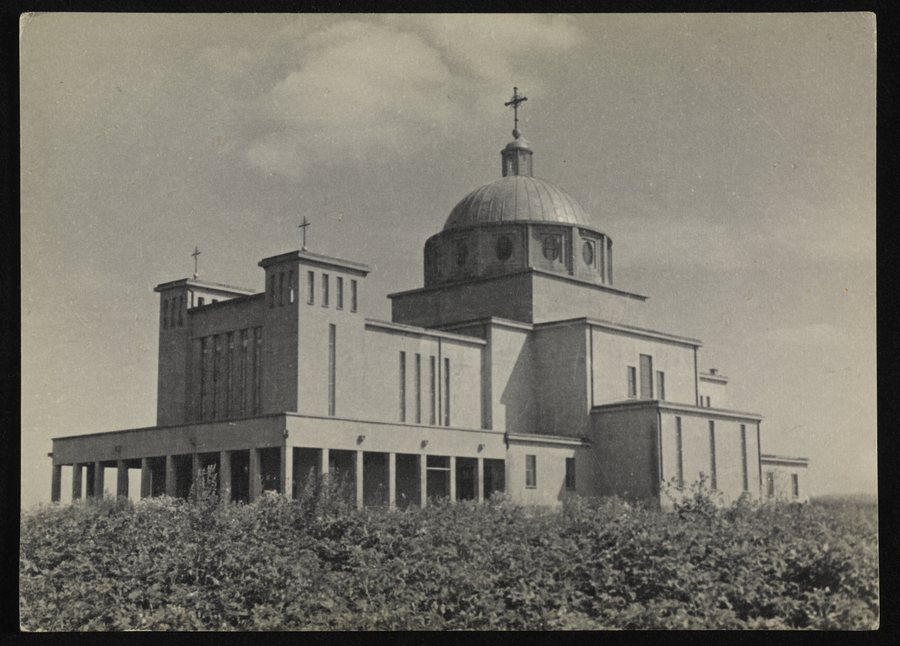 File:Starogard Gdanski, kosciol 1949 (66046186).jpg
Photo: Jan Bułhak via Wikimedia Commons, Public domain
File:Starogard Gdanski, kosciol 1949 (66046186).jpg
Photo: Jan Bułhak via Wikimedia Commons, Public domain
Starogard Gdański at a glance
- “Korona i Krzyż” is a city walking route about 1.9 kilometres long; it takes approximately 1.5 hours to walk.
- The Dolina Wierzycy is in the western part of the city and within a Natura 2000 protected area.
- The Muzeum Ziemi Kociewskiej offers city tours and demonstrations of traditional methods for making regional products.
- The market square measures 107 × 107 metres and is the oldest part of the city.
Which routes and experiences suit your trip?
For a walking tour, “Korona i Krzyż” offers a specific point of reference: the tourist route is about 1.9 kilometres long and takes approximately 1.5 hours. Both figures are approximate. This makes it possible to plan this city walk differently from a visit focused on the riverside path. In the Dolina Wierzycy, you can use the riverside path on foot or by bicycle. The two options therefore appeal to different preferences for physical activity, and should not be understood as one continuous route.
What does the Dolina Wierzycy offer?
The valley lies in the western part of Starogard Gdański, within a Natura 2000 protected area. A riverside path there can be used on foot or by bicycle. There is also an observation platform offering views across the entire Wierzyca Valley and Starogard Gdański. If you prefer taking in a panorama, you can make this view a focus of your visit; if you would rather be on the move, you can follow the riverside path.
Which cultural sites can you discover?
The Muzeum Ziemi Kociewskiej offers city tours and demonstrations of traditional methods for making regional products. The preserved Baszty Narożna (Książęca) and Gdańska (Szewska) are also part of the museum. They house permanent exhibitions on history and ethnography, as well as temporary exhibitions. This gives you a choice of different ways to explore the area: city tours, demonstrations of regional production methods, and exhibitions in the towers. Those with a particular interest in history and ethnography will find different subjects here than at the former synagogue. The preserved Neo-Gothic building was constructed in 1849.
What does the historic city centre tell you?
The market square is the oldest part of Starogard Gdański and measures 107 × 107 metres. A reconstructed medieval well stands in its north-western corner. The city’s oldest surviving church also has a place in its history: it is a three-aisled basilica built around 1350 during the rule of the Teutonic Order. The market square, well, church and former synagogue offer different points of interest if you are curious about the city’s architectural history.
If you would like to compare other destinations, you can also find Borzechowo, Czarna Woda, Wycinki, Kolincz, Krąg, Osiek, Zblewo and Kokoszkowy.
FAQ
How long is the “Korona i Krzyż” city walking route?
The route is about 1.9 kilometres long. It takes approximately 1.5 hours to walk.
What can you do in the Dolina Wierzycy?
The riverside path can be used on foot or by bicycle. An observation platform offers views of the entire valley and Starogard Gdański.
What exhibitions are in the Baszty?
The Baszty Narożna (Książęca) and Gdańska (Szewska) house permanent exhibitions on history and ethnography, as well as temporary exhibitions.
For the overarching travel overview: Preußisch Stargard.

.jpg)