
Wda – Riverside Holiday Resort and Canoe Tour Stage
Accommodation in Wda
Wda lies on the northeastern edge of the Tuchola Forest and on the Wda River. The village is a holiday resort and also a stage stop for canoe tours on the Wda. Other points of reference include the history of a manor farm and the Church of the Most Sacred Heart of Jesus, with its distinctive use of materials. The landscape, history and water-based activities offer different ways to plan your trip.
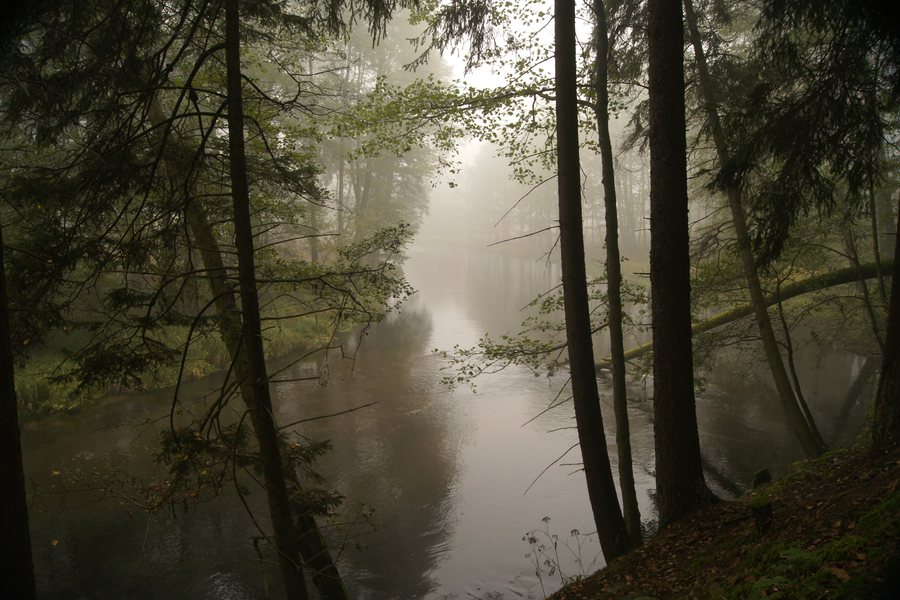 File:Rzeka Wda, Wdecki Park Krajobrazowy.jpg
Photo: Kinga Wiśniewska via Wikimedia Commons, CC BY-SA 3.0 pl
Key facts about Wda
- Location: on the northeastern edge of the Tuchola Forest and on the Wda River.
- Character: a holiday resort and stage stop for canoe tours on the Wda.
- Wda was probably established during the time of the Teutonic Order.
- The manor farm that came later belonged to the Gniewskie Starostwo; its reconstruction began from scratch in 1677.
- The Church of the Most Sacred Heart of Jesus is 28 m long and 10 m wide.
- The façade and lower sections of the side walls are made of dressed stone, while the remaining wall sections are made of plastered lime brick.
- At the end of the 19th century, there were two inns for travellers on the route from Zblewo via Ocypel to Skórcz.
How does Wda fit into the surrounding landscape?
The Tuchola Forest provides the regional landscape context, while the Wda River is a second, water-related point of reference. These are two distinct ways to orient yourself: one is the landscape region, the other the river on which the village lies. If you want to place Wda in context, you can therefore consider both aspects separately rather than treating the riverside location and the landscape setting as one and the same.
Which milestones shape the history of the village?
Wda’s origins are thought to date back to the time of the Teutonic Order. Later, Wda was a manor farm belonging to the Gniewskie Starostwo. A specific turning point is also recorded for the manor farm: its reconstruction began from scratch in 1677. This places its history in context, from a presumed early origin through its time as a manor farm to a reconstruction with a specific date.
At the end of the 19th century, Wda had two inns. They served travellers on the route from Zblewo via Ocypel to Skórcz. This historic travel traffic offers a different perspective on the village from its role as a stage stop for canoe tours: the inns are part of the history of travel in Wda, while canoe tours shape the village profile described here.
What makes the church in Wda distinctive?
The Church of the Most Sacred Heart of Jesus can be considered in terms of its dimensions and materials. It is 28 m long and 10 m wide. Dressed stone forms the façade and the lower sections of the side walls; the remaining wall sections are made of plastered lime brick. The specific dimensions help identify the church by more than just its name; the sequence of materials also describes its exterior. The distinction between the façade, the lower sections of the side walls and the remaining wall sections is important: stone is confined to specific areas.
What role does Wda play in canoe tours?
As a holiday resort and stage stop for canoe tours, Wda combines a place to stay with a role along tours on the river of the same name. Calling it a stage stop refers to Wda’s place along a canoe tour and distinguishes this perspective from its character as a holiday resort. Together with the historic inns, this offers a comparison between two kinds of travel: the former traffic on the route from Zblewo via Ocypel to Skórcz and canoe tours on the Wda. Depending on whether you are interested in local history or river activities, different aspects come to the fore.
If you’d like to discover more destinations, you can also find Szteklin here.
FAQ
Where is Wda?
Wda lies on the northeastern edge of the Tuchola Forest and on the Wda River.
What is known about the history of Wda?
Wda was probably established during the time of the Teutonic Order. Later, the village was a manor farm whose reconstruction began from scratch in 1677.
What are the dimensions of the Church of the Most Sacred Heart of Jesus?
The church is 28 m long and 10 m wide. Its façade and the lower sections of the side walls are made of dressed stone; the remaining wall sections are made of plastered lime brick.
What significance does Wda have for canoe tours?
Wda is a stage stop for canoe tours on the Wda and is also described as a holiday resort.
For the wider travel overview: Wilcze Błota.

