
Lubiszewo Tczewskie
Accommodation in Lubiszewo Tczewskie
Lubiszewo Tczewskie offers plenty to explore on a trip where church history and hiking play a part: a historic pilgrimage church and two marked trails are at the heart of it. As you plan, you can decide whether you are most interested in the historic works of art or would like to explore a trail through the surrounding area.
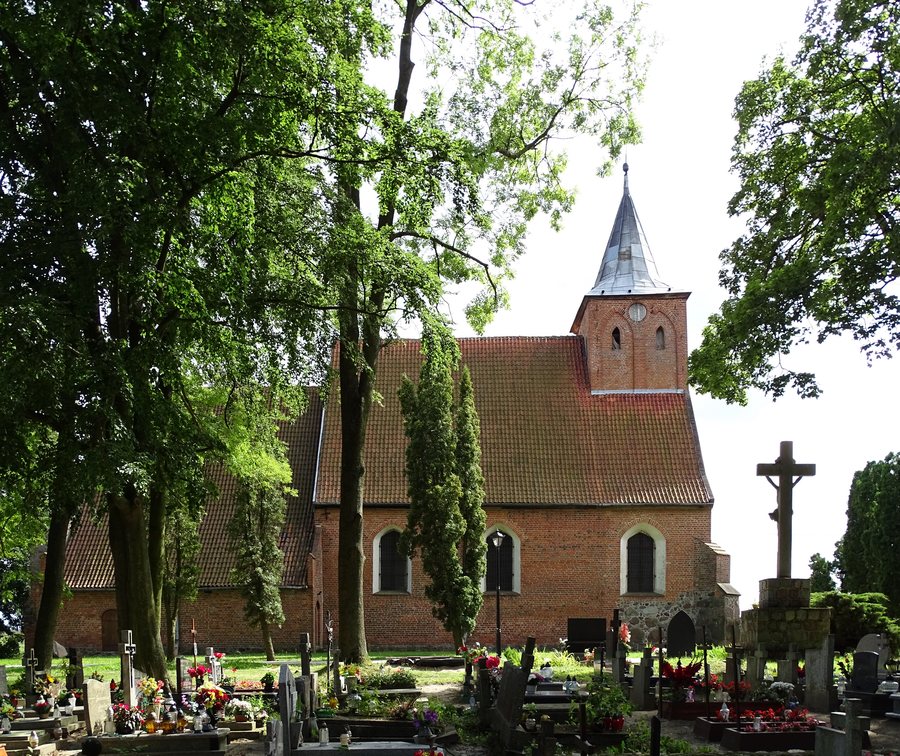 Lubiszewo Tczewskie, Gmina Tczew, Poland
Photo: Eder Thorunensis via Wikimedia Commons, CC BY-SA 4.0
Lubiszewo Tczewskie: quick facts
- The Church of the Holy Trinity was built in 1348 and has been the Sanctuary of Our Lady of Consolation since 1997.
- A statue of Our Lady of Consolation, dating from 1380, is venerated at the Sanctuary of Our Lady of Consolation.
- The church’s main altar is adorned with a Gothic sculpture of the Holy Trinity dating from 1420.
- The yellow-marked Kociewski Trail is about 80 km long and passes through Lubiszewo.
- The green-marked Roman Klim Trail runs from Tczew via Szpęgawa and Stanisławie to Lubiszewo.
What can you discover at the church?
The Church of the Holy Trinity shapes the cultural character of the town through its long history and the works of art associated with it. Several dates are important for understanding its history: the church was built in 1348, while the Gothic sculpture of the Holy Trinity on the main altar dates from 1420. These are two distinct historical facts—one about the church and one about the altar piece.
The veneration of the Virgin Mary is also associated with a date of its own: a statue of Our Lady of Consolation dating from 1380 is venerated at the Sanctuary of Our Lady of Consolation. The Church of the Holy Trinity has been the Sanctuary of Our Lady of Consolation since 1997. Lubiszewo has been a pilgrimage destination for centuries; the sanctuary is also part of the Marian Shrines Trail of Pomerania. If you are interested in religious history or sacred art, you can take these aspects into account when planning your trip.
What stories do the castle ruins tell?
The town’s history extends beyond the church. The castle complex in Lubiszewo was established before 1198. Later, from 1229 to 1253, it was the seat of Sambor II, the independent Duke of Lubiszewo-Tczew. These facts describe different periods in its history: its early establishment before 1198 and its later function as a ducal seat during a precisely specified period.
Lubiszewo can therefore be explored not only through its church art, but also through its historical role. If you are planning your trip around a particular theme, these different historical connections offer a different focus from the marked hiking trails. The dates help you understand each of the structures and historical functions mentioned in its own context.
How do the trails through Lubiszewo differ?
The yellow-marked Kociewski Trail passes through Lubiszewo and is about 80 km long. From the town, it runs along Lake Rokickie. Its approximate total length gives you an idea of the scale of the trail; it does not indicate the length of a single section near Lubiszewo.
The green-marked Roman Klim Trail follows a specific route from Tczew via Szpęgawa and Stanisławie to Lubiszewo. From the village, it follows the yellow markings to the Rokickie Lakes area. From there, the Roman Klim Trail continues towards Śliwiny and reaches Waćmierek. If you are choosing trails based on their routes, you can distinguish between the approximately 80 km-long yellow trail and the green trail described through several named places.
To compare other destinations, you can also explore Borkowo, Waćmierek, Swarożyn, Pelplin, Zajączkowo, Tczew, Szpęgawa and Gniew.
FAQ
How long is the Kociewski Trail?
The yellow-marked Kociewski Trail is about 80 km long and passes through Lubiszewo.
Which places does the Roman Klim Trail connect?
The green-marked trail runs from Tczew via Szpęgawa and Stanisławie to Lubiszewo. From the Rokickie Lakes area, it continues towards Śliwiny and reaches Waćmierek.
Which works of art are associated with the church?
A statue of Our Lady of Consolation dating from 1380 is venerated at the Sanctuary of Our Lady of Consolation. The church’s main altar features a Gothic sculpture of the Holy Trinity dating from 1420.
For the broader travel overview: Tczew.

