
Discover Sławków
Accommodation in Sławków
Sławków combines traces of its former mining industry with historic buildings and opportunities to learn about the town and nature. Which of these aspects you would like to explore more closely offers a concrete starting point for planning your trip.
Sławków at a glance
- The Szlak Kruszcowy is an approximately 6 km-long historical and educational tourist trail that opened to visitors in 2023.
- Four tourist hiking trails run through Sławków and its surroundings; they are suitable for hiking and cycling.
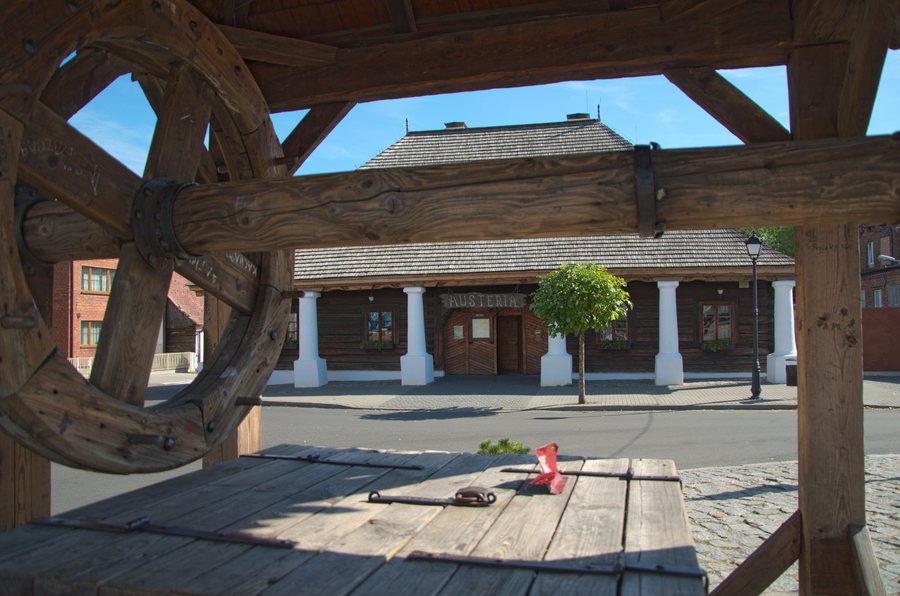
- Historic sites include the ruins of the Bishops of Kraków’s castle and the Austeria Miejska on the Rynek.
- The Centrum Edukacji Ekologicznej i Kulturowej offers multimedia experiences and an ethnographic exhibition.
What trails and experiences does Sławków offer?
The Szlak Kruszcowy passes sites connected with the former mining and metalworking industries. Its name and educational focus point to its historical theme: the approximately 6 km-long route highlights connections to the former extraction and processing of raw materials.
Other trails also offer different ways to explore the town. The red and blue tourist hiking trails run through the center, making it possible to discover sights in Sławków. Four tourist hiking trails in total run through the town and its surroundings. They are suitable for both hiking and cycling, appealing to travelers who want to spend their time outdoors actively.
Which places tell the story of the town’s history?
The ruins of the Bishops of Kraków’s castle date back to the 13th century. An archaeological reserve was established there on October 30, 1990. This site therefore brings together two distinct historical periods: the castle complex’s medieval origins and the establishment of the reserve in 1990.
Another historic building is the Austeria Miejska w Sławkowie, also known as “Pierwochą Zwana.” The wooden inn is located at number 2 on the Rynek. It was probably built in 1781 and bore the name “Pierwochą Zwana” until the town lost its municipal rights in 1870. The date should be treated as approximate. The Chapel of Saint Rosalia is another of the town’s older sites: it was probably first built as a Passion column in 1536.
What can you discover in the exhibition and the church?
The Centrum Edukacji Ekologicznej i Kulturowej introduces visitors to the town’s natural diversity through multimedia games, quizzes, films, and audio stations with narration. Its focus therefore differs from that of the historical route: here, learning about nature takes center stage, while the Szlak Kruszcowy leads to sites connected with the former mining and metalworking industries.
The center’s Lamus Zygmunta Glogera also houses an ethnographic exhibition featuring everyday objects from the 18th to the 20th century. At the parish Church of the Holy Cross, meanwhile, it is worth looking up at the wooden, plastered nave ceiling. Its polychrome decoration depicts the Coronation of the Virgin Mary and the four Evangelists: Matthew, Mark, Luke, and John. Visitors interested in religious imagery will find a specific example of sacred art here.
When planning your stay, you can consider whether you would like to discover Sławków mainly through its historic sites, its themed trail, or its interpretation of nature and culture. If you would like to compare more destinations, you can also find Wojkowice, Grodków, Będzin, Siewierz, Psary, Czeladź and Mierzęcice here.
FAQ
How long is the Szlak Kruszcowy?
The historical and educational tourist trail is approximately 6 km long.
Which hiking trails run through the center?
The red and blue tourist hiking trails run through the center of Sławków.
What does the ethnographic exhibition feature?
The Lamus Zygmunta Glogera displays everyday objects from the 18th to the 20th century.
For the broader travel overview: Będzin.

