
Discover Strumień: Culture and Cycling Routes
Accommodation in Strumień
Strumień offers historic buildings, exhibitions, audio guides and cycling routes as different ways to shape a stay. Here you can find guidance on the town’s character and activities that may influence your travel plans.
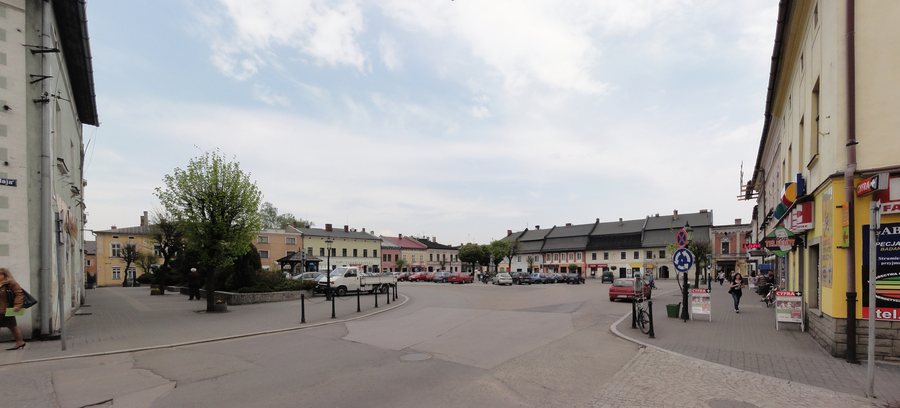
Strumień at a glance
- Built around 1628, the town hall is the oldest surviving town hall building in the Silesian Voivodeship.
- The Baroque Roman Catholic church was built in 1790; its tower was added in 1792.
- Red cycling route 251 starts in the Market Square. The international R4 runs along Podwale Street.
- Audio guides for adults and children can be borrowed on site at the tourist information point.
What history shapes the townscape?
On the east side of the Market Square, a row of two-storey townhouses with mansard roofs forms the old town frontage. The buildings are aligned with their gables parallel to the street. A mansard roof has a break in its slope: the lower section is steeper than the upper one. This distinguishes it from other roof types.
The town hall dates from around 1628 and is the oldest surviving town hall building in the Silesian Voivodeship. The Baroque church belongs to a later period of construction: it was built in 1790, and the tower was added in 1792. When looking at the building history, it is worth keeping these two dates distinct.
Another historical landmark is the former Kaflarnia, a listed monument. Its production history began with tiles in the interwar period. Later, clothing was made there, followed by grave candles until the end of the 1990s. The town hall, church and Kaflarnia thus represent different aspects of Strumień’s architectural and industrial history.
Which cycling routes can you distinguish?
Red cycling route 251 starts in the Market Square and runs via Chybie and Rudzica to Jaworze, at the foot of the Silesian Beskids. In Strumień, international cycling route R4 runs along Podwale Street and heads towards Pszczyna or Jastrzębie-Zdrój.
The difference is clear when choosing a route: for route 251, the starting point, intermediate places and destination are part of the route; here, R4 can be identified by its street alignment and directions. Check the current signage before setting off.
What cultural activities are available?
At the tourist information point, you can borrow the audio guide “Tam, gdzie królowa polskich rzek...” for adults and “W krainie utopca” for children. You must first read the terms of use. Check current availability before your visit.
Galeria Pod Ratuszem is located in renovated cellars beneath the town hall. Exhibitions, exhibition openings and meetings are held there; the works feature local cultural practitioners and artists from abroad. Organised groups can arrange a visit with the Promocji i Rozwoju Department. Confirm the arrangements in advance.
What does the park offer for a break?
The park, with its brine fountain, has a playground. Adults can sit on a bench by the fountain. These are two specific places to take a break in the park: a place to play and a seat by the fountain.
Discover more destinations: Ochaby Wielkie, Zaborze, Jaworzynka, Brenna, Kostkowice, Skoczów, Bąków, Koniaków.
FAQ
Where does red cycling route 251 start?
It starts in Strumień’s Market Square and runs via Chybie and Rudzica to Jaworze, at the foot of the Silesian Beskids.
How do the audio guides differ?
“Tam, gdzie królowa polskich rzek...” is intended for adults, while “W krainie utopca” is for children. To borrow one on site, you must first read the terms of use; check availability in advance.
Can groups visit Galeria Pod Ratuszem?
Organised groups can arrange a visit with the Promocji i Rozwoju Department. Confirm the arrangements in advance.
What was made at the former Kaflarnia?
Its production history began with tiles in the interwar period. Later, clothing was made there, followed by grave candles until the end of the 1990s.
To the main travel overview: Cieszyn.

