
Chorzenice: Chapel, Pałac and Local History
Accommodation in Chorzenice
Chorzenice combines a chapel dating from 1927 with the architecture and layered history of the Pałac—a tangible starting point for travelers interested in local history.
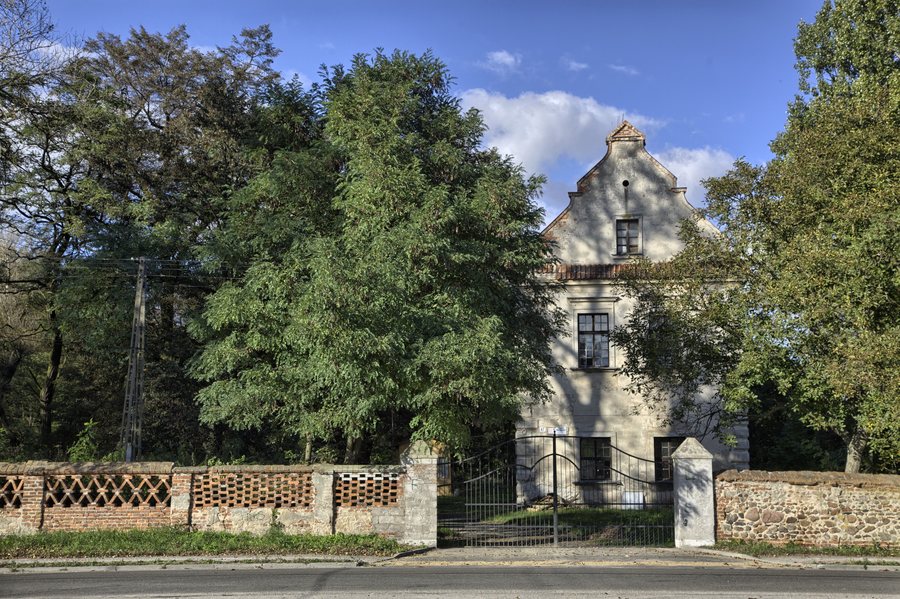 File:Chorzenice - dwór obronny tzw. lamus i park.jpg
Photo: Artur Nawojski via Wikimedia Commons, CC BY-SA 3.0 pl
Chorzenice at a glance
- The name Chorzenice first appears in historical sources from the 14th century.
- The Mass chapel of St. Stanislaus dates from 1927.
- Adam Nieniewski had the Pałac built in the late 1930s.
- During World War II, the Pałac served as a gendarmerie post and was used as a children’s home after the war.
Which cultural and historical traces shape Chorzenice?
The first recorded mention of the place name and the dated buildings offer different clues to Chorzenice’s history. The name appears in sources from the 14th century. The Mass chapel of St. Stanislaus, by contrast, is a specific building dating from 1927. This makes it possible to distinguish the history of the town from that of individual buildings, rather than attributing all the dates to a single structure.
The celebrations in honor of the parish patron saint are also linked to a specific date: a 2008 account reports that they were held in the chapel every year on May 8. This offers a glimpse of the tradition as described at the time. For culturally minded travelers, the chapel can therefore be understood not only through its year of construction but also through its role in the religious calendar.
How can you recognize the architecture of the Pałac?
The Pałac in Chorzenice was originally built on a rectangular plan. Single-story extensions were later added on both sides. The building has two stories and nine façade bays. The term “façade bays” refers to the vertical divisions of a façade and helps make the recorded description of the exterior more concrete.
The architectural character also includes a flat roof with an attic parapet and a columned porch in the center of the main façade. An attic parapet is a low structure along the edge of a roof; the columned porch is a prominent feature of the entrance area. Together with the rectangular plan and later side extensions, these features offer several ways to understand the Pałac’s architectural form without confusing its individual elements.
How do the manor farm, park and history fit together?
The Chorzenice park and manor complex includes a manor farm dating from 1927. Numerous trees around the Pałac are remnants of the former park. These two details describe different aspects of the complex: the manor farm’s year of construction and the surviving traces of the former parkland around the Pałac.
The Pałac’s history also includes significant uses. During World War II, the Germans established a gendarmerie post there; the Pałac became a site where many Poles were murdered. After the war, the building was converted into a children’s home. This sequence is an important part of local history and complements the architectural features rather than replacing them.
Which points of interest can guide your travel planning?
When comparing destinations, you can explore Chorzenice from several cultural and historical angles: the early mention of its name, the chapel and its documented festival tradition, the Pałac’s architectural form, and its changing historical uses. The dates refer to different things: the 14th century to the name, 1927 to the chapel and manor farm, and the late 1930s to the construction of the Pałac.
Discover more destinations: Hucisko, Korzonek, Łysiny, Garnek, Wierzchowisko, Rudniki, Nieznanice and Koniecpol.
FAQ
When was the Mass chapel of St. Stanislaus built?
The chapel in Chorzenice dates from 1927.
What is known about the celebrations on May 8?
A 2008 account reports that celebrations in honor of the parish patron saint were held in the chapel every year on May 8.
What historical uses did the Pałac have?
During World War II, it housed a gendarmerie post established by the Germans. After the war, the Pałac was used as a children’s home.
For the main travel overview: Częstochowa.

