
Ruda Śląska
Accommodation in Ruda Śląska
Ruda Śląska combines industrial history and historic workers’ housing estates with leisure activities and green spaces. You can weigh up which of these aspects should shape your stay by considering the different places and experiences on offer.
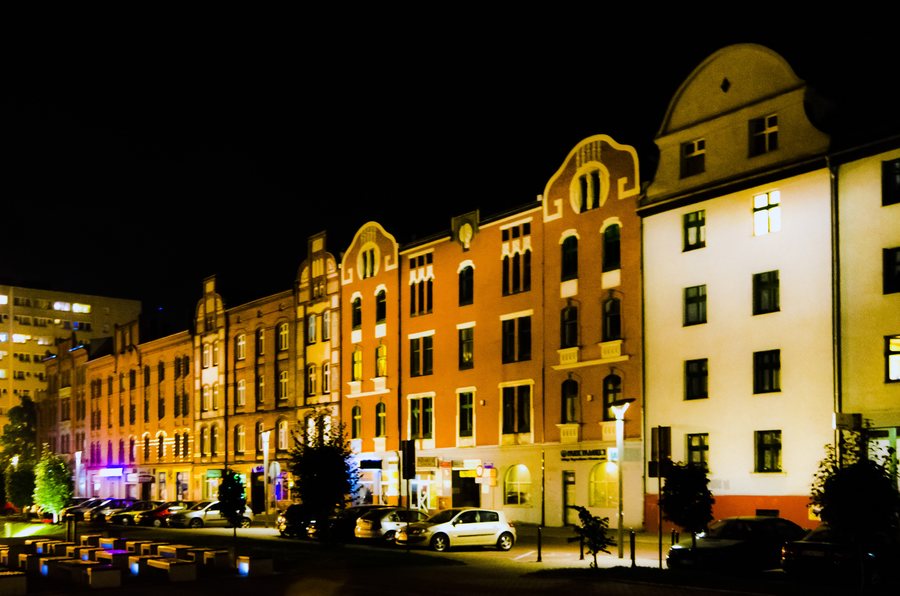
Ruda Śląska at a glance
Notable landmarks include the Wielki Piec, which is almost 76 metres tall, and the railway station complex in Chebzie, now home to Stacja Biblioteka. More than 90 percent of the Ficinus workers’ colony’s housing stock has been preserved. Leisure and outdoor activities include Aquadrom, Trakt Rudzki, and a nature trail in a five-hectare natural area. The city has Ruda and Chebzie railway stations on the Wrocław–Kraków line.
Which leisure activities suit your stay?
Aquadrom brings together leisure, sports, and sauna facilities. These include seven winding slides, a wild-water channel, an artificial wave, and several whirlpools. There is also a children’s area, four different saunas, and a seven-metre-high diving tube. The range of facilities caters to different interests, so you do not have to limit your stay to a single activity.
RUDZKA mAPPKA can also complement your exploration of the city: the museum developed it to guide users to Ruda Śląska’s main attractions and involve them in interactive outdoor games. If you want to combine culture and activity, you can include this option in your travel plans alongside the city’s museums and industrial history.
Where can you encounter industrial and residential history?
The Ficinus workers’ colony is one of the oldest examples of company housing architecture in Upper Silesia. More than 90 percent of its housing stock has been preserved. The area includes a historic pedestrian zone, a museum exhibition on traditional Silesian cuisine, and a gallery featuring people associated with Ruda Śląska. Ficinus therefore offers insights into both residential architecture and regional cuisine and city history.
Another testament to industrial history is the Wielki Piec at Huta „Pokój”. Built between 1966 and 1968, it is almost 76 metres tall and was entered in the register of monuments in 2012. Since 2020, it has been part of the European Route of Industrial Heritage (ERIH). These details make it a clearly defined stop for travellers interested in industrial architecture and its historical context.
The railway station complex in Chebzie was built between 1897 and 1899; today, it houses Stacja Biblioteka. It is part of the Silesian Voivodeship’s Route of Technical Monuments. The site thus combines a historic railway station with another, technical perspective on the region’s built heritage. The Maksymilian Chrobok Municipal Museum presents temporary exhibitions on ethnography, history, and fine arts. The parish of St Joseph was elevated to the status of a diocesan sanctuary on 30 April 2010—another point of interest if you are interested in local religious history.
The Carl-Emanuel colony comprises 15 workers’ houses along Wolności, Raciborska, and Zabrzańska streets. Another historical and landscape feature can be found in the Ruda district: at the intersection of Wolności and Kościelna streets lies a coarse-grained granite erratic boulder, protected as a natural monument since 1960.
What green spaces and routes are there?
Trakt Rudzki connects the districts of Wirek and Nowy Bytom through a network of revitalised green spaces and parks. Derelict industrial sites have been transformed into public spaces, while micromobility options support travel between the districts. The planned Trakt Rudzki is intended for walking, cycling, and running. Some sections are also expected to be suitable for roller skating. When planning your trip, you can distinguish between the land already redeveloped and the activities planned for the route.
Another natural feature is the five-hectare area between Bujoczka and Kościelna streets, where a nature trail has been created. It offers a themed way to explore this natural area. Together with the protected erratic boulder, these places are worth considering if, alongside industrial and urban history, nature is also one of your interests.
What can help you find your way around?
Ruda and Chebzie are Ruda Śląska’s two railway stations on the Wrocław–Kraków line. This gives you two station locations within the city to consider when planning your journey. Aquadrom is five minutes from the A4 motorway and 15 minutes from the Drogowa Trasa Średnicowa.
For information about the city, you can switch to the overview of Ruda Śląska. If you would like to compare other destinations for your trip, you can also explore Tarnowskie Góry, Tychy, Bytom, Siemianowice Śląskie, Sosnowiec, Częstochowa, and Będzin.
FAQ
What facilities does Aquadrom offer?
Aquadrom has seven winding slides, a wild-water channel, an artificial wave, several whirlpools, a children’s area, four different saunas, and a seven-metre-high diving tube.
What does the Ficinus workers’ colony offer?
Ficinus includes a historic pedestrian zone, an exhibition on traditional Silesian cuisine, and a gallery featuring people associated with Ruda Śląska. More than 90 percent of its housing stock has been preserved.
Which railway stations are in Ruda Śląska?
Ruda and Chebzie are the city’s two railway stations on the Wrocław–Kraków line.
For the broader travel overview: Silesia.

