
Discover Księży Las
Accommodation in Księży Las
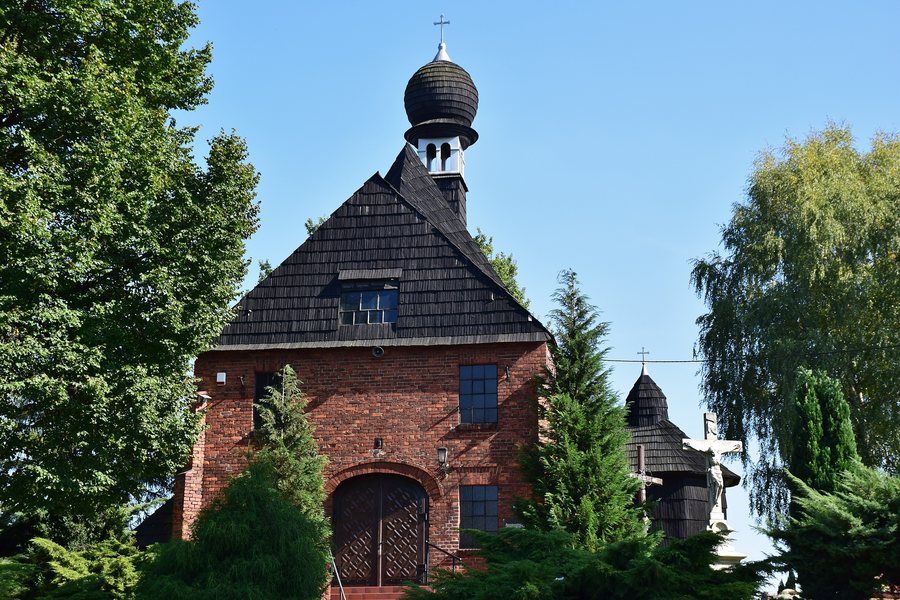
Księży Las is an old village with a history dating back to 1302. A specific historical landmark is the wooden Church of St. Michael the Archangel, built in 1494. Its log construction, eastward orientation and predominantly Baroque furnishings give the place a clearly defined cultural and historical theme. A connection between the Pętla Zbrosławicka and the Północ-Południe cycling route is also described. For your planning, the village’s history, church architecture and a route connection can therefore be considered as distinct points of interest.
Key facts about Księży Las
- The history of the old village dates back to 1302.
- The wooden Church of St. Michael the Archangel dates from 1494; it faces east and is built using log construction.
- Protestants took over the church during the Reformation and used it from 1570 to 1629.
- The furnishings are predominantly Baroque; the high altar includes a depiction of the Archangel Michael.
- A route description from 2024 mentions a connection between the Pętla Zbrosławicka and the Północ-Południe cycling route.
What makes the wooden Church of St. Michael special?
Several distinct features help put the church in context: the year 1494, its wooden construction, its orientation and its furnishings. Log construction refers to a structure made by stacking logs horizontally. Facing east means that the church building is oriented towards the east. The terms therefore describe different things: one refers to the construction, the other to the building’s orientation.
The word predominantly is also significant when describing the interior furnishings. It indicates that they are mostly Baroque, without assigning every individual element to the same style. The high altar depicts the Archangel Michael, who is named as the church’s patron. The construction, orientation and furnishings thus offer different points of interest if you are interested in church architecture.
How should the dates be understood?
The village’s history dates back to 1302, while the church dates from 1494. These two dates are nearly two centuries apart and provide different points of reference: one for Księży Las as a village, the other for the church building. The village’s history and the church’s construction history can therefore be considered related but distinct topics.
A later chapter in the church’s history is its takeover by Protestants during the Reformation. They used the church from 1570 to 1629. This period follows the church’s construction chronologically, but tells of a later use of the building. If you are exploring the historical character of the place, both the village’s long history and specific dates relating to the church and its use are relevant.
What role does the cycling route connection play?
A route description from 2024 mentions a connection in Księży Las between the Pętla Zbrosławicka and the Północ-Południe cycling route. This adds another possible focus for trip planning alongside the village’s history and church architecture. The description is dated; check current route conditions before setting out.
For orientation, it helps to distinguish between the two named routes and treat the connection as a separate planning point. You can consider Księży Las both in terms of its historical points of interest and the route connection mentioned, without conflating the two.
Which focus suits your accommodation search?
First consider what you want your stay to focus on: the village’s history and wooden church, or planning around the route connection mentioned. These interests raise different questions for your trip planning. When searching for a hotel, you can then check whether the location of a specific offer suits your plans. The village’s historical points of interest and the route connection provide different starting points, rather than the same kind of travel experience.
Discover more destinations: Krupski Młyn, Ziętek, Kalety, Tarnowskie Góry, Szałsza, Tąpkowice, Pyrzowice, Boniowice.
FAQ
How far back does the history of Księży Las go?
The history of the old village dates back to 1302.
What distinguishes the wooden Church of St. Michael?
It dates from 1494, faces east and is built using log construction. Its furnishings are predominantly Baroque; the high altar depicts the Archangel Michael.
Which cycling route connection is mentioned in Księży Las?
A route description from 2024 mentions a connection between the Pętla Zbrosławicka and the Północ-Południe cycling route. Check current route conditions before setting out.
For the broader travel overview: Tarnowskie Góry.

