
Rudnik: Discover Basket Weaving and Culture
Accommodation in Rudnik
Rudnik brings together a basket-weaving tradition dating back to the 19th century, public art, and buildings from several eras. If you put culture at the heart of your trip, the town offers a clear theme: from craftsmanship and woven sculptures to a church, mill, and manor house.
Rudnik at a glance
- Rudnik’s basket-weaving tradition dates back to the 19th century; the first basket-weaving school was established on the initiative of Ferdynand Hompesch.
- More than 20 willow sculptures stand in public spaces. Artists design them, and local basket weavers make them; the number may change.
- The Szlak wiklinowych rzeźb begins at the market square by the monument to Count Ferdynand Hompesch.
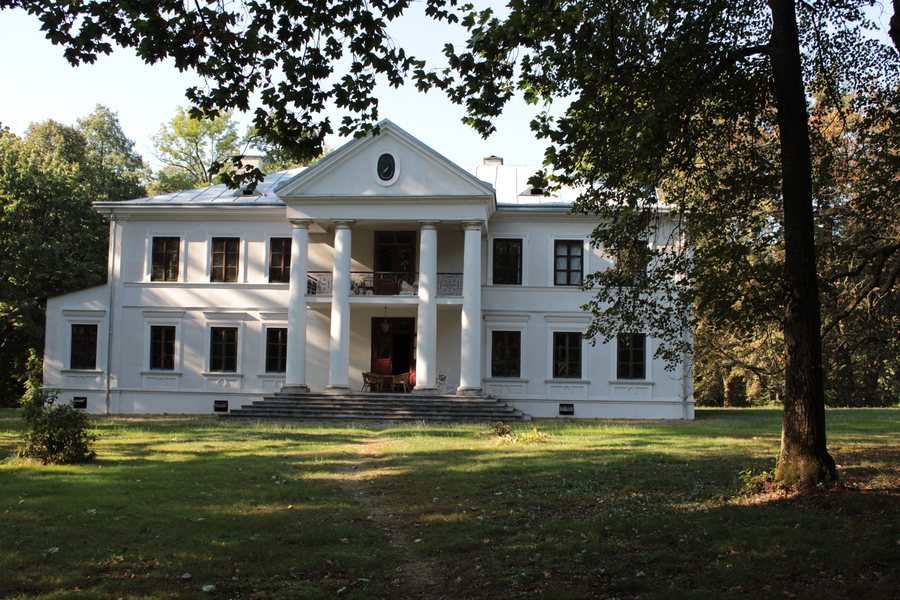
- Historic buildings include the Church of the Holy Trinity, built in 1927–1928, a mill with a power station built in 1905, and a manor house dating from the second half of the 18th century.
How do craftsmanship and willow art shape the town?
Rudnik is known for its basket-weaving tradition, which dates back to the 19th century. Its history includes the first basket-weaving school, established on the initiative of the Austrian Count Ferdynand Hompesch. Thus, the town’s history encompasses not only the craft itself but also how it was taught. This background gives the willow sculptures a distinctive cultural context.
More than 20 original sculptures woven from willow can be found in public spaces. Artists from Poland and abroad design the works, while local basket weavers bring them to life through their craft. Design and execution are thus undertaken by different people: the sculptures combine artistic vision with basket-weaving skill. The stated number may change over time.
Where does the sculpture trail begin, and what event is associated with it?
The Szlak wiklinowych rzeźb starts at the market square by the monument to Count Ferdynand Hompesch, regarded as the founder of basket weaving in Rudnik. At this designated starting point, the theme of willow sculptures meets the memory of the craft’s founder. If you are interested in the local connection between art and tradition, this is a clear point of reference for planning your trip.
Another cultural highlight is the “Wiklina Rudnik nad Sanem” event. It has been held since 2000 and is considered the largest event of its kind in the Subcarpathian Voivodeship. If you would like to plan your trip around the event, check the specific dates before making arrangements.
Which historic buildings give Rudnik its distinctive character?
The buildings mentioned span clearly distinct periods. The Tarnowski Palace and Park Complex includes a brick-and-timber manor house dating from the second half of the 18th century. Count Hieronim Tarnowski built the mill with a power station in 1905. Later, in 1927–1928, the Church of the Holy Trinity in Rudnik was built on the initiative of Hieronim Tarnowski and the local construction committee.
The manor house, mill with power station, and church represent different building purposes and historical periods. The timeline runs from the second half of the 18th century through 1905 to 1927–1928. It provides a simple way to compare the history of these buildings: the manor house is the oldest of the three, and the church the most recent.
How do you choose a hotel for your stay?
Rudnik offers a clear cultural focus for a trip centered on basket weaving and local history. Then compare the location, price, and amenities of specific offers according to your own needs.
Discover more destinations: Wólka Tanewska, Ulanów, Krzeszów Dolny, Nisko, Jeżowe.
FAQ
What characterizes Rudnik’s basket-weaving tradition?
It dates back to the 19th century. The first basket-weaving school was established on the initiative of the Austrian Count Ferdynand Hompesch. Local basket weavers also work with the material for the willow sculptures.
Where does the Szlak wiklinowych rzeźb begin?
The trail begins at the market square by the monument to Count Ferdynand Hompesch, regarded as the founder of basket weaving in Rudnik.
Which buildings date from different periods?
The manor house in the Tarnowski Palace and Park Complex dates from the second half of the 18th century. The mill with a power station was built in 1905, and the Church of the Holy Trinity in 1927–1928.
For the broader travel overview: Niżański.

