
Discover Hruszowice
Accommodation in Hruszowice
Several layers of cultural history come together in Hruszowice: an early medieval earthwork, a brick burial chapel from the 19th century, and a Greek Catholic church built between 1996 and 1999. Nearby, there are also archaeological traces at Kopiec Monastery. You can use these as specific points of focus when planning a trip centered on sacred architecture and archaeological evidence.
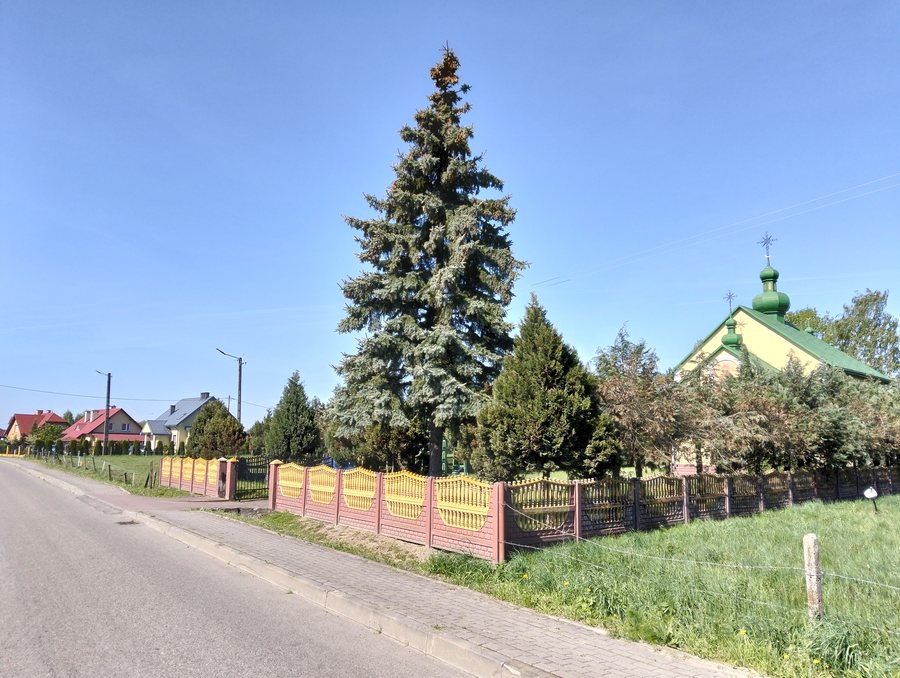 File:MOs810 Wikigrant 10 2025 Resovia (Greek Catholic Church in Gaje) (1).jpg
Photo: MOs810 via Wikimedia Commons, CC BY 4.0
Hruszowice at a glance
- The Greek Catholic church is a three-part brick building dating from 1996–1999.
- The church contains a contemporary iconostasis from Olchowiec; next to it stands a small bell tower made of metal and wood.
- In the municipal description from 2018, the brick burial chapel from the 19th century was referred to as a Roman Catholic church.
- The early medieval earthwork in Hruszowice is legally protected as a monument.
- Traces dating from the 12th to 13th centuries have been discovered at the more distant Kopiec Monastery site.
What churches and architectural forms define Hruszowice?
The Greek Catholic Church of the Dormition of the Most Holy Mother of God is a three-part brick building dating from 1996 to 1999. “Three-part” describes the layout of the building, while “brick” refers to its building material. For an initial architectural comparison, you can consider these features separately: they describe different aspects of the building.
The church contains a contemporary iconostasis that comes from the church in Olchowiec. An iconostasis is a screen decorated with icons that separates the sanctuary from the rest of the church. The term therefore refers to an item of interior furnishing, not to the building’s architectural form. A small bell tower made of metal and wood stands next to the church. Together, the building, its interior furnishings, and the adjacent tower offer different clues for understanding the sacred architecture.
How do the historical points of reference differ?
The early medieval earthwork in Hruszowice is legally protected as a monument. In the municipal description from 2018, the brick burial chapel from the 19th century was referred to as a Roman Catholic church.
What archaeological traces are there at Kopiec Monastery?
Kopiec Monastery is a local archaeological site with settlement remains of the earthwork type. The outlines of pits and remains of hearths dating from the 12th to 13th centuries have been discovered there. Both location and dating are important when comparing these with the earthwork in Hruszowice: the early medieval earthwork is associated with Hruszowice, while the pit outlines and hearth remains mentioned above are associated with Kopiec Monastery.
If you would like to visit particular places, check their current accessibility before traveling. Discover more destinations: Bolestraszyce, Łodzinka Dolna, Kalwaria Pacławska.
FAQ
What makes the Greek Catholic church distinctive?
It is a three-part brick building dating from 1996–1999. It contains a contemporary iconostasis from the church in Olchowiec.
What is known about the burial chapel?
The brick chapel dates from the 19th century. In the municipal description from 2018, it was referred to as a Roman Catholic church.
What archaeological traces are there in the area?
The outlines of pits and remains of hearths dating from the 12th to 13th centuries have been discovered at Kopiec Monastery.
For the broader travel overview: Przemyski.

