
Discover Będziemyśl: Church and Historic Traces
Accommodation in Będziemyśl
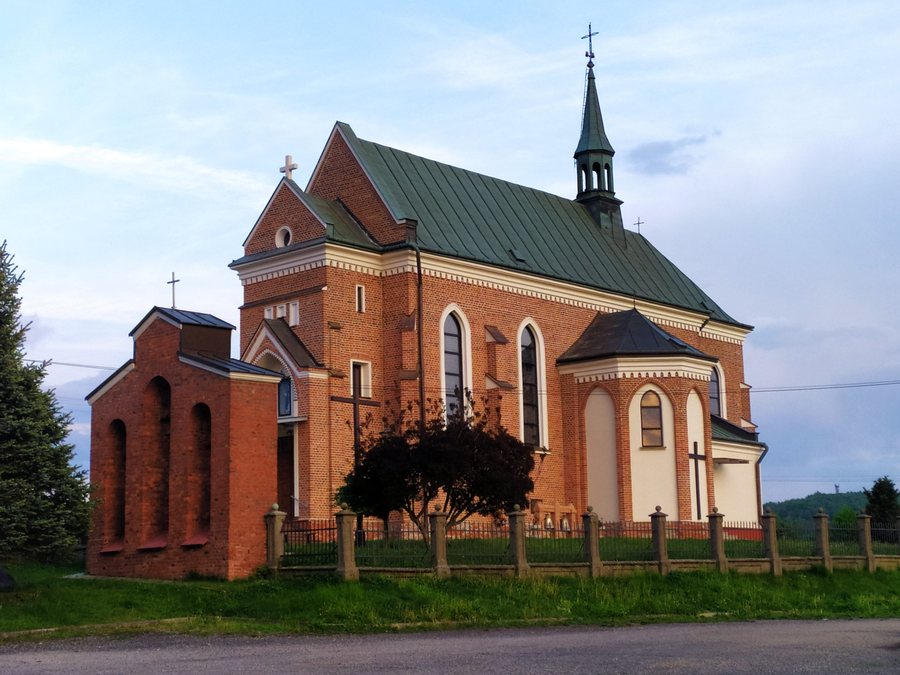
Będziemyśl brings together a range of historical and cultural features: the Neo-Gothic parish church of St. Hyacinth, the Zamczysko castle site and a jubilee cross more than 15 metres high. A stone figure of St. John of Nepomuk, a bell cast in Berlin and a pierogi festival add to the picture. For planning your trip, the combination of architecture, archaeological traces and local food culture is particularly interesting.
Key facts about Będziemyśl
- The parish church of St. Hyacinth was built in the Neo-Gothic style in 1919–1921; a stone figure of St. John of Nepomuk from the 18th century stands nearby.
- The Zamczysko castle site lies in the southeastern part of the village, on Winnica Hill. Remains of an earthen rampart have survived there and are believed to date from the 15th century.
- The jubilee cross stands in the village centre and is more than 15 metres high. At the 12th edition of Piknik z Pierogiem, 13,000 pierogi in three varieties were offered on 28 July.
What do the buildings tell us about different periods?
The parish church can be placed in context by its construction date and style: it was built between 1919 and 1921 in the Neo-Gothic style. Neo-Gothic refers to a later revival of Gothic design forms, so the style designation should be distinguished from a medieval construction date. The bell in the bell tower next to the church has its own date: it was cast in Berlin in 1833. The church’s construction years and the bell’s casting year describe two different details.
The stone figure of St. John of Nepomuk from the 18th century stands near the parish church. This means that in this area, a church building from the early 20th century, a 19th-century bell and an 18th-century figure come together. If you are interested in cultural history, you can read these details as referring to different periods rather than grouping them into a single building phase.
How do Zamczysko and the jubilee cross differ?
Zamczysko is a castle site on Winnica Hill in the southeastern part of the village. The surviving feature noted there is the remains of an earthen rampart; its origin is only believed to date to the 15th century. This date is therefore an estimate, not an exact one. That distinguishes Zamczysko from the clearly stated construction years of the parish church and the casting year of the bell.
The jubilee cross, by contrast, can be identified by its location in the village centre and its height of more than 15 metres. The local features thus differ in type and location: a castle site on a hill, a cross in the centre and the parish church with a figure nearby. These differences give you several specific historical themes to guide your interest in Będziemyśl.
What role does Piknik z Pierogiem play?
Piknik z Pierogiem adds a culinary occasion to the architectural and historical attractions. At its 12th edition in Będziemyśl, held on 28 July, 13,000 pierogi in three varieties were offered. The festival is recurring, but you should check the date for the particular edition you plan to attend.
If an event determines your travel dates, check its date before booking.
Discover more destinations: Ostrów, Olchowa, Sędziszów Małopolski, Iwierzyce, Wola Ociecka, Ropczyce.
FAQ
What does the Neo-Gothic style of the parish church mean?
Neo-Gothic revives Gothic design forms in a later style. The parish church of St. Hyacinth was built in this style in 1919–1921.
Where is the Zamczysko castle site?
It is on Winnica Hill in the southeastern part of the village. Remains of an earthen rampart have survived there and are believed to date from the 15th century.
What was offered at Piknik z Pierogiem?
At the 12th edition on 28 July, 13,000 pierogi in three varieties were offered.
To the overview of the wider area: Ropczyce-Sędziszów.

