
Pasłęk
Accommodation in Pasłęk
Pasłęk combines an old town shaped by medieval fortifications with buildings from several centuries. The Wąska is also part of the townscape: a kayaking route runs along the river to Lake Druzno.
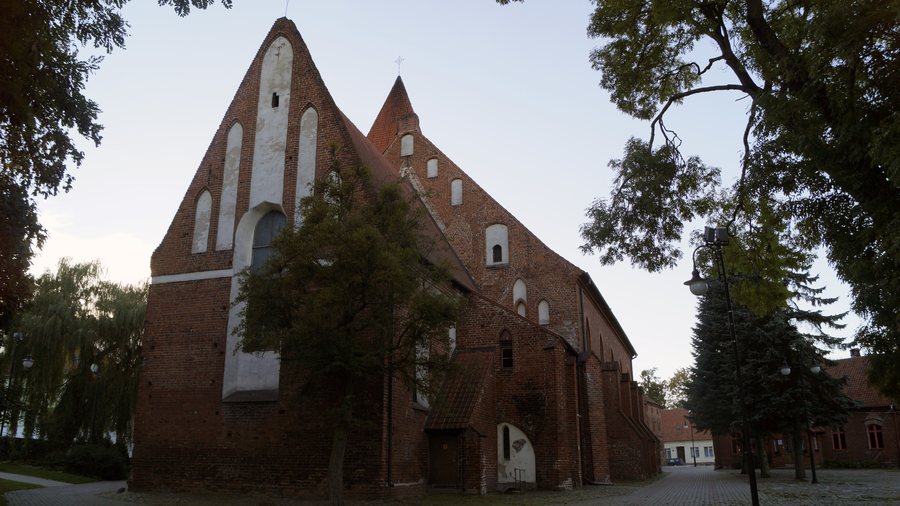 File:Pasłęk, kościół parafialny św. Bartłomieja.jpg
Photo: Anna Denis Aneczka.vip via Source, CC BY-SA 3.0 pl
File:Pasłęk, kościół parafialny św. Bartłomieja.jpg
Photo: Anna Denis Aneczka.vip via Source, CC BY-SA 3.0 pl
Pasłęk at a glance
The medieval defensive walls enclose the old town and are 1,200 meters long. They are among the longest surviving medieval defensive walls in Poland; within the Warmian-Masurian Voivodeship, they are the longest surviving ones. Other historic buildings include the Gothic Church of St. Bartholomew, the town hall in the market square, and several city gates. The Wąska River flows through Pasłęk, and a kayaking route along it leads to Lake Druzno.
What defines Pasłęk’s old town?
The defensive walls give the old town a clear historical focal point. Their length of 1,200 meters and their place among the surviving medieval fortifications make them a particularly defining feature of Pasłęk. The former city gates also help explain the different functions of the town’s entrances. The Gothic Brama Kamienna, also known as Wysoka Wieża, was the main gate to the old town from the southwest.
Brama Młyńska represents a different historical connection: it is one of Pasłęk’s three former city gates. From there, the route led to the castle grounds at the foot of Castle Hill, to the mills, and to a landing place on the Wąska. Together with the town walls, the gates show how the fortified town and its connections to the outside were arranged.
Which historic buildings can you put into context?
For a trip focused on cultural history, Pasłęk offers different architectural styles and periods. The Gothic Church of St. Bartholomew dates from around 1350. The Gothic-Renaissance town hall in the market square dates from 1380.
The castle also has a long history: around 1320, the present north wing was built on a steep hill. The castle was probably built on the site of an earlier Prussian castle or fortification. The townhouses on Henryka-Dąbrowskiego Street represent a later period: the restored houses date from the turn of the 17th and 18th centuries and are among the oldest in the old town.
Młyńskie Przedmieście lies below the old town. Its prewar buildings have been almost entirely preserved; the buildings of the former watermill complex are particularly noteworthy. The water tower adds an early 20th-century structure to this picture: it was built in 1910 to a design by Gustaw George. In Pasłęk, you can therefore encounter medieval fortifications, older houses, former mill buildings, and a water tower from a later period.
What role does the Wąska play in planning your trip?
The Wąska flows through Pasłęk, and a kayaking route runs along it to Lake Druzno. Alongside exploring the old town, gates, and historic buildings, this offers a water-based aspect to your trip. If you are mainly interested in culture and architectural history, your priorities will differ from those of a trip that includes the kayaking route.
Which other destinations would you like to compare?
To compare other destinations, you can also explore Bogdaniec, Kazimierzowo, Komorowo Żuławskie, Oleśno, Rychliki, Łęcze, Pilona and Kadyny.
FAQ
How long are the medieval defensive walls?
Pasłęk’s defensive walls are 1,200 meters long and enclose the old town. They are the longest surviving medieval defensive walls in the Warmian-Masurian Voivodeship.
Which city gates are associated with Pasłęk?
The Gothic Brama Kamienna, also known as Wysoka Wieża, was the main gate to the old town from the southwest. Brama Młyńska is one of the three former city gates.
Is there a kayaking route on the Wąska?
Yes. The Wąska flows through Pasłęk, and a kayaking route runs along it to Lake Druzno.
For the overview of the wider region: Elbląg.

