
Lubawa: Churches, Park and Culture
Accommodation in Lubawa
Lubawa offers three distinct starting points for planning a trip: notable church furnishings, a city park with paths alongside ponds and canals, and cultural landmarks along the Po ziemi lubawskiej cycling route. If you are looking for a hotel in Lubawa, you can first consider whether sacred architecture, waterside paths or the cycling route should shape the theme of your stay. This helps you match your choice of location to the interests you would like to focus on during your trip.
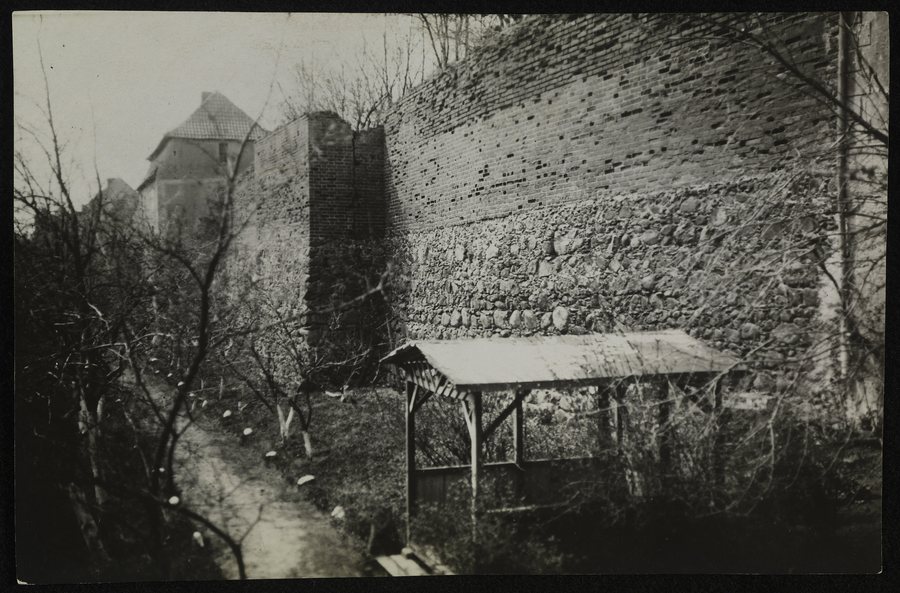 File:Lubawa, mury miejskie miedzy 1920 i 1929 (70934330).jpg
Photo: Adam Wisłocki via Wikimedia Commons, Public domain
File:Lubawa, mury miejskie miedzy 1920 i 1929 (70934330).jpg
Photo: Adam Wisłocki via Wikimedia Commons, Public domain
Quick facts about Lubawa
- The Church of St John the Baptist and St Michael the Archangel has especially valuable ceilings in the nave and presbytery; most of its furnishings date from the time of its foundation.
- Łazienki Lubawskie City Park lies behind this church. Its paths run alongside ponds and canals crossed by decorative bridges.
- The Po ziemi lubawskiej cycling route passes a Gothic church and revitalised castle ruins in Lubawa.
- The wooden Church of St Barbara is located outside the Old Town.
Which churches shape Lubawa’s cultural heritage?
The Church of St John the Baptist and St Michael the Archangel is notable for its interior furnishings: the ceilings in the nave and presbytery are especially valuable. Most of the furnishings date from the time of its foundation. Two aspects therefore stand out: the ceilings in these two areas and the date of the furnishings.
Two other independent landmarks provide further points of reference. The cycling route passes the Gothic Church of the Visitation of the Blessed Virgin Mary and St Anne. The wooden Church of St Barbara is located outside the Old Town. This lets you consider Lubawa’s churches by different features: their furnishings, Gothic architecture, or timber construction and location outside the Old Town.
What characterises Łazienki Lubawskie City Park?
The city park stretches behind the Church of St John the Baptist. Its paths run alongside ponds and canals, with decorative bridges crossing these bodies of water. The park paths, water and bridges give the area a different focus from the churches, where interior furnishings, architectural style or location are key. If you would like to include waterside paths in your trip planning alongside sacred architecture, the park offers a distinct point of interest.
Which cultural sites lie along the cycling route?
In Lubawa, the Po ziemi lubawskiej cycling route passes the Gothic Church of the Visitation of the Blessed Virgin Mary and St Anne, as well as revitalised castle ruins. The church and ruins are different landmarks along the same route: a place of worship with an explicitly named Gothic architectural style stands alongside the remains of a castle. This offers a different cultural perspective from the furnishings of the Church of St John or the paths in the city park.
These differences offer a practical basis for considering Lubawa in light of your own travel interests, rather than treating all the sights as the same experience.
Discover more destinations: Siemiany, Kiemiany, Urowo, Kałduny, Mątyki, Zalewo, Eylau, Boreczno.
FAQ
What is special about the Church of St John the Baptist and St Michael the Archangel?
The ceilings in the nave and presbytery are especially valuable. Most of the furnishings date from the time of its foundation.
What is Łazienki Lubawskie City Park like?
Its paths run alongside ponds and canals crossed by decorative bridges. The park lies behind the Church of St John the Baptist.
Which landmarks does the Po ziemi lubawskiej cycling route pass in Lubawa?
It passes the Gothic Church of the Visitation of the Blessed Virgin Mary and St Anne, as well as revitalised castle ruins.
To the main travel overview: Iławski.

.jpg)