
Kamionki: Cycling Route and Szkotowo
Accommodation in Kamionki
Kamionki lies along the green cycling route, whose sequence of named places helps locate the route. In Szkotowo, Jezioro Szkotowskie and the parish church of St. Joseph the Worker provide landscape and historical highlights. You can therefore consider the green cycling route through Kamionki, fishing and church-building history in Szkotowo as different interests when planning your trip.
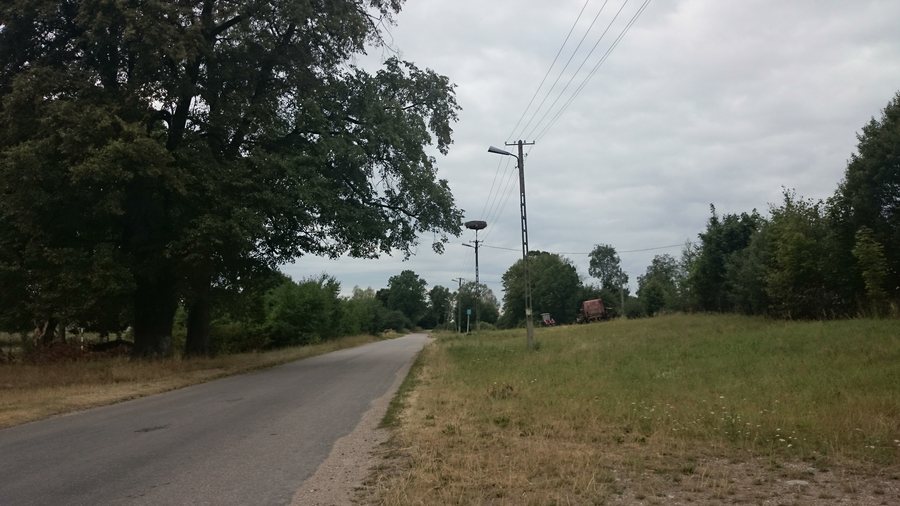 File:Ciconia ciconia nest in Kamionki (powiat nidzicki).jpg
Photo: Kietlak via Wikimedia Commons, CC BY-SA 4.0
Key Facts About Kamionki
- The green cycling route begins in Komorniki (Gmina Działdowo), passes through Gołębiewo, Wierzbowo, Dziurdziewo and Kamionki, and continues to Grunwald and Olsztynek; it ends in Łajsy (Gmina Gietrzwałd).
- Jezioro Szkotowskie near Szkotowo covers 41.3 ha. Its northern and eastern shores are high and steep, while the western shore is low and marshy.
- The parish church of St. Joseph the Worker in Szkotowo was built as an Evangelical church in 1874–1877.
- Jezioro Szkotowskie is considered a good fishing spot and attracts many tourists.
What role does the cycling route play for Kamionki?
For orientation on the green cycling route, Kamionki is an intermediate point in the sequence of named places, not its start or end. From Komorniki, the route passes through Gołębiewo, Wierzbowo and Dziurdziewo before reaching Kamionki. It then continues to Grunwald and Olsztynek and ends in Łajsy. The sequence of places helps you locate Kamionki on the route and check its course against a map when planning your own trip.
When preparing your trip, check the current route conditions locally before setting out. This keeps your plans aligned with the conditions you actually encounter, while the named places provide clear guidance on the route.
What makes Jezioro Szkotowskie distinctive?
Jezioro Szkotowskie is near Szkotowo. At 41.3 ha, its area provides a specific point of reference; the contrast between its shores, however, is particularly striking. The northern and eastern shores are high and steep, while the western shore is low and marshy. This description makes clear that the shores do not all have the same character.
The lake’s area and shoreline profile answer different questions: the figure in hectares indicates its size, while the comparison between the shores conveys its landscape contrast. If you are interested in the landscape, you can consider these two aspects separately rather than assuming the shoreline has a uniform shape.
What cultural and recreational attractions are there in Szkotowo?
The parish church of St. Joseph the Worker in Szkotowo was built between 1874 and 1877 as an Evangelical church. The construction dates provide a more precise historical reference than a general classification as a 19th-century building; at the same time, the recorded architectural form identifies its original religious purpose. The church is a distinct historical highlight in Szkotowo.
Fishing is another attraction at Jezioro Szkotowskie. The lake is considered a good fishing spot and attracts many tourists. If fishing is important to your trip, check current access conditions in advance. Cycling the green route through Kamionki, fishing at Jezioro Szkotowskie near Szkotowo, and exploring the building history of the parish church of St. Joseph the Worker in Szkotowo can each be included in your travel plans independently; no fixed itinerary is implied.
Discover more destinations: Napiwoda, Jabłonka, Janowo, Wikno, Natac Wielka and Nidzica.
FAQ
Where does the green cycling route begin and end?
It begins in Komorniki (Gmina Działdowo) and ends in Łajsy (Gmina Gietrzwałd). Along the way, it passes through places including Kamionki, then continues to Grunwald and Olsztynek.
How do the shores of Jezioro Szkotowskie differ?
The northern and eastern shores are high and steep. The western shore is low and marshy, so the lake has different shoreline profiles.
When was the parish church in Szkotowo built?
The parish church of St. Joseph the Worker was built as an Evangelical church in 1874–1877.
For the broader travel overview: Nidzicki.

