
Klewki: Culture, Architecture and Routes
Accommodation in Klewki
Klewki combines historic buildings with a distinctive location between two lakes and routes with varying details about their courses and requirements. When planning your trip, you can weigh whether to focus on architecture, local history or one of the described routes.
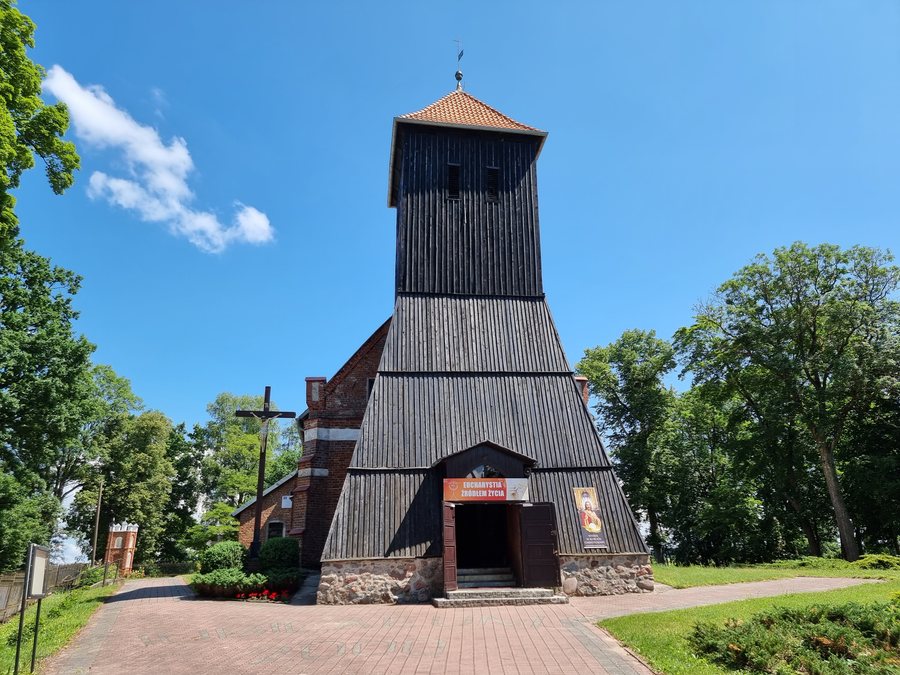
Klewki at a glance
Klewki was established on an isthmus between Lake Klebarskie and Lake Linowskie; a stream connects the two lakes. Its buildings include a 16th-century church, a palace dating from the mid-19th century and two chapels. Two route descriptions are also available for planning: for the red-marked Szlak 36, the length, difficulty and estimated travel time are given. The Linowska Struga route is described by its sequence of lakes, the Struga and canals.
Which historic buildings define Klewki?
The church in Klewki dates from the 16th century and features Baroque polychrome decoration. Its furnishings include a late Gothic crucifix from the 16th century and a folk-style Pietà from the same century. The Baroque high altar of the Church of Saints Valentine and Roch dates from the late 18th century. These different dates provide several points of reference if you are interested in the town’s architectural and art history.
The church acquired a wooden tower in the 19th century. Another historic building is the eclectic palace from the mid-19th century, which has a preserved park. The church and palace thus offer two distinct architectural points of reference: the church stands out for its long building history and individual furnishings, while the palace is notable for its eclectic style and its historic connection with the park.
What architectural details do the chapels have?
The two chapels in Klewki have two storeys and are built of exposed red brick. Each has a small niche and blind niches on the first floor; the second floor has an opening that is open on all four sides. These features make the chapels a subject in their own right alongside the church and palace: here, the focus is on the storey layout, materials and the design of the openings rather than on individual furnishings.
How do the routes described differ?
The red-marked Szlak 36 runs through Olsztyn, Szczęsne, Klewki, Klewki PKP, Kaborno, Nowa Wieś, Kopanki and Łajs, and possibly Małszewo. The route is 25.5 kilometres long, moderately difficult and hilly; it is marked on the ground. The estimated travel time is given as two hours and 50 minutes. If you use these details for planning, check local trail conditions in advance.
The Linowska Struga route starts in the village of Klewki and goes via Lake Linowskie, the Linowska Struga, Lake Klebarskie and Lake Silickie. The described route then follows the Wiktorii Canal and the Kiermas Canal to Lake Bogdańskie. Unlike Szlak 36, this route description focuses mainly on the sequence of waterways and the route to the destination; no distance or travel time is specified. Therefore, compare the two descriptions using the planning details actually provided, not an assumed duration.
How can Klewki’s location be understood?
The historic location on an isthmus between two lakes is a distinctive geographical reference point. The stream connecting the two lakes is also part of this description. Together with the course of the Linowska Struga route, this creates a picture in which lakes, a watercourse and canals repeatedly feature as named landmarks. If you are considering Klewki as a place to stay, you can weigh these local and route-related features according to which of the described buildings or routes matter to your trip planning.
Discover more destinations: Pluski, Dorotowo, Siła, Swaderki, Naterki, Tumiany, Myki, Rzeck.
FAQ
What historic details does the church in Klewki offer?
The church dates from the 16th century and features Baroque polychrome decoration. The furnishings mentioned include a late Gothic crucifix and a folk-style Pietà from the 16th century, as well as a Baroque high altar from the late 18th century. The wooden tower was added in the 19th century.
What is known about the two chapels?
Both chapels have two storeys and are built of exposed red brick. The first floor has a small niche and blind niches; the second floor has an opening that is open on all four sides.
What planning details are available for Szlak 36?
The red-marked route is 25.5 kilometres long, moderately difficult and hilly. The estimated travel time is two hours and 50 minutes; if planning based on these details, you should check local trail conditions.
To the main travel overview: Olsztyński.

