
Grunwald
Accommodation in Grunwald
Grunwald is closely associated with the battle of 15 July 1410. The extensive battlefield, a monumental memorial complex, and the ruins of a battle chapel provide the area with several distinct historical points of reference.
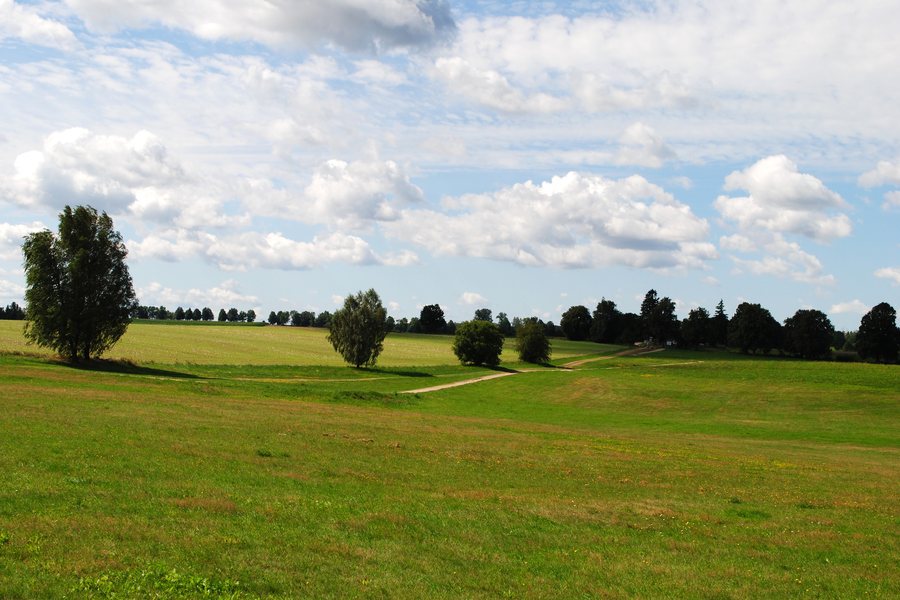
Grunwald at a glance
The battlefield lies between Stębark, Grunwald, and Łodwigowo. Every year in July, the Grunwald fields host a battle reenactment commemorating the conflict of 1410. The memorial complex on Victory Hill was unveiled in 1960; the ruins of the battle chapel lie about 500 metres west of the memorial hill.
What is part of Grunwald’s historic battlefield?
The battlefield is an extensive area, not just a single memorial site. The battle took place here on 15 July 1410. The battle chapel is particularly important for establishing the exact location of the events: its ruins are considered the only reliable evidence that makes it possible to pinpoint the site of the battle in this area. The surviving walls are from a 15th-century chapel.
After the Second World War, the ruins were studied archaeologically and opened to visitors. Today, they are permanently secured. The memorial hill is another point of reference for orientation: the chapel ruins lie about 500 metres to its west. Beside the entrance to the chapel is a stone traditionally called Jagiełło’s Stone by the people of Masuria.
What does the memorial complex on Victory Hill feature?
Unveiled in 1960, the memorial complex consists of an obelisk, eleven masts, and an amphitheatre. A relief map in the amphitheatre shows the armies’ positions before the battle began. The eleven masts are almost 30 metres high and bear the insignia of the victorious Polish, Lithuanian, Ruthenian, and Czech troops.
Below the amphitheatre are a small museum and a cinema. A battle sequence from Aleksander Ford’s film “The Teutonic Knights” is shown there. The memorial hill thus brings together different forms of remembrance: the relief map showing the armies’ positions, the insignia of the victorious troops involved, and a cinematic depiction of the battle.
What other historic sites are listed?
Grunwald’s historic sites also include a manor house and farm complex dating from the 19th and 20th centuries. The battlefield has been listed in Poland’s register of monuments since 17 February 1984, under registration number A-523. The ruins of the battle chapel are listed under registration number 572, dated 4 April 1960. The manor house and farm complex has been listed since 4 May 1998, under registration number 2904.
These sites represent different historical layers: the battlefield points to the events of 1410, the chapel ruins to a building from the 15th century, and the manor house and farm complex to the centuries that followed. The register dates refer to the respective entries.
When does the battle reenactment take place?
The battle reenactment commemorating the conflict of 1410 takes place every year in July on the Grunwald fields. It is therefore a recurring part of local remembrance. If you plan to visit Grunwald for this event, consider July when choosing your travel dates.
If you would like to compare other destinations independently, also see Pojezierce, Słonecznik, Kretowiny, Miłomłyn, Morag, Międzylesie, Stare Jablonki, and Lubajny.
FAQ
When did the Battle of Grunwald take place?
The battle took place on 15 July 1410.
What does the relief map in the amphitheatre show?
It shows the armies’ positions before the battle began.
Where are the ruins of the battle chapel?
They lie about 500 metres west of the memorial hill.
For the overview of the wider travel area: Ostródzki.

.jpg)