
Mscice: Village Park, History and Routes
Accommodation in Mscice
Mscice brings together historical landmarks and several routes through and between places. At its center is the village park, with two cemeteries from different periods; the history of the village also includes a parish church, the remains of a medieval settlement and a regional architectural tradition. If you are looking for a hotel in Mscice, you can consider whether your focus is on these cultural themes or on the routes described here. The routes differ in their geographical orientation.
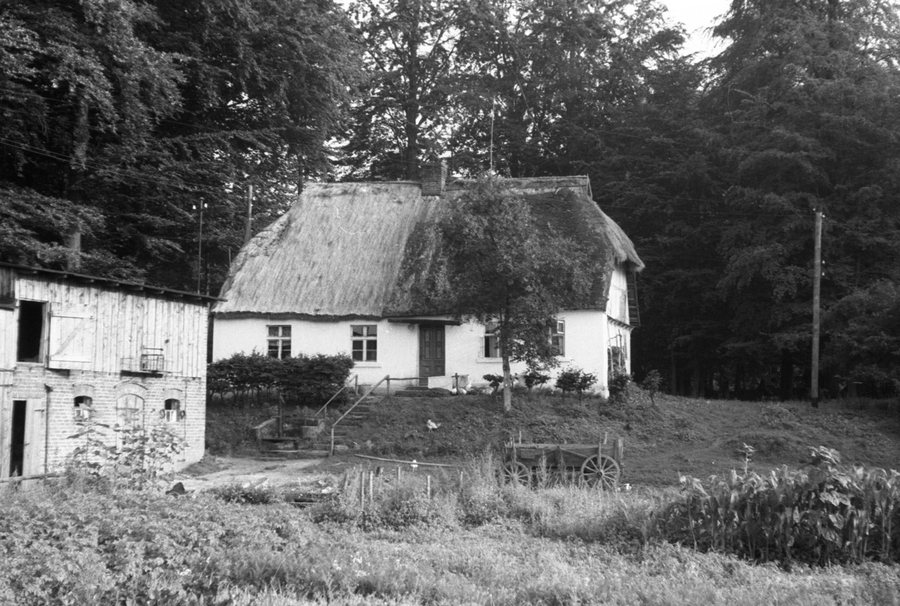 Dom szachulcowy o dachu przyczółkowo-naczółkowym krytym strzechą, tynkowany - Mścice - 003619n.jpg
Photo: Józef Burszta via Source, CC BY-SA 3.0 pl
Mscice at a glance
- The parish church of św. Antoniego Padewskiego was consecrated on October 26, 1996.
- Archaeological site 170 is the remains of a medieval settlement.
- The village park is in the center of the village and includes historic cemeteries.
- The foot and cycle path between Mscice and Mielno is about 4 kilometers long and open for use.
What historical themes shape Mscice?
The parish church of św. Antoniego Padewskiego was consecrated on October 26, 1996. Another point of reference in time is archaeological site 170, the remains of a medieval settlement. Also part of Mscice’s heritage is its rural architecture, which belonged to the Jamneńska group and formed a distinct cultural enclave until the end of the 19th century. These facts span medieval settlement, a regional architectural tradition and a specific date in the more recent history of the village. Visitors choosing Mscice for its cultural landmarks will encounter different periods and types of historical evidence.
What will you find in the village park?
The village park is in the center of the village, has been revitalized and includes historic cemeteries. One is an Evangelical cemetery dating from around the turn of the 20th century. Nearby is a family cemetery from the first quarter of the 20th century. The two sites therefore differ both in their designation and in their period. Together, they form two distinct historical points of reference within the centrally located park.
How do the routes around Mscice differ?
The foot and cycle path between Mscice and Mielno is about 4 kilometers long. It has been completed, passed its technical inspection and opened for use. Both residents and people spending their holidays by the sea use it. Its approximate length provides a guide for rough route planning without specifying a particular walking or cycling time.
Other route descriptions cover different geographical paths. The Jamneński Trail loops around Lake Jamno from the south and passes through Mscice. The Spichlerzy Trail also passes through Mscice and continues through Biesiekierz, Dunowo, Jarzyce, Świeszyno and Manowo. Thus, one route focuses on the southern circuit of the lake, while the other runs through several named places. When planning, you can decide whether to consider a connection between Mscice and Mielno or one of the longer routes.
The planned renewal of the route between Koszalin, Mscice and Mielno is intended to improve pedestrian and cyclist safety and make travel more comfortable. This goal adds a practical aspect to the information about routes connecting the places.
FAQ
What does site 170 refer to?
Archaeological site 170 in Mscice is the remains of a medieval settlement.
Which cemeteries are in the village park?
The park contains an Evangelical cemetery dating from around the turn of the 20th century and a family cemetery from the first quarter of the 20th century.
When was the parish church consecrated?
The parish church of św. Antoniego Padewskiego in Mscice was consecrated on October 26, 1996.
For the broader travel overview: Stoisław.

