
Boșorod: Dacian Fortress, Customs and Routes
Accommodation in Boșorod
Culture and Traditional Customs
The municipality of Boșorod is known for preserving traditional customs and practices. The traditional Nedeia in Boșorod takes place on the first Sunday after the feast of Saint Peter. The Călușer tradition is maintained in all the villages of the municipality. During the Călușer, unmarried young men wear a Călușer costume with bells on their boots and a tricolor sash; on Christmas Day, they go through the villages of the municipality.
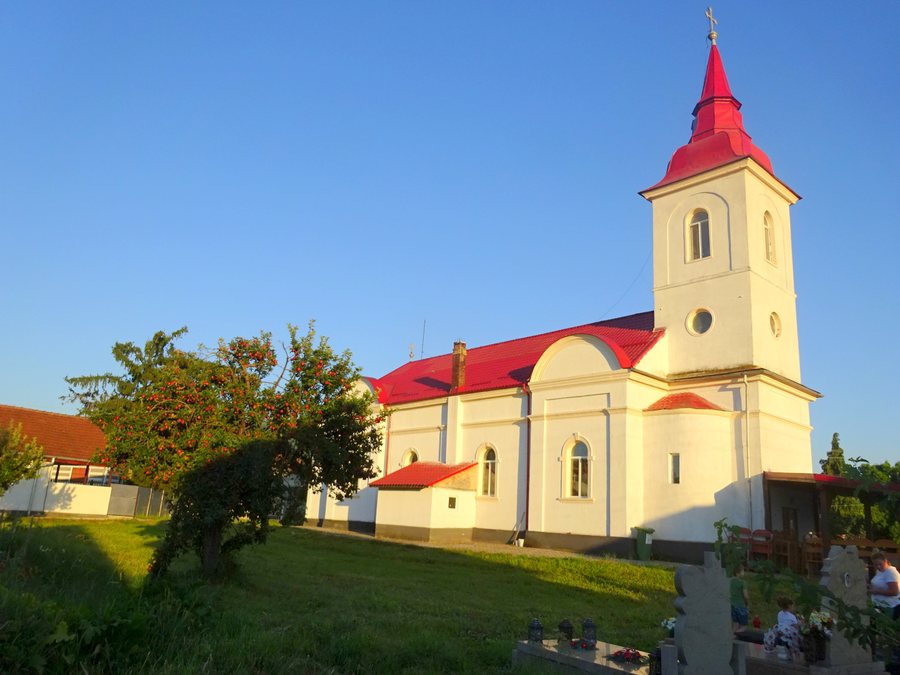 File:Biserica Adormirea Maicii Domnului din Boșorod (1).jpg
Photo: Țetcu Mircea Rareș via Wikimedia Commons, CC BY-SA 4.0
File:Biserica Adormirea Maicii Domnului din Boșorod (1).jpg
Photo: Țetcu Mircea Rareș via Wikimedia Commons, CC BY-SA 4.0
Pizaraii is a local custom that is still practiced today: children go through the village wearing masks, wish people prosperity and fill their pockets with apples and colaci. Traditional local crafts include weaving on wooden looms, making wool carpets and sewing traditional costumes. Groups of flute players are known on the Platforma Luncanilor. The inhabitants of Boșorod municipality currently take their livestock to the traditional sheepfold in Valea Călianului.
Fortress and Crafts
The Dacian fortress of Piatra Roșie is located within the territory of Boșorod municipality in Hunedoara County. Piatra Roșie is a submontane elevation 832 meters high in the Munții Orăștiei area. The historical access to the fortress was through the northeastern corner tower. A 3-meter-wide, stepped path paved with stone slabs led to it.
In the vicinity of Boșorod lies the preserved and functioning mill in the Luncani Valley, which was rebuilt in 1940. The mill has a 2.5-meter water wheel and a 1.5-meter millstone wheel. The combination of the fortress complex, traditional work and regional customs gives the historical references a concrete scale in each case.
Nature Park and Routes
In Grădiștea Muncelului–Cioclovina Nature Park, the fully protected zone includes the Șura Mare–Cioclovina–Piatra Roșie area. The protected area can be reached via national road DN66 from Călan in the direction of Boșorod and Luncani.
The BR route connects Ohaba-Ponor with the villages of Luncani and Boșorod, passes by Peștera Șura Mare and runs through the Ponorirci–Cioclovina karst area. Between Ohaba-Ponor and Boșorod, it is approximately 25 kilometers long, takes 9–10 hours on foot and follows asphalt, ridge roads and dirt tracks suitable for MTB. The information on length, walking time, terrain and landscape features helps compare different route lengths and forms of activity conceptually. The combination of asphalt, ridge roads and dirt tracks suitable for MTB describes different sections and means of travel along the same route. Together with the approximate length and stated walking time, this provides a clear framework for considering the route's overall scale and its different surfaces separately.
For a stay in Boșorod, hotel offers can be interpreted differently based on travel dates, room category and cancellation policies. The date indicates the desired period, the room category the specific type of offer, while the cancellation policies define the applicable booking terms. These three details remain clearly separate from one another.
For the broader travel overview: Bosorod.

.jpg)