
Săcărâmb: Churches, Mining and Mineral History in the Apuseni Mountains
Accommodation in Săcărâmb
The present-day Roman Catholic church of Săcărâmb was built in 1777 from local volcanic rock and consecrated on December 8, 1777.
Culture
A preserved mural medallion in the Roman Catholic church depicts mining emblems with two hammers and a miner's lamp. The church stands on the volcanic cone of Calvaria mică.
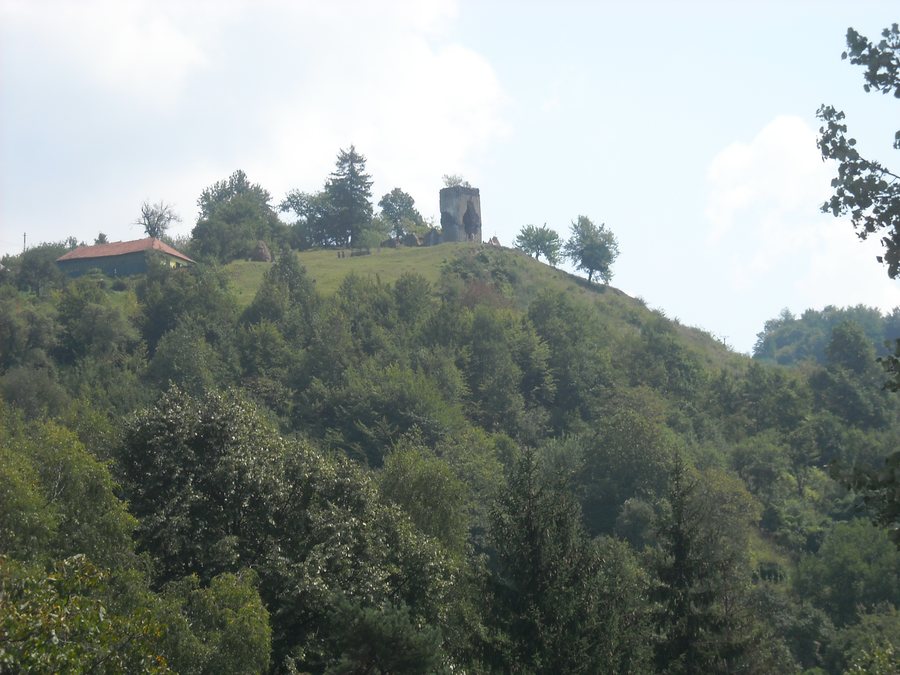
The Orthodox church of Săcărâmb was completely renovated in 1980. Its ruins still stand on the ridge where the former Greek Catholic church Biserica trăsnită had been built.
Different forms of cultural heritage therefore come together in Săcărâmb: a consecrated church building, an image motif connected with mining, a volcanic cone and the visible remains of a former church site. The details can be considered separately and together form a multifaceted picture of the area's history.
History
The first mine adit was established in Săcărâmb in 1746. Between 1748 and 1876, more than 40 tonnes of gold were extracted from the Săcărâmb deposit.
Between 1802 and 1814, Săcărâmb was a center of the Romanian Enlightenment. The “Crucea Roșie” in Săcărâmb is a landmark on the route taken by the revolutionaries of 1848 to Alba Iulia.
The historical information spans the period from early mining activity and gold extraction to the political and intellectual developments of the 19th century. Both economic-historical and cultural-historical perspectives are therefore relevant when examining the area, without either replacing the other.
In a quantitative assessment of scientific, educational and tourism values, Săcărâmb was among the highest-ranked Romanian mineral type localities. The Săcărâmb/Nagyág mineral type locality is associated with eight new minerals.
Mineralogy complements the historical perspective with an independent scientific approach. Alongside the dates relating to the use of the deposit, the scientific classification and the mineral discoveries associated with Săcărâmb/Nagyág are therefore also central. Those reading the area's history can compare these topics as separate but closely related areas of focus.
Nature
Săcărâmb is part of the Golden Quadrilateral of the Apuseni Mountains.
The Emperor Franz Joseph Spring in Silver Forest is a local excursion destination. The rest of the route to Silver Forest takes about five minutes on foot along an unpaved path of stone and mud.
The connection with nature is evident here on two different scales: the regional classification refers to the Apuseni Mountains, while Silver Forest is associated with a specifically named spring and a short but unpaved footpath. This makes it possible to distinguish between a geographical overview and an individual section of the route when planning a day trip.
When planning a stay in Săcărâmb, hotel offers can be compared based on travel dates, room category and cancellation conditions. For personal selection, these three details remain separate decision points.
More destinations
The same municipality also includes Vărmaga.
To the overarching travel overview: Comuna Certeju De Sus.

