
Banpotoc: Garden, Archaeology and Landscape
Accommodation in Banpotoc
Banpotoc combines tangible cultural sites with a religious tradition and a landscape whose destinations lie at varying distances from one another. I Giardini di Zoe became a tourist attraction in 2018.
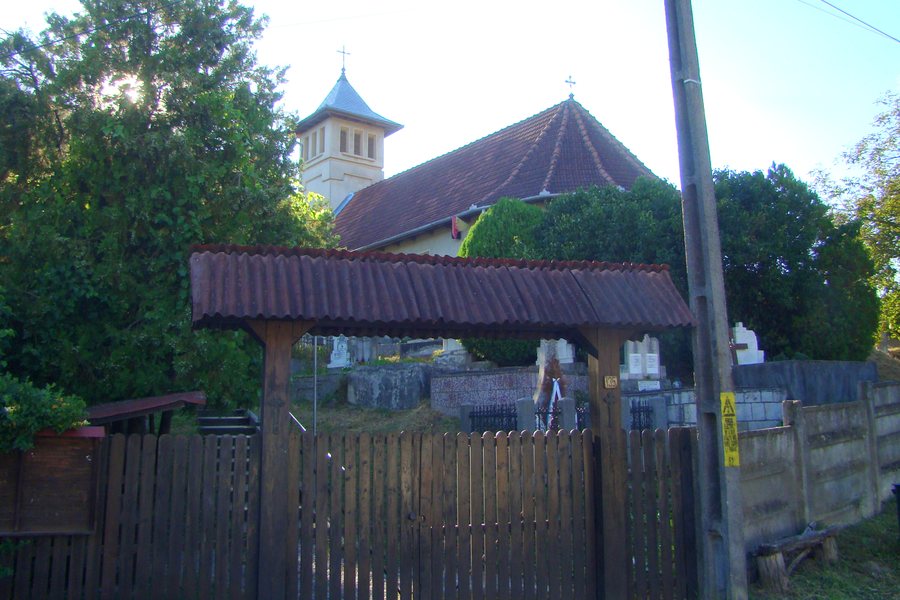 File:Biserica Sfinții Arhangheli din Banpotoc (6).jpg
Photo: Țetcu Mircea Rareș via Wikimedia Commons, CC BY-SA 4.0
File:Biserica Sfinții Arhangheli din Banpotoc (6).jpg
Photo: Țetcu Mircea Rareș via Wikimedia Commons, CC BY-SA 4.0
Culture
At I Giardini di Zoe, plant life is combined with decorative objects brought from Italy. The materials and elements include travertine, the volcanic stone peperino, and restored cast-iron objects. The combination of living plants, worked stones and restored cast-iron objects defines the distinctive design of this garden, without the individual components losing their own origins and names.
The garden thus brings together different material and natural references in one setting: the plants are part of the living design, while travertine, peperino and cast iron are added as named design elements. The archaeological settlement complements this description of the garden with an independent historical reference.
Banpotoc is also home to the archaeological settlement “Aşezarea Coţofeni de la Banpotoc”. Those who enjoy considering cultural themes side by side can view the landscaped garden and the archaeological site as two different approaches to Banpotoc’s history and present.
Spirituality
The religious side of Banpotoc includes the church in the Banpotoc parish, which bears the name “Sfinții Arhangheli Mihail și Gavriil”. Connected with the place is the tradition “Taina Sfântului Maslu”: It has continued for more than 40 years, was initiated in the 1980s, and is carried out according to a programme established at the beginning of Lent in thirteen churches in eleven settlements in the Mureș Valley.
The church and the custom thus identify two specific religious points of reference in Banpotoc: a named church site and a tradition that has continued for decades and extends across a wide area. The time reference, programme and spatial extent all belong to the same tradition. You can consider religious local references and cultural attractions as different themes without interpreting them as a single shared activity.
When choosing a hotel in Banpotoc, the offer pages primarily allow you to compare travel dates, room category and cancellation conditions. These three details form a separate practical level alongside the cultural, religious and geological themes of the destination.
Landscape
The Banpotoc–Cărpiniș travertine deposit lies between Banpotoc and Cărpiniș, approximately 1 km north of the Mureș. The Banpotoc travertine quarry can be reached via mountain paths. The geological references range from a deposit located between two settlements to a named quarry accessible via mountain paths.
To understand the landscape, the names and geographical ranges should be read separately: the deposit describes a positional relationship, the quarry an access route, the hill the immediate surroundings, and the three mountains the wider regional area.
The geographical ranges clearly differ: Dealul Uroiului, a hill, lies in the immediate surroundings of Banpotoc. Hunyad Castle, a castle, lies in the wider regional area around Banpotoc. Also in the wider regional area are Dealul Cutinului, a mountain, Măgura Sârbii, a mountain, and Vârful Fericellii, a mountain.
For the higher-level travel overview: Hărău Commune.

.jpg)