
Sântămăria-Orlea: Church, Castle and Fossils
Accommodation in Sântămăria-Orlea
In Sântămăria-Orlea, architectural history, paleontology and the regional landscape stand side by side as clearly distinguishable themes.
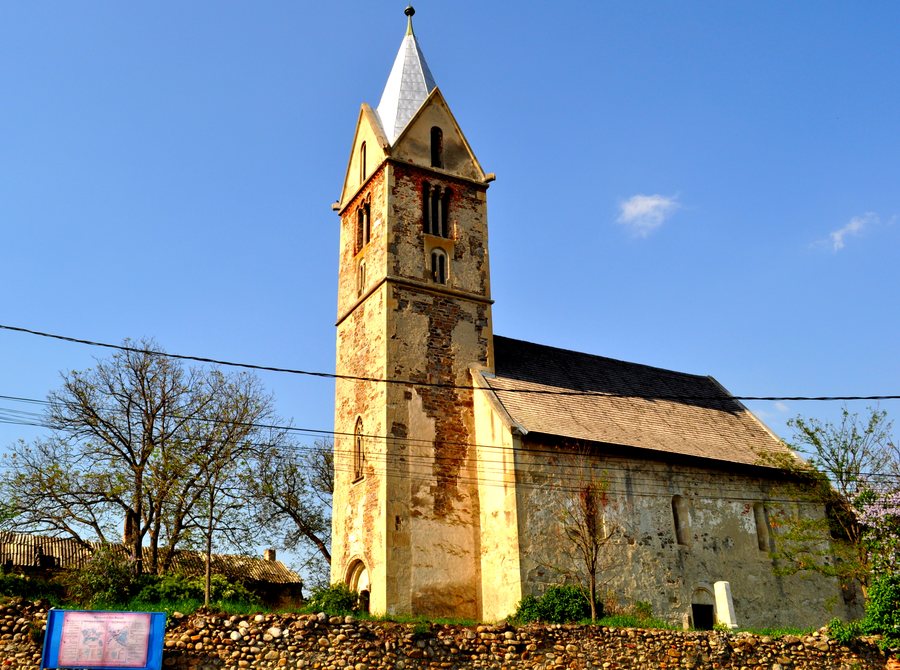 File:Biserica cnezilor Cândea din Sântămăria-Orlea.jpg
Photo: Țetcu Mircea Rareș via Wikimedia Commons, CC BY-SA 4.0
File:Biserica cnezilor Cândea din Sântămăria-Orlea.jpg
Photo: Țetcu Mircea Rareș via Wikimedia Commons, CC BY-SA 4.0
Culture and History
The Reformed Church of Sântămăria-Orlea was originally an Orthodox stone church. At the end of the 13th century, knyazs of the Cândea family built it in the Romanesque style.
Kendeffy Castle is also located in Sântămăria-Orlea. The Kendeffy family built it in 1782. Near the center of the village, the castle stands above the road connecting Râu de Mori and Sântămăria-Orlea.
The ruins of the watchtower “Turnul lui Vece” stand on the steep, rocky ridge of Orlea Hill. Historically, Turnul lui Vece controlled access through the Strei Valley toward Hațeg and Banat.
Dacia is an ancient site in the wider regional surroundings of Sântămăria-Orlea.
For planning purposes, the historical information can be organized by structure, period and geographical connection. This keeps the local history and the sites in the wider regional surroundings legible as distinct focal points.
When selecting sites, a distinction can be made between the village and its wider regional surroundings. The church, castle and watchtower represent different historical points of reference in Sântămăria-Orlea, while Dacia broadens the geographical scope to include an ancient site. This arrangement keeps local architectural history separate from regional excursion destinations.
Nature
The Sânpetru fossil site covers 5.0 ha and contains fossils of dinosaurs, crocodiles and turtles.
The site is a protected natural area in IUCN Category IV and also a paleontological nature reserve. It is the source of the first dinosaur fossils that put Țara Hațegului on the world map of paleontology.
Piatra Meteștilor, a summit, lies in the wider regional surroundings of Sântămăria-Orlea. Știrbina, Ascuțit and Măgura Zimbrului are also summits in these wider regional surroundings.
The geographical classification supports objective travel planning: nearby structures, the Sânpetru fossil site and summits in the wider regional surroundings represent different geographical levels of reference.
This means that the nature-related topics comprise two distinct focal points. The Sânpetru fossil site belongs to the paleontological aspect of the regional surroundings, while the named summits belong to the landscape. Including both allows natural-history and landscape destinations to be considered as separate themes of a trip rather than combining them into a single nature theme.
Trails
Valea Dinozaurilor is a themed trail that leads from Sântămăria-Orlea through Sânpetru to Ohaba-Sibișel. The route can be completed on foot, by bicycle or by car.
The three modes of transport provide a direct basis for comparison when planning your own day, without limiting the route to a single way of traveling.
For comparing hotels in Sântămăria-Orlea, you can review travel dates, room category and cancellation policies side by side on offer pages. Such an objective comparison supports planning your accommodation, while the choice of themes to visit can be made independently of it.
Casa Dinozaurilor Pitici in Sânpetru, in the municipality of Sântămăria-Orlea, shows visitors what takes place at a paleontological excavation site and presents a reconstruction of Elopteryx nopcsai.
For the overarching travel overview: Santamaria - Orlea.

