
Dorna Arini: Bistrița, Mountain Landscapes and Culture
Accommodation in Dorna Arini
Those who consider Dorna Arini as a travel destination encounter several dimensions: the river as a geographical line, the gorge as a distinctive landform, the mountains as named destinations, and cultural sites with different historical associations. For personal travel planning, these focal points can be organized by landscape, activity or history.
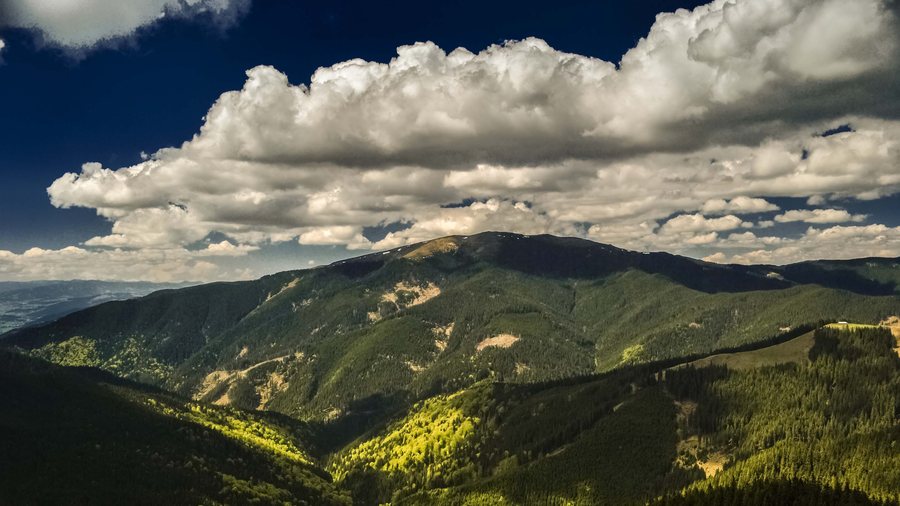 File:Comuna Dorna - Arini, Romania - panoramio (1).jpg
Photo: Mihai Burlacu via Wikimedia Commons, CC BY-SA 3.0
File:Comuna Dorna - Arini, Romania - panoramio (1).jpg
Photo: Mihai Burlacu via Wikimedia Commons, CC BY-SA 3.0
Nature and Landscape
The Bistrița crosses the commune of Dorna-Arini from west to east. The Zugrenilor Gorge is a four-kilometre-long gorge carved by the river through crystalline schist and crystalline limestone. Its very steep slopes reach heights of 200 to 300 metres; the distinctive rock formations include Colțul Acrii, Piatra lui Osman, Grindul Pușcatei and Stânca Coifului.
The Pietrosul Broștenilor–Zugrenilor Gorge Nature Reserve is a protected area of national interest. It is assigned to Dorna-Arini in Suceava County and lies on the administrative boundary between the communes of Dorna-Arini and Crucea. The Zugrenilor Gorge can be crossed via the paved DN 17B road.
The Pietrosul Bistriței peak, Muntele Pietrosul mountain, Giumalău mountain and Oușoru peak are located around Dorna-Arini. The “Dorna-Arini – culmea Munţilor Bistriţei – Panaci” cycling route follows the ridge of the Bistrița Mountains through clearings and pastureland. Along the way, it offers views of the Giumalău Massif to the northwest and the Călimani Mountains to the southwest.
For a personal comparison, you can consider the landform, route type and geographical setting separately. The gorge, nature reserve, mountain destinations and cycling route therefore stand as distinct focal points alongside one another.
When choosing a hotel in Dorna Arini, you can compare travel dates, room categories and cancellation policies on the respective accommodation pages. Check this information side by side before booking and note the criteria that are important for your trip. Such a comparison can be tailored to your own dates and the desired room type.
History and Culture
In 1775, the Bistrița River became a border: the northern part of the commune lay in the Austro-Hungarian Empire, while the southern part, 75% of the commune’s area, belonged to Moldavia. This situation lasted for 143 years, until after the First World War.
On Dealul Vultur south of the Bistrița River and on Dealul Bărnărel north of the Bistrița, hundreds of metres of trenches dug by soldiers by hand bear witness to the wartime period.
The Acoperământul Maicii Domnului Monastery is located in Gheorghițeni, in the commune of Dorna-Arini in Suceava County. In Dorna-Arini, the monastery has a 60-metre-high wooden bell tower.
The ethnographic collection “Pădurea, leagăn de civilizație a răzeșilor Dornei” is a permanent exhibition on the upper floor of the “Savin Alexievici” Cultural Centre in the village of Cozănești, in the centre of the commune seat.
In the wider regional area around Dorna-Arini are the Schitul Rarău Monastery and the Biserica Ortodoxă Breaza church.
For the overarching travel overview: Comuna Dorna - Arini.

.jpg)