
Lezhë: Hotels, Culture and Nature
Accommodation in Lezhë
At the western edge of Lezhë, surviving traces of 5th-century walls, fortification walls and the acropolis of ancient Lissus on a hill bear witness to the area's long history. Lezhë Castle has Illyrian origins and was rebuilt and fortified during the Roman, Byzantine and Ottoman periods. Within the castle, visitors can explore historical ruins. From here, panoramic views extend over the Zadrima plain, the Drin and the city of Lezhë.
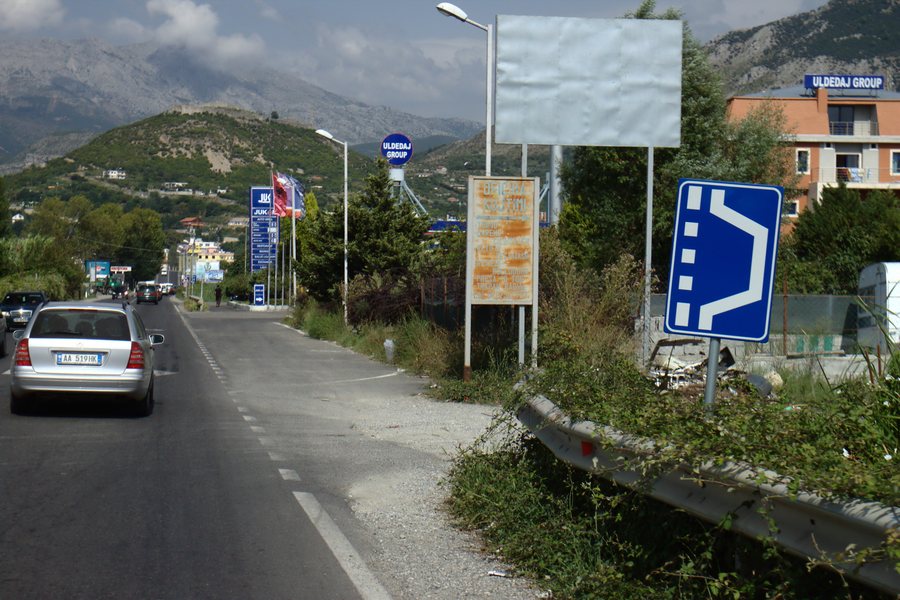 File:Lezhë, hlavní silnice II.jpg
Photo: I would appreciate being notified if you use my work outside Wikimedia. More of my work can be found in my personal gallery . via Source, CC BY 3.0
File:Lezhë, hlavní silnice II.jpg
Photo: I would appreciate being notified if you use my work outside Wikimedia. More of my work can be found in my personal gallery . via Source, CC BY 3.0
Culture
Visitors can also encounter distinctive evidence of the city's history in the historic centre and along the Drin. The Mlikaj House in the Skënderbeg neighbourhood on the Drin is a two-storey urban vernacular residence dating from the 19th century. Its walls, roof, windows and doors have architectural value. Lezhë's Old City Bridge is the oldest bridge built over the Drin and has historical and artistic value for visitors.
The Ethnographic Museum of Lezhë preserves and presents the tangible and intangible heritage of the Lezhë region. Its collection includes 843 original objects, including folk costumes, household furnishings, tools, musical instruments and handmade weapons. Approximately 315 objects are on public display. The permanent exhibition represents Malësia e Madhe, Mirdita and Zadrima.
History
The Skanderbeg Memorial stands at the site where the Assembly of Lezhë took place on 2 March 1444 and the League of Lezhë was founded. It was built on the ruins of St Nicholas' Church, where Skanderbeg was buried after his death on 17 January 1468. The memorial contains 25 bronze shields depicting Skanderbeg's 25 most important battles.
The statue of Gjergj Kastriot Skanderbeg stands in the historic centre of Lezhë, near the site of the assembly of the League of Lezhë. The bronze statue is 3.7 metres high and depicts him at the age of 39, when he convened and organised the assembly of the League of Lezhë. It is a historic and cultural landmark of Lezhë and is significant to both local and foreign visitors. The Archaeological Museum of Lezhë was built on Lezhë Castle and officially opened.
Nature
The area around Lezhë includes the nearby Kune-Vain Lagoon. It is approximately 8 km from Lezhë and is Albania's first protected area. The nearby InfoKulla–Kune-Vain visitor information centre is located at the entrance to the protected area. Maps and information about nature trails are available there.
The Kune-Vain Lagoon offers day trips featuring environmental education and wildlife exploration. In the nearby lagoon area, visitors can also explore the surroundings by bicycle. The landscapes of Lezhë and its surroundings also offer opportunities for walking and hiking. Thus, alongside the historic sites within the city and at the castle, there are also nature-based activities in the surrounding region.
Regional Traditions
An old tradition in Fishtë, Kallmet and the surrounding area is the family production of rakija, preserved from generation to generation. Rakija is made there using traditional methods: the fruit ferments naturally and is then distilled in traditional copper stills.
The nearby Church of Saint Euphemia in Kallmet was first mentioned in 1343. In Fishtë, in the Bashkia Lezhë, is the Oazi Fishtë restaurant. It offers traditional Albanian cuisine with meat, fish and village dishes, as well as international specialities in natural surroundings.
If you would like to explore more destinations, you can find Shëngjin, Rubik here.
For the higher-level travel overview: Lezhë County.

