
Dragoman
Accommodation in Dragoman
Dragoman combines a protected wetland with a rich Orthodox cultural history. The municipality therefore offers different points of interest for planning your trip: nature around the Dragoman Marsh, churches and monasteries, and an annual folklore festival.
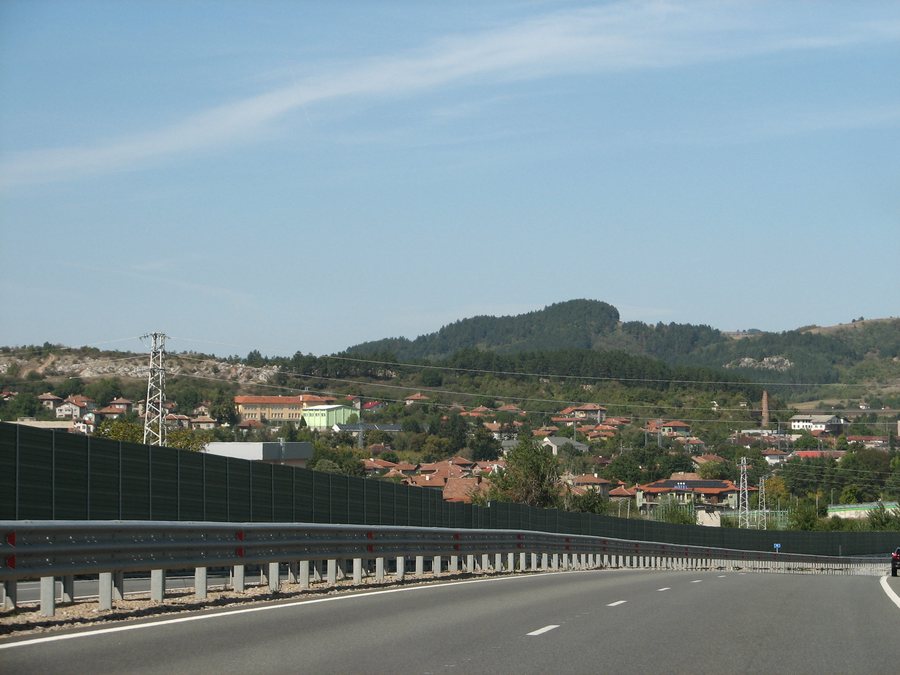
Dragoman at a glance
The Dragoman Marsh is a wetland with typical marsh vegetation. Open water remains year-round in some places. The protected area of the same name extends across the territories of the town of Dragoman and the village of Golyamo Malovo. It was designated to protect important habitats, protected species, natural ecosystems, and biodiversity.
The wetland lies entirely within the Natura 2000 site “Dragoman” (BG0000322) and partly within the “Rayanovtsi” bird protection area (BG0002001). These protected-area designations reflect the landscape’s ecological focus; for orientation, it helps to consider Dragoman as both a nature and a cultural destination.
What makes the nature around Dragoman distinctive?
With its wet habitats and open water that remains year-round in some places, the marsh differs from a landscape shaped solely by dry terrain. The designated protected areas cover the wetland and preserve habitats, species, ecosystems, and biodiversity. If you are particularly interested in nature, you can take this into account when planning a stay in Dragoman.
The Tchepan also offers a specific destination for outdoor activity: Petrovsky Krast is the highest point in the Tchepan Mountains and can be reached in less than two hours. An Iron Age rock sanctuary dedicated to the cult of Sabazios-Dionysus stood on the summit of Tchepan and remained in use into antiquity. Landscape and history meet at this named location, though this does not provide information about a specific route.
Which churches and monasteries define the municipality?
The Dragoman municipal area is known as “Little Holy Mountain” or “Little Athos” because of its concentration of Orthodox churches. The churches are often in hard-to-reach locations. The municipality has five places of worship named Sveta Petka. The Church of Sveti Spas in the village of Vasilovtsi is one of the five cultural landmarks in the Dragoman municipality recognized for their artistic and historical value.
Berende is home to the medieval Church of “Saints Peter and Paul,” with fully preserved interior frescoes. Its exact date is unknown; estimates range from the early 13th to the mid-14th century. Berende is also home to a centuries-old oak tree entwined with a votive cross dedicated to Saint Dimitar.
The Nedelishki Monastery of “Sveti Atanassi Veliki” lies between the villages of Dreatin and Nedelishte. Its history spans more than ten centuries; as a cultural and historical landmark, it adds to the municipality’s collection of religious sites. The municipality of Dragoman’s first monastery school was founded in the monastery’s monks’ wing.
Another historic site is the Tcheparlyanski Monastery, on the right bank of the Nishava, about 2 km east of Tcheparlyantsi. It stands on the site of an early Christian sanctuary. Two Byzantine tombstones dating from the 6th to 7th centuries were found in its foundations.
When does the folklore festival take place?
The international folklore festival “Nishavski Horovod” takes place every year on May 24 and 25, simultaneously in Bulgaria and Serbia. Dragoman is the Bulgarian festival center, while Dimitrovgrad is the Serbian one. If you want to plan your trip around the festival, the dates provide a specific point of reference; the two towns have different roles within the festival.
Where can you find information about local traditions?
In the village of Nesla, a visitor center serves as a source of tourist information. It also provides space for exhibitions and demonstrations of local crafts, customs, rituals, culinary traditions, and folklore. This offers a distinct way to explore the municipality’s cultural life and complements its historic churches and monasteries with insights into local everyday life.
For a town view of Dragoman, you can also visit the page for the town of Dragoman. Other destinations in the same broader area include Elin Pelin, Kostinbrod, Samokov, Mirkovo, Zlatitza, Gorna Malina, and Koprivshtitza.
FAQ
When does “Nishavski Horovod” take place?
The international folklore festival takes place every year on May 24 and 25, simultaneously in Bulgaria and Serbia. Dragoman is the Bulgarian center, while Dimitrovgrad is the Serbian one.
What is special about the Dragoman Marsh?
Typical marsh vegetation characterizes the wetland, and open water remains year-round in some places. The protected area covers the territories of Dragoman and Golyamo Malovo.
What is known about the Church of “Saints Peter and Paul”?
The medieval church in Berende has fully preserved interior frescoes. Its exact date is unknown; the estimates provided range from the early 13th to the mid-14th century.
What does the visitor center in Nesla offer?
It serves as a source of tourist information and provides space for exhibitions and demonstrations of local crafts, customs, rituals, culinary traditions, and folklore.
For the broader travel overview: Sofia Province / Sofia.

