
Svishtov on the Danube: Culture and History
Accommodation in Svishtov
Svishtov brings together churches, historic educational and commercial buildings, and museums covering a range of cultural and historical subjects. The town is also surrounded by the hilly landscape along the Danube and destinations nearby, allowing you to tailor your stay to your interests in architecture, art and regional history.
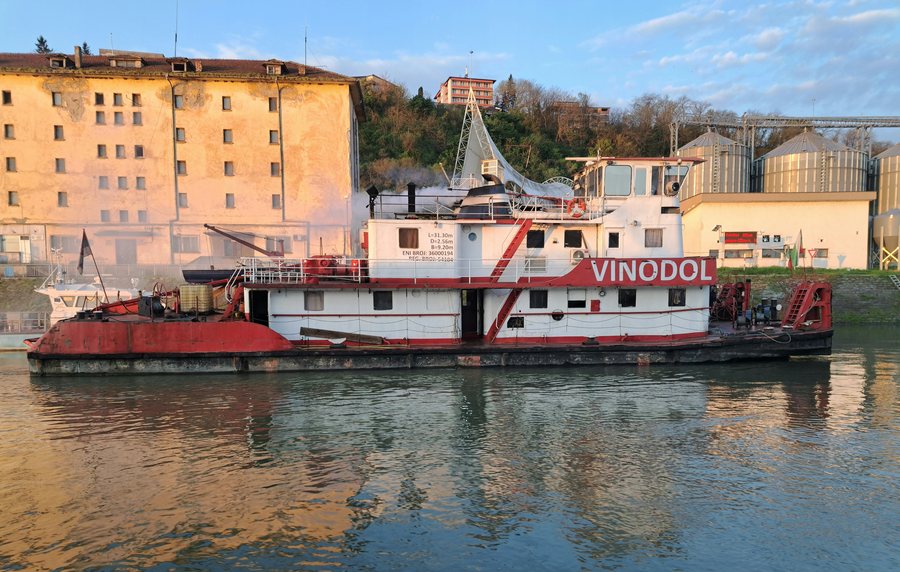 File:20230424.Svishtov an der Donau.-011.jpg
Photo: Bybbisch94, Christian Gebhardt via Wikimedia Commons, CC BY-SA 4.0
Svishtov at a glance
- Landscape: Svishtov lies on the Danube in hilly surroundings; here, the river reaches far into Bulgaria’s interior.
- Persina Nature Park includes areas within the lands of Svishtov and Oresh.
- Novae lies 4 km east of Svishtov; Pokrov Bogorodichen Monastery is 3 km to the southeast.
Which buildings shape Svishtov’s cultural history?
The Church of St. Dimitar is Svishtov’s oldest fully preserved architectural monument, dating from the late 15th or early 16th century. It also houses a wooden cross with rare, intricate carvings. The date and the named artwork offer two distinct points of reference for the building’s history.
The Church of the Holy Transfiguration has a different distinction: its iconostasis is considered the work of master craftsman Dencho from Tryavna. The First Bulgarian Choir also sang here for the first time. Alongside religious art, music history is therefore another subject associated with the churches.
The State Commercial School was completed in 1895. Its Baroque dome is topped by a figure of Hermes, and the building also housed the first steam heating system on the Balkan Peninsula. The First Bulgarian Community Centre was founded on January 30, 1856, and its building was designed in the Secession style. Together, these buildings illustrate different facets of the city’s educational, technological and cultural history.
What do the museums and cultural venues tell us?
The Nikolay Pavlovich Art Gallery houses more than 5,000 exhibits by hundreds of artists. Its cultural program includes exhibitions, literary readings, memorial events, competitions, chamber concerts, award ceremonies and creative workshops for children. If you would like to plan around a particular event, check the dates in advance.
The Aleko Konstantinov House Museum is included on Bulgaria’s list of 100 national tourist sites. It recreates the interior of a wealthy merchant’s house from the second half of the 19th century and displays photographs, books, letters and personal belongings of Aleko Konstantinov.
The Samokovliev House hosts the Svishtov Historical Museum’s “City Life and Culture” exhibition. The house also recreates the furnishings of townhouses from the late 19th and early 20th centuries. The Sladkarov House, by contrast, focuses on an ethnographic exhibition about the folk life and culture of the Svishtov region. Architecturally, it is classified as a Mountain Arbanasi-type house.
The Svetinikol School Complex offers a course in ceramics and applied arts. Since its restoration in 2010, it has also hosted educational initiatives, concerts, celebrations, exhibitions and literary readings. As individual events may vary, it is advisable to check specific dates before your trip.
Which destinations can complement your stay?
At the Historical Park “Kaleto,” an elevated viewing platform offers a view over the entire city and the Danube. For a different focus nearby, Novae—a Roman city dating from the 1st to the 4th century AD—lies 4 km east of Svishtov. It is designated a cultural monument of national importance.
Pokrov Bogorodichen Monastery lies 3 km southeast of Svishtov, in the wooded “Manastirski Trap” area. This means different points of interest sit side by side nearby: the Roman history of Novae and the monastery’s natural setting. Past editions of the Festival of Ancient Heritage in Svishtov and Novae have featured re-enactments of gladiator fights. If you would like to plan around the festival, check in advance whether dates have been announced for your travel period.
How can you tailor your hotel search to your stay?
If you are looking for a hotel in Svishtov, first decide whether your focus is on the city’s museums and buildings or also on nearby destinations.
Discover more destinations: Svishtov, Polski Trambesh, Gorna Oryahovitsa, Lyaskovets, Veliko Tarnovo, Elena, Pavlikeni, Zlataritsa
FAQ
Which historic buildings are particularly old?
The Church of St. Dimitar dates from the late 15th or early 16th century and is Svishtov’s oldest fully preserved architectural monument. The First Bulgarian Community Centre was founded in 1856, and the State Commercial School was completed in 1895.
What distinguishes the two house museums?
The Aleko Konstantinov House Museum recreates the interior of a wealthy merchant’s house from the second half of the 19th century. The Samokovliev House illustrates the furnishings of townhouses from the late 19th and early 20th centuries and houses the “City Life and Culture” exhibition.
Which destinations are near Svishtov?
The Roman city of Novae lies 4 km east of Svishtov. Pokrov Bogorodichen Monastery is 3 km to the southeast, in the wooded “Manastirski Trap” area.
For the broader travel overview: Veliko Tarnovo Province.

