
Belogradchik: Discover Natural Landmarks and Culture
Accommodation in Belogradchik
Belogradchik brings together protected natural landmarks, traces of early history and regional culture. A waterfall, lake, cave and museum offer different ways to plan your trip.
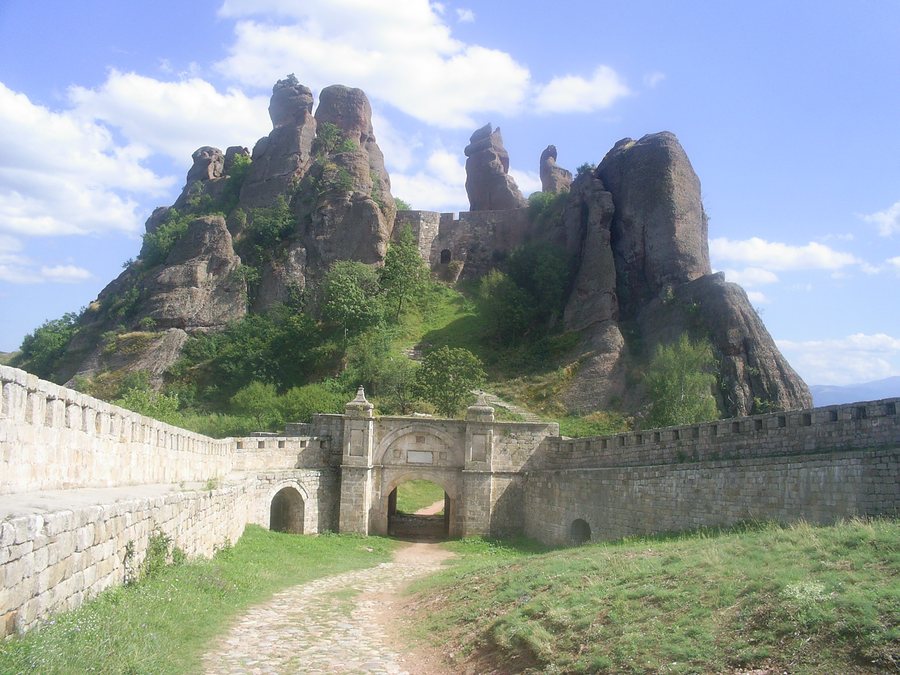
Belogradchik at a glance
- Bela Voda Waterfall is in a pine forest in the White Water area near Stakevtsi. The protected natural landmark covers 1.6 hectares.
- Magura Cave is in the area of Rabisha. It is a natural landmark with remarkable formations and prehistoric finds.
- Borov Kamak is a 1.3-hectare red sandstone formation in the area of Borovitsa. It is protected as a natural landmark.
- Rabisha Lake covers 325 hectares and is Bulgaria’s largest tectonic lake. It is near Magura Cave.
Which natural landmarks define the area?
The natural attractions differ in form and scale. Bela Voda combines a waterfall with a pine forest; the protected area covers 1.6 hectares. Borov Kamak, by contrast, is a 1.3-hectare red sandstone formation. Its protected status serves to preserve remarkable geological and botanical features that are of interest to tourism. The Belogradchik Rocks are also designated as a protected natural landmark.
Rabisha Lake offers another distinctive feature: at 325 hectares, it is Bulgaria’s largest tectonic lake. Its proximity to Magura Cave makes the lake and cave two distinct points of interest for trip planning. Together with the waterfall and sandstone formation, they create a natural profile spanning water, forest and rock, without requiring these destinations to be combined into a single visit plan.
What do the cave and museum tell us about history?
Magura Cave brings together natural formations and archaeological finds. Its prehistoric rock paintings date from the Epipalaeolithic to the Early Bronze Age. This makes the cave itself relevant to understanding prehistory, as well as the time span represented by the paintings. The cave is in the area of Rabisha and is a natural landmark.
The “Historical Museum - Belogradchik” focuses on the history, everyday life and customs of the local Torlak ethnographic group. Its more than 8,000 exhibits span prehistory, antiquity and the Middle Ages. The museum is housed in Panova House, an example of western Bulgarian architecture from the National Revival period. The cave and museum thus offer two different ways to explore the past: prehistoric rock paintings on the one hand, and regional everyday and cultural history on the other.
Which routes and other attractions can you explore?
Marked eco-trails start in Belogradchik and lead to attractions in the town and surrounding area. One specific route leads to the Red Church in Borovitsa. It is rated as easy, covers 17.2 kilometres and is listed as taking one hour; it also includes a tasting of local products. Check the route details before your trip.
The Astronomical Observatory Belogradchik is located near the town of Belogradchik. It was established in 1961 as Bulgaria’s first school observatory and has been an observation station of the Bulgarian Academy of Sciences since 1976. There is parking for cars and buses at Belogradchik Fortress; check the current access conditions before your visit.
Discover more destinations: Chuprene, Vidin and Bregovo.
FAQ
What makes Magura Cave archaeologically interesting?
The cave contains prehistoric rock paintings dating from the Epipalaeolithic to the Early Bronze Age. It is in the area of Rabisha and is known for its remarkable formations and prehistoric finds.
How do Bela Voda and Borov Kamak differ?
Bela Voda is a waterfall in a pine forest and covers 1.6 hectares. Borov Kamak is a 1.3-hectare red sandstone formation, protected to preserve its geological and botanical features.
What information is available about the route to the Red Church?
The route to Borovitsa, rated as easy, is listed as 17.2 kilometres long and taking one hour, and includes a tasting of local products. Check the route details before setting out.
For the broader travel overview: Vidin Province.

