
Municipality of Nerežišća
Accommodation in Municipality of Nerežišća
The Municipality of Nerežišća combines protected landscapes with historic sites and local wine and olive oil experiences. This lets you compare nature, culture and regional cuisine as different focal points for your trip.
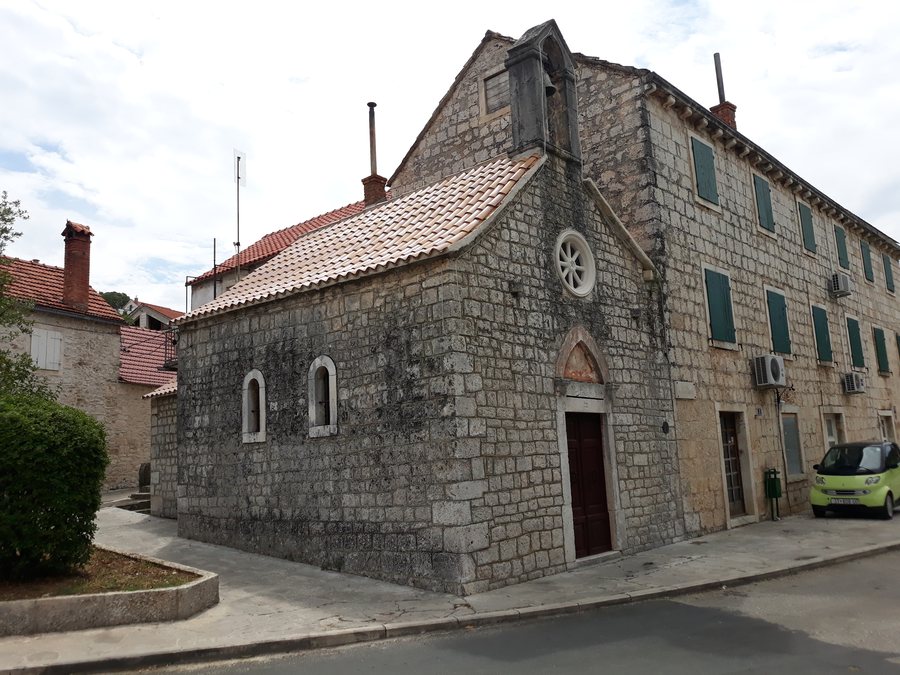 File:Church of St. Margaret in Nerežišća 20210719.jpg
Photo: Argo Navis via Wikimedia Commons, CC BY-SA 4.0
File:Church of St. Margaret in Nerežišća 20210719.jpg
Photo: Argo Navis via Wikimedia Commons, CC BY-SA 4.0
Key facts about the Municipality of Nerežišća
- Nerežišća lies at the crossroads of Brač’s main roads, on the slopes of the island’s largest plain.
- Most of the protected Vidova gora landscape lies within the Municipality of Nerežišća; its highest peak is Sutvid, at 778 m.
- Dolina Blaca is also a protected landscape. The Vidova gora educational trail is intended for pedestrians and cyclists.
What nature and landscape experiences are available?
Vidova gora has been protected since 1973. Its peak, Sutvid, reaches 778 m. Another protected landscape in the municipality is Dolina Blaca, which has been protected since 1986. Both the mountain landscape and the valley are therefore defining natural features of the municipality.
The Vidova gora educational trail begins at the turnoff for Vidova gora at the second kilometre of the Nerežišća–Bol road and ends at the highest peak on the island of Brač. It is intended for pedestrians and cyclists. If you are planning a trip that includes hikes or bike rides, you can make this trail a separate excursion; no trail length is specified here.
How do you get to Pustinja Blaca, and what does the museum showcase?
To reach the Pustinja Blaca Museum from Nerežišća, drive through the Vidova gora area to the Dragovoda area. From there, it is about another half hour on foot. Take this walk into account when planning your visit.
The museum houses 18th-century portraits and several Baroque paintings. The collection also includes old firearms belonging to Blaca sailors, which were used to defend against pirates, Glagolitic missals and a small printing press. A visit offers insights into different aspects of the history and cultural heritage of Pustinja Blaca.
Which historic sites define Nerežišća and Donji Humac?
The tradition of Balun o ruke has been preserved in Nerežišća. During Museum Night 2018, teams played on the roof of the 14th-century Church of St. Peter. A dwarf pine more than two hundred years old grows on the roof. The Frane Senjković Memorial with Balun o ruke is part of a festival in honour of Saint Margaret, the patron saint of Nerežišća.
Donji Humac is known for its old stone houses, stone structures and preserved folk customs. The parish church of Saints Fabian and Sebastian contains a 13th-century fresco, considered one of the oldest in southern Croatia. The Chapel of Saint Elijah dates from the 10th century and was built on the remains of a Roman mausoleum. The early Romanesque Chapel of Saint Luke is dated to the 11th or 12th century.
The Kopačina Cave near Donji Humac is another notable historic site: it is considered the oldest known human settlement on Brač. Traces of life dating from the 8th to the 3rd millennium BC have been found there. Those interested in religious architecture can also visit the Church of Our Lady of Carmel, surrounded by symmetrical, richly decorated stone manor houses.
In Dračevica, the parish church of the Immaculate Conception of the Blessed Virgin Mary dates from 1770 and was extended in 1904. The largest windmill on Brač also stood there; it once milled grain for the entire island.
What is included in the wine and olive oil experience?
In Nerežišća, a wine and olive oil experience welcomes visitors to a traditional setting with old stone houses, a traditional wine cellar, an ethnographic house and a vineyard. Tastings include an informative presentation on how wine and olive oil are made. Offerings include Plavac Mali Franulić wine, as well as olive oil, olives, cheese, capers and other products.
Which places and municipalities can you compare?
For further orientation, you can use Nerežišća and Donji Humac as place names within the municipality. If you would also like to compare other municipalities, you can find the Municipality of Selca, the Municipality of Milna, the Municipality of Pučišća, the Municipality of Supetar, the Municipality of Bol and the Municipality of Sutivan here.
FAQ
How long does it take to walk to the Pustinja Blaca Museum?
From the Dragovoda area, it is about another half hour on foot. The described drive from Nerežišća through the Vidova gora area takes you as far as that point.
Where does the Vidova gora educational trail begin?
The educational trail, intended for pedestrians and cyclists, begins at the turnoff for Vidova gora at the second kilometre of the Nerežišća–Bol road.
What can you see in Kopačina Cave?
The cave is considered the oldest known human settlement on Brač. Traces of life dating from the 8th to the 3rd millennium BC have been found there.
For the broader travel overview: Brač.

