
Municipality of Sveti Petar Orehovec: Churches and Cultural Landscape
Accommodation in Municipality of Sveti Petar Orehovec
The Municipality of Sveti Petar Orehovec lies in the central area of the slopes of Kalničko prigorje. Churches with historically documented first mentions, traditional rural buildings, and a described cycling route offer concrete points of reference for exploring the municipality according to your travel interests.
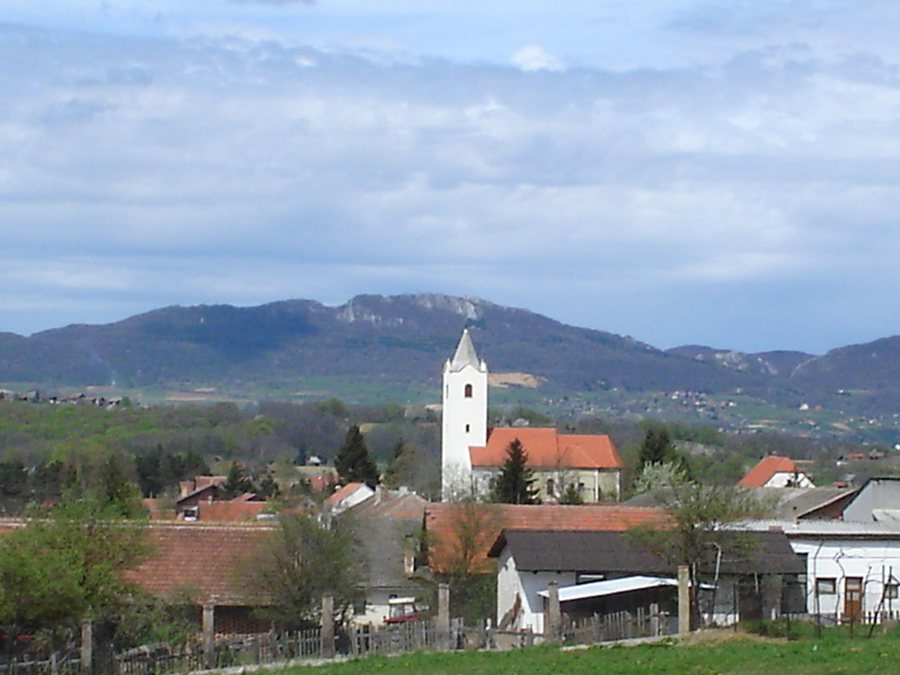 File:Sveti Petar Orehovec - pogled prema Kalniku.JPG
Photo: Paradox86 via Wikimedia Commons, Public domain
Key facts about the Municipality of Sveti Petar Orehovec
- The municipality lies on the slopes of Kalničko prigorje.
- Near Kapela Ravenska, a pond and forest are designated as a valuable cultural landscape area.
- Part of the Bilogora i Kalničko gorje Special Protection Area lies within the municipality.
- The Gornja Rijeka route can alternatively start in the center of Sveti Petar Orehovec.
What landscape and natural features characterize the municipality?
Near Kapela Ravenska, on the road to Ferežane and at the turnoff to Sv. Duh, a pond and the surrounding forest are designated as a particularly valuable cultural landscape area. This designation describes the character of the local landscape. Another precisely defined reference is the Bilogora i Kalničko gorje Special Protection Area, with the designation HR1000008: 523 m² of it, equivalent to 0.05 ha, lie within the municipality. This area figure makes clear that this is a portion of the site, not its total area.
Which churches tell the story of local history?
In the municipality’s namesake settlement, Sveti Petar Orehovec, stands the parish church of St. Peter. It is listed as immovable cultural heritage under the designation Z-1900 and is first mentioned in 1334 in the first parish register of the Diocese of Zagreb. In Miholec stands the parish church of St. Mihovil, which was already mentioned in 1244 in a deed of gift by King Bela IV. The first recorded mention of the church of St. Antun in Gušćerovec dates to 1343. Chronologically, therefore, the earliest of these three first mentions is in Miholec; the other two dates link St. Peter and St. Antun to the 14th century.
What traces of rural building traditions have been preserved?
The municipality’s architectural character includes indigenous vineyard cottages and old, traditionally built houses that have been preserved here. Another specific cultural object is the mural of Ban Gašpar Orehovečki. It is located on the north wall of the community and cultural center “Kuća ideja – prostor zajedništva” in Sveti Petar Orehovec. Rural building traditions and a named mural thus represent distinct aspects of local culture.
Obreške kleti, known in the foothills of Kalnik as “Ilica,” are also considered one of Croatia’s best-known ethnological sites. They lie on the road from Gornja Rijeka to Kalnik, between the villages of Vukovec and Hižanovec. The name and precise location help distinguish this cultural area from the churches and buildings in other settlements in the municipality.
How is the Gornja Rijeka cycling route described?
The “Gornja Rijeka” cycling route can alternatively begin in the center of Sveti Petar Orehovec. From there, the described route passes through Črnčevec and Vinarec to Popovec Kalnički and continues to Obreške kleti. The route description thus connects several place names with a named destination without specifying a travel time or difficulty level. If you plan to ride the route, check current route conditions before setting out.
When choosing a hotel, you can first decide whether you would prefer to connect your stay with local history, rural building traditions, or the described cycling route. These topics offer different starting points for planning your days; they do not imply any specific accommodation features.
Which events are associated with specific years?
The folk evening event “Na Petrove popoldan” took place on June 27, 2026, from 6 p.m. at the school and sports hall in Sveti Petar Orehovec. Its program included traditions, singing, dancing, and folk customs. As another dated example, the municipality held “Petrovo 2025” from June 26 to 29, 2025. This traditional multi-day edition included cultural, sporting, religious, and entertainment events. Both accounts refer to the dates specified and do not automatically describe a future event program.
Discover more travel destinations: Municipality of Kloštar Podravski, Municipality of Kalnik, Municipality of Sveti Ivan Žabno, Municipality of Legrad, Municipality of Sokolovac, Municipality of Gola, Municipality of Križevci.
FAQ
Where can the Gornja Rijeka cycling route begin?
One possible starting point is the center of Sveti Petar Orehovec. The route passes through Črnčevec and Vinarec to Popovec Kalnički and continues to Obreške kleti.
Which of the churches mentioned is the earliest to be documented?
The parish church of St. Mihovil in Miholec is mentioned in 1244 in a deed of gift by King Bela IV. The first mentions of St. Peter and St. Antun date to 1334 and 1343, respectively.
When did “Na Petrove popoldan” take place in 2026?
The folk evening event took place on June 27, 2026, from 6 p.m. at the school and sports hall in Sveti Petar Orehovec.
For the broader travel overview: Koprivnica-Križevci County.

