
Municipality of Dubravica
Accommodation in Municipality of Dubravica
The Municipality of Dubravica offers a variety of points of interest for a trip: Cret Dubravica, home to a rare plant species; a brown cycling route to the Sutla Valley; and a rich ecclesiastical history. The facts below will help you decide whether nature, cycling or cultural history matches your interests.
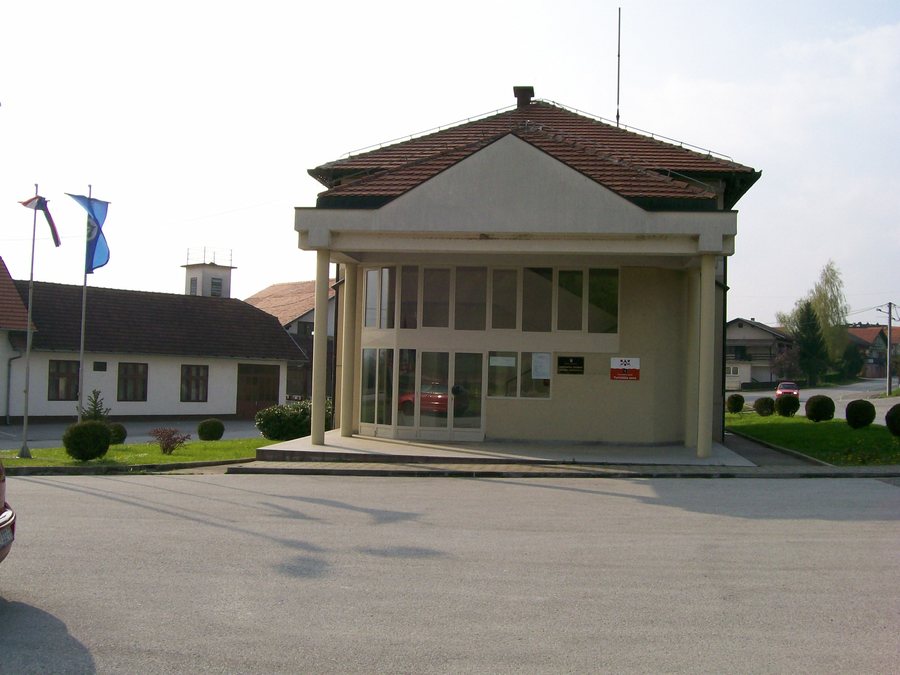 File:Općina Dubravica, Zagrebačka zupanija.jpg
Photo: Suradnik13 via Wikimedia Commons, CC BY-SA 4.0
File:Općina Dubravica, Zagrebačka zupanija.jpg
Photo: Suradnik13 via Wikimedia Commons, CC BY-SA 4.0
Key facts about the Municipality of Dubravica
- Cret Dubravica is one of the last places in Croatia where the round-leaved sundew can be found.
- The Sutla River forms the western boundary of Dubravica and, there, the state border with Slovenia.
- The brown cycling route passes through several villages on its way to the Sutla Valley.
- Named sacred buildings and traditional houses can be found in Rozga and other places in the municipality.
What natural and landscape features define the municipality?
Cret Dubravica stands out for the presence of the round-leaved sundew. It is one of the last places where this plant can be found in Croatia. If you are particularly interested in plants and nature when planning your trip, this gives you a specific point of interest.
The Sutla also shapes the area’s geographical setting: the river runs along Dubravica’s western boundary and, there, forms the state border with Slovenia. In this section, the municipal boundary and national border coincide. The Sutla Valley is also the endpoint of the brown cycling route described here. The river border and the cycling route offer two different ways to explore the landscape: one as a geographical reference point, the other as a route through several villages.
Where does the brown cycling route go through Dubravica?
The route runs from Kupljenovo through Luka, Dubravica, Marija Gorica and Pušća to the Sutla Valley. It connects several place names in the route description, without specifying a particular distance or travel time. The most important detail for your planning is the route itself: Dubravica lies on a route that is not limited to a single place.
Along the way, the route passes through villages with preserved traditional architecture. This also makes the cycling route interesting for travellers who want to take in the villages’ built character as well as the landscape. Numerous old traditional wooden houses, known as hiže, have been preserved in Dubravica. They are among the municipality’s notable cultural assets. Many are in poor condition because of their age and lack of maintenance. The surviving architecture should therefore not be taken to mean that the building stock is uniformly well preserved.
What sacred buildings and historical traces can be found?
Three sacred buildings in Rozga are listed as immovable cultural heritage: the Church of St. Anne, code Z-5882; the rectory manor house, code Z-5852; and the Chapel of Majke Božje Lušačke, code Z-5943.
The history of St. Anne’s also includes an earlier parish church on Vinsko brdo. It was consecrated on 5 August 1691 and later destroyed by fire. The former parish church on Vinsko brdo should be distinguished from the Church of St. Anne in Rozga, which is listed as immovable cultural heritage. Pavao Stoos, born on 10 December 1806 in Dubravica, in the parish of Rozga near Zaprešić, celebrated his first Mass at the Church of St. Anne in Rozga.
Further historical details concern two chapels: the Chapel of Majke Božje Lurdske in Lugarski brijeg was consecrated on 12 August 1934. According to an inscription, the Chapel of the Blessed Virgin Mary in Lušakima was built in 1609 and is considered the oldest sacred building in the parish.
To compare it with other municipalities, you can also visit the pages for Municipality of Pisarovina, Municipality of Vrbovec, Municipality of Pušća, Municipality of Krašić, Municipality of Velika Gorica, Municipality of Jastrebarsko and Municipality of Brdovec. For information about the individual place within the municipality, see Dubravica.
FAQ
What special plant can be found at Cret Dubravica?
It is one of the last places in Croatia where the round-leaved sundew can be found.
Where does the brown cycling route go?
It runs from Kupljenovo through Luka, Dubravica, Marija Gorica and Pušća to the Sutla Valley.
Which sacred buildings in Rozga are listed?
The Church of St. Anne, the rectory manor house and the Chapel of Majke Božje Lušačke are listed as immovable cultural heritage.
Who was Pavao Stoos?
The poet was born in 1806 in Dubravica, in the parish of Rozga near Zaprešić, and celebrated his first Mass at the Church of St. Anne in Rozga.
For the broader travel overview: Zagreb County.

