
Municipality of Kula Norinska: Neretva Landscape, Birdlife and Cultural Heritage
Accommodation in Municipality of Kula Norinska
The Municipality of Kula Norinska combines a protected karst and wetland landscape along the Neretva with fortresses, churches and burial sites. When planning your trip, you can focus on nature and birdlife, local history or cultural events.
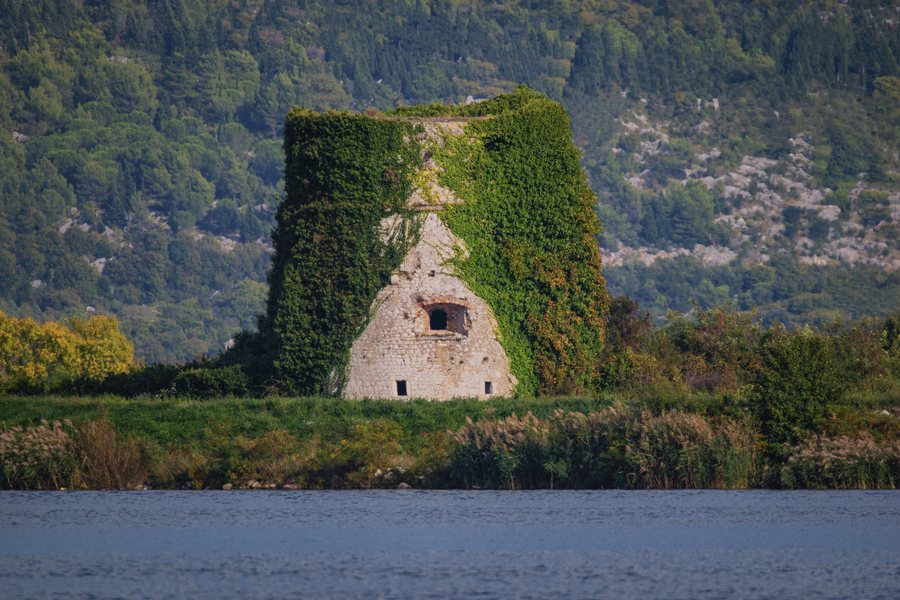
Key facts about the Municipality of Kula Norinska
- Modro oko and Lake Desne form a protected landscape in a partially flooded karst depression on the right bank of the Neretva.
- The area is connected to the Neretva and is important for bird migration and overwintering; the 618-metre-high Velika Rujnica lies in the background.
- The monumental Kula Norinska Fortress dates from the 16th century and stands opposite the mouth of the tributary Norin.
- The parish church of Gospe od Karmela in Bagalovići was built in 1865 on the site of a chapel erected there around 1790.
- The Maraton lađa on the Neretva is held annually on the second Saturday in August.
What makes the Neretva landscape distinctive?
Modro oko and Lake Desne together form the protected landscape of Modro oko. The area is a partially flooded karst depression on the right bank of the Neretva and is connected to the river by the Desanka and Crna. These water connections and the karst formations give the natural area a distinctive character. In the background stands Mount Velika Rujnica, at 618 metres high.
The area’s ecological significance is also part of this landscape: it contains endangered habitats and is important for bird migration and overwintering. Its natural significance therefore extends beyond the shape of the depression to include a range of seasonal functions. Travellers weighing landscape and cultural heritage when choosing a destination will find a clear focus on nature here.
Which historic sites and discoveries shape the municipality?
Kula Norinska Fortress is a monumental 16th-century fortress on the Neretva River, opposite the mouth of its tributary Norin. The parish church of Gospe od Karmela stands in Bagalovići; its history spans the new church built in 1865 and the chapel erected there around 1790.
The municipality includes the settlements of Kula Norinska and Borovci. In Borovci, at Zanoga, southeast of the cemetery and the church of Sv. Nikola, there are 44 undecorated Stećci grouped around a tumulus. Vratar is also located in Borovci, on Mount Gradina: the site is listed in the Register of Cultural Goods as an old town and a potential hillfort settlement.
Other recorded heritage sites have different points of emphasis. The church of Sv. Jure in Desne is listed as a single registered cultural good together with Stećci. In addition, the rural settlement unit of Kula Norinska is recorded and protected at the local level in spatial planning documentation. Individual buildings and archaeological finds thus sit alongside a protected settlement ensemble.
Which festivals and events should you know about?
In Desne, the Feast of St. Jure is considered a centuries-old tradition. Its stated components include a Mass, a procession and a folk festival. At the Toćijada in Momići, the main event is a competition to prepare Toć: according to the organisers’ rules, the dish is cooked with three types of meat and can be sampled by all visitors.
Ribarska večer in Krvavac takes place in late July. Its programme includes folk dances, folk music and a wide-ranging food and wine offering; the event is developing into a traditional and well-known manifestation. The Maraton lađa is an annual amateur sporting event featuring traditional boats on the Neretva; the Municipality of Kula Norinska takes part. It is held on the second Saturday in August. Check the dates and programme details for your travel year before planning around them.
Photo safaris are another part of the municipality’s tourism profile. The municipal tourism website describes them as the leading tourist activity in the Neretva Valley and beyond, and cites more than 30,000 visitors annually. As this figure is undated, it should be treated as a historical estimate, not as current visitor statistics.
Discover more destinations: Municipality of Ploče, Municipality of Župa Dubrovačka, Municipality of Smokvica, Municipality of Opuzen, Municipality of Slivno, Municipality of Dubrovačko Primorje.
FAQ
What characterises the Modro oko landscape?
Modro oko and Lake Desne form a protected, partially flooded karst depression on the right bank of the Neretva. The area is connected to the river via the Desanka and Crna and is important for bird migration and overwintering.
What archaeological sites are there in Borovci?
At Zanoga, there are 44 undecorated Stećci grouped around a tumulus. Vratar is located on Mount Gradina and is listed in the Register of Cultural Goods as an old town and a potential hillfort settlement.
Which events offer a seasonal reference point?
The Maraton lađa is held annually on the second Saturday in August. Ribarska večer in Krvavac is associated with late July; check the current dates of the events for your travel year.
For the broader travel overview: Dubrovnik-Neretva County.

