
Municipality of Jasenice: Majstorska cesta, Nature and Cultural Heritage
Accommodation in Municipality of Jasenice
The Municipality of Jasenice brings together the history of the Majstorska cesta, Velebit landscapes, distinctive karst formations and churches with histories of their own. The main considerations when planning your trip are your interests: historic roads and culture, nature experiences, or activities on the coast and in the mountains.
Key facts about the Municipality of Jasenice
A 24-kilometre section of the Majstorska cesta runs through the municipality; the entire historic road is 41 kilometres long. It connects Sv. Rok in Lika with Obrovac in Dalmatia and was officially opened on 4 October 1832. Part of the Velebit mountain range lies within the municipality. Modrič, the westernmost part of the municipality, is considered a starting point for hikes to 1,752-metre-high Sveto brdo, the second-highest peak of Velebit.
What makes the Majstorska cesta interesting?
The Majstorska cesta is a defining feature for anyone interested in historic roads and the connections between Croatia’s diverse landscapes. Its route between Sv. Rok in Lika and Obrovac in Dalmatia passes through the karst Velebit Mountains, according to historical accounts, and connected southern and northern Croatia. The section running through the Municipality of Jasenice is 24 kilometres long; this figure refers to the part within the municipality, not the entire 41-kilometre road.
The opening date is also precisely recorded: the road was officially opened on 4 October 1832. In the same year, Emperor Francis I had the Church of St. Francis built in memory of the newly constructed road. It stands in Podprag on the slopes of Velebit, below Tulove grede. The road and the church in Podprag represent the connection between transport and cultural history.
What nature and outdoor experiences are available?
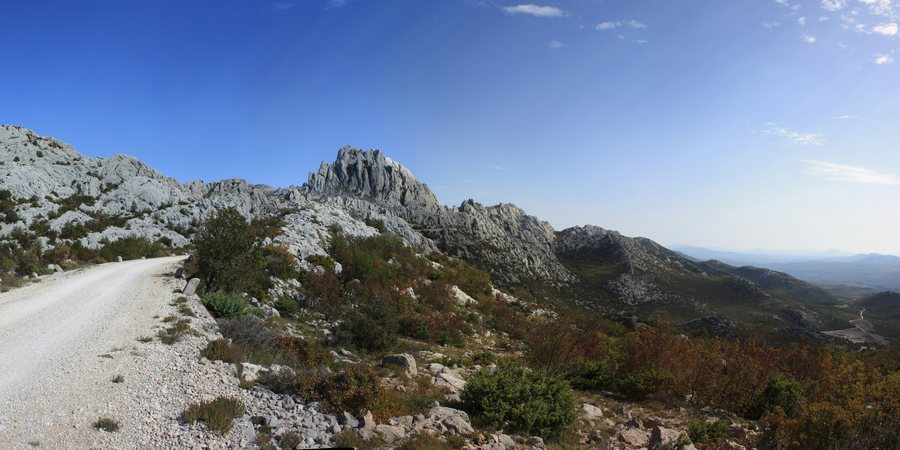
Part of the Velebit mountain range, protected for its exceptional natural value and biodiversity, lies within the municipality. Tulove grede is an unusual karst formation in Velebit Nature Park: the limestone ridge is about one kilometre long and has particularly steep rocky spurs.
Those interested in hiking can consider Modrič as a starting point for routes to Sveto brdo. The peak is 1,752 metres high and is the second-highest in Velebit. The Modrič Cave requires different preparation: it is about 800 metres long, has no concrete paths or spotlights, and does not receive large groups. Suitable equipment and an experienced guide are required to explore it.
Cycling along the Majstorska cesta and climbing Tulove grede are also considered cycling experiences in the municipality. Water sports such as jet skiing are available as well. The options range from mountain and karst landscapes to activities on the water; which ones suit your trip depends on your interests.
Which cultural sites define the municipality?
The churches in the municipality reflect different periods of its history. The Church of St. Jerome in Jasenice was built in 1874 on the site of the former parish church of the Holy Trinity. After the end of the Croatian War of Independence, it was gradually restored as the population returned to the municipality.
In Rovanjska, the Church of St. George stands right on the seashore. It is a protected zero-category monument and cultural heritage of the Republic of Croatia. Its location and designated monument status make it a specific cultural point of interest within the municipality. The municipality’s settlements include Rovanjska and Jasenice: Rovanjska and Jasenice.
What should you consider when choosing a base?
The Municipality of Jasenice is close to the Zagreb–Split motorway and Zadar Airport. This is a useful point of reference when comparing potential bases for your trip. The municipality also offers a range of themes to help you plan: the historic Majstorska cesta, cultural sites, Velebit, and Modrič Cave, with its specific exploration requirements.
Nearby, a plateau on the edge of the Zrmanja Canyon offers a view of the deeply carved canyon of the Zrmanja River. If you want to compare other municipality pages, you can also find Municipality of Sukošan, Municipality of Ražanac, Municipality of Zemunik Donji, Municipality of Zadar, Municipality of Pakoštane and Municipality of Sveti Filip I Jakov.
FAQ
How long is the section of the Majstorska cesta in the Municipality of Jasenice?
The section running through the municipality is 24 kilometres long. The entire historic road is 41 kilometres long.
What is required to explore Modrič Cave?
Suitable equipment and an experienced guide are required to explore it. The cave is about 800 metres long and has no concrete paths or spotlights.
What is the significance of the Church of St. George in Rovanjska?
It stands right on the seashore and is a protected zero-category monument and cultural heritage of the Republic of Croatia.
For the broader travel overview: Zadar County.

