
Mikuleč: Church of St. George and accommodation search
Accommodation in Mikuleč
Mikuleč offers a clear focus for a trip to the Okres Svitavy: the Church of St. George, with its multilayered architectural history. One building reveals its Gothic origins, a Late Baroque reconstruction, a later bell tower and frescoes dating from around 1900. If you are looking for accommodation in the area, you can plan a visit to the church as a specific part of your stay and then compare the accommodation address with your other destinations in the district.
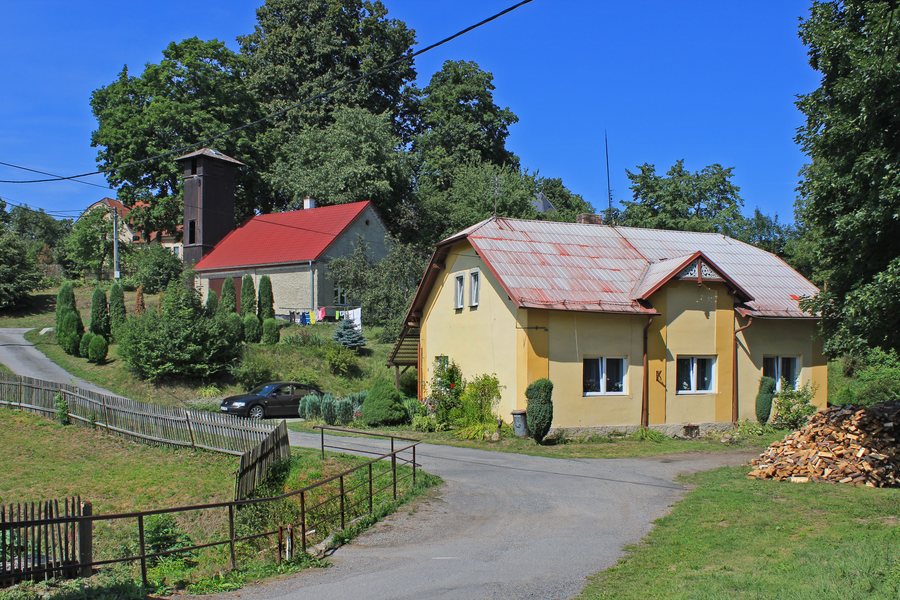 File:Mikuleč, fire house.jpg
Photo: Photo: This file is available under Creative Commons BY-SA license . Basically: You can use this picture for any purpose, provided that you attribute it to Pavel Hrdlička, Wikipedia . You may distribute the resulting work under the same license.
Mikuleč facts at a glance
- The Church of St. George stands on a rise at the northern edge of the village, in the middle of the cemetery.
- The presbytery is all that remains of the Gothic predecessor, which was probably built in the 14th century.
- The Late Baroque church was built in the second half of the 18th century; the bell tower was added in the 19th century.
- Interior frescoes were created in 1899–1900 by pupils of Mikoláš Aleš, based on his designs.
What does the Church of St. George tell us about the village?
The church’s location is already part of what makes it distinctive. It stands on a rise on the northern edge of Mikuleč, in the middle of the cemetery. This location helps you find the building on a map; it is not a guarantee that you can visit the interior at any time. For a walk to the church site, you can first check its exact location and ask about current access arrangements before planning an interior visit.
The earliest building phase should be described with care. According to the municipal account, the Gothic predecessor was probably founded around the middle of the 14th century in connection with a fortified seat. Only the presbytery remains from that building. The word “probably” is important here: the connection with the fortified seat is not a confirmed fact that can be turned into a definitive account of the church’s foundation.
From Gothic origins to the Late Baroque building
A Late Baroque church dedicated to St. George was built on the Gothic foundations in the second half of the 18th century. A Neo-Romanesque bell tower was added in the 19th century. This means that the visible or documented parts do not all belong to a single period. This gap in time can make a visit to the church especially interesting: when looking at the architecture, consider the predecessor building, the later church and the tower as distinct layers, rather than describing the entire ensemble simply as medieval or Baroque.
This history can also serve as a starting point for planning your trip without implying that a guided tour or exhibition is available. The source describes building phases, but provides no current tour times, admission prices or accessibility information. You will need to seek up-to-date information locally about these practical matters.
Frescoes based on designs by Mikoláš Aleš
The church interior features frescoes of Bohemian patron saints. They were created in 1899–1900 by pupils of Mikoláš Aleš, based on his designs. The distinction between design and execution matters: the frescoes are not described as works painted by Aleš himself. Those interested in art history can view the frescoes as a later addition to a building whose origins go back much further.
This combination of architecture and mural painting offers a distinctive cultural reason to stay in Mikuleč. However, any accommodation option should be checked separately for its location, dates and actual services. A general accommodation overview for Mikuleč lists various types, including private apartments and guesthouses; some listed options may be outside the village. The overview therefore does not confirm that a room is available or that any particular accommodation is directly beside the church.
FAQ
Where is the Church of St. George?
It is on a rise at the northern edge of Mikuleč, in the middle of the cemetery.
Which parts date from which periods?
The presbytery remains from the Gothic predecessor. The Late Baroque building was constructed in the second half of the 18th century, and the Neo-Romanesque bell tower was added in the 19th century.
Who created the frescoes?
Pupils of Mikoláš Aleš executed them in 1899–1900 based on his designs. If you are planning to visit the interior, check current access arrangements separately.
Explore more destinations in the Okres Svitavy.
