
Kaberla: Landscapes, Hiking and History
Accommodation in Kaberla
An old village on a limestone escarpment, protected habitats, two different hikes and the Varetimägi stone grave give Kaberla clear nature and cultural themes. When planning your trip, it’s worth distinguishing between the hikes by their features and conditions.
Kaberla at a glance
- Kaberla is an old village with scattered farmsteads among fields arranged in a mosaic pattern.
- The Kaberla hoiuala protected area safeguards alvars (6280*), juniper scrub (5130) and old natural forests (9010*).
- The Varetimägi stone grave is in the northeast of the village, near Tammiku farmstead, and dates from the pre-Roman Iron Age.
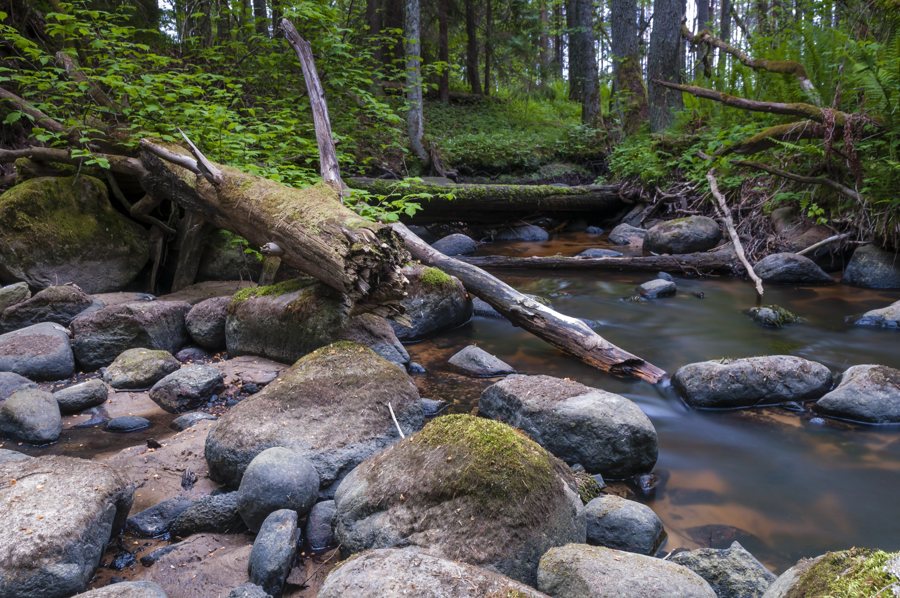
- The hike along Kaberla Stream passes through mixed forest and follows a stream with small cascades; advance booking is required.
- The hike in the Ubari maastikukaitseala nature reserve follows coastal and forest trails and includes seasonal, supervised climbing on steep slopes with equipment.
What shapes the landscape?
Kaberla is an old village with scattered farmsteads on a limestone escarpment among fields arranged in a mosaic pattern. The village landscape is therefore defined by several elements: the individual farmsteads, the slope and the pattern of the fields. This offers a different perspective from focusing on a single building or a single natural area.
The Kaberla hoiuala protected area has a distinct focus. Its conservation objectives cover three named habitat types: alvars (6280*), juniper scrub (5130) and old natural forests (9010*). These names refer to different types, not to one uniform landscape. This makes it possible to consider the character of the village and the nature conservation theme separately: the scattered farmsteads and fields shape the description of the village, while the habitat types identify what is protected.
Which hike suits your interests?
The hike along Kaberla Stream passes through mixed forest and follows a stream with small cascades. Guided explanations add the stream’s history and local folklore to the nature experience. Advance booking is required for this hike, so plan to book before your visit.
In the Ubari maastikukaitseala nature reserve, the hike combines coastal and forest trails with safe, supervised climbing on steep slopes, with equipment provided. The activity is seasonal. Check the dates before planning so you can take part at an appropriate time.
The two tours offer different experiences: the Kaberla Stream hike brings together the stream, small cascades and guided explanations of history and folklore; the Ubari tour includes coastal and forest trails as well as supervised climbing. The conditions also differ: advance booking is required for the first hike, while the second is offered seasonally. This helps you compare the tours by what they offer and what you need to do to plan.
What does the Varetimägi stone grave tell us?
The Varetimägi stone grave is in the northeast of Kaberla village, near Tammiku farmstead. It dates from the pre-Roman Iron Age. The location and date provide two different reference points: the first places the grave within the village, while the second places it in time. Its archaeological history thus adds a clearly defined historical layer to the themes of village and landscape.
Discover more destinations: Tabasalu, Saue, Järveküla, Laagri, Salmistu, Sõitme, Tuhala, Kaberneeme.
FAQ
Which hike needs to be booked in advance?
Advance booking is required for the hike along Kaberla Stream.
What makes the hike in the Ubari maastikukaitseala different?
It follows coastal and forest trails and includes supervised climbing on steep slopes, with equipment provided. The activity is seasonal.
Where is Varetimägi, and when was it created?
The stone grave is in the northeast of Kaberla village, near Tammiku farmstead. It dates from the pre-Roman Iron Age.
For the regional travel overview: Harju.

