
Hiiumaa between Coast, Hiking Trails and Island Culture
Accommodation in Hiiumaa
Hiiumaa combines marked hiking trails, birdwatching, distinctive coastal landscapes and an unusually rich cultural history.
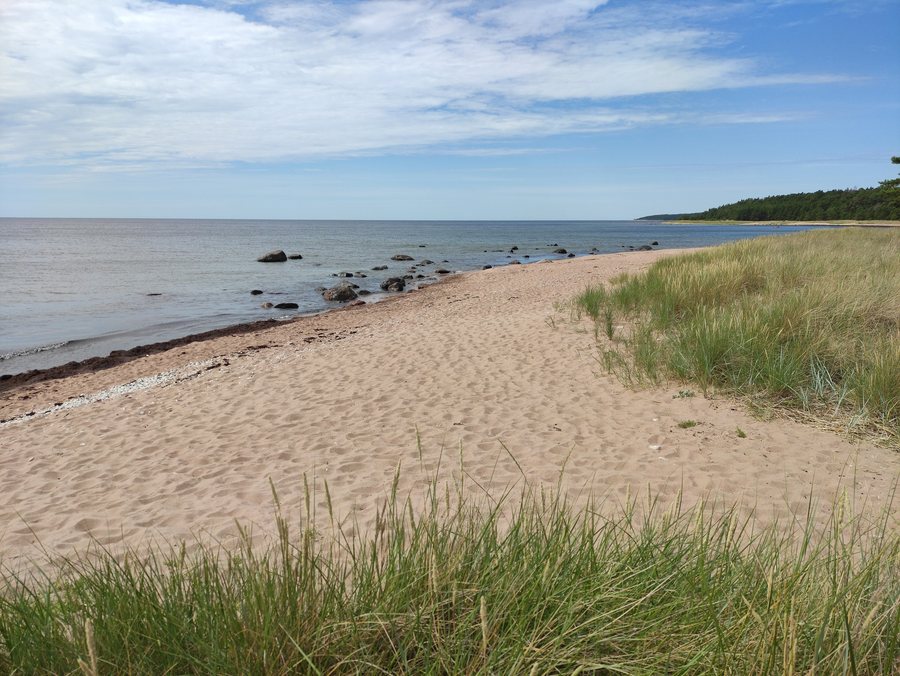 File:Kaleste rand, Kaleste, ostrov Hiiumaa, Estonia.jpg
Photo: Fry72, Karel Frydrýšek via Wikimedia Commons, CC BY-SA 4.0
File:Kaleste rand, Kaleste, ostrov Hiiumaa, Estonia.jpg
Photo: Fry72, Karel Frydrýšek via Wikimedia Commons, CC BY-SA 4.0
Hiiumaa has 324 kilometres of marked hiking trails. A vivid example is the Vanajõe Valley Study Trail in the Tihu Landscape Protection Area. It follows the banks of a river and valley slopes up to six metres high. The landscape ranges from vegetated elevations to distinctive coastal formations: Sääretirp is an esker spit whose higher, vegetated areas transition into a pebble beach.
Käina Bay also shapes the experience of nature. A total of 192 bird species have been recorded there; in autumn, 10,000 to 15,000 waterbirds and coastal birds stop to rest. At Kärdla Beach, the seabed is sandy, while the beach is shallow and slopes gently.
What nature spots and trails are there in Hiiumaa?
The Tihu Study Trail leads to the largest lake in Hiiumaa. A viewing platform at the end of the trail can be reached via a 200-metre-long boardwalk. It is suitable for observing waterbirds and wetland birds.
Sea kale and dog roses grow along the shores of Sääretirp.
Which coastal sites and lighthouses are there?
There are small coastal trails at Ristna Beach. On the Ristna Peninsula, you can also explore military history. The Ristna Lighthouse was completed at the workshop of the famous engineer Gustave Eiffel in France. From the tower, there is a view over the Kõpu forests and the sea.
The Kõpu Lighthouse is 36 metres high above the ground; its light is 102.6 metres above sea level. Its history dates back around 500 years and is connected with shipping and navigation during the Hanseatic period. The Tahkuna Lighthouse is the tallest cast-iron lighthouse on the Estonian coast.
Which museums and historical sites are there?
The Kassari Exhibition House presents the permanent exhibition “Life on the Island. Fire, Water, Air, Earth.” The Long House of the Hiiumaa Museum is located in the former director’s residence of the Kärdla Broadcloth Factory. The 60-metre-long wooden building was constructed in the 1830s and 1840s. At the Hiiumaa Military Museum, its present use is connected with a former border guard station in Tahkuna. Among the most significant exhibits is a collection of coastal defence artillery with guns measuring 180 mm, 130 mm and 100 mm.
The stone Reigi Church was inaugurated on 24 August 1802 and is known for its art collection. The Baroque Suuremõisa Manor was built between 1755 and 1760. It contains a museum room about the history of the manor and an English park. The ruins of Käina Martin’s Church are from a Gothic church built around the turn of the 15th and 16th centuries.
The Soera Farm Museum preserves a typical 19th-century Hiiu household with archaic tools and household objects. The Mihkli Farm Museum displays mainly 19th-century buildings as well as a largely intact archaic rural ensemble. The Mihkli farm was home to a Hiiu-Swedish family until their deportation in 1781. The Vaemla Wool Factory is located in a preserved barn built in the mid-19th century as a manor hay barn.
In Sõru, the Sõru Museum documents the traditional culture of shipbuilding, seafaring and fishing in Hiiumaa. The three-masted ship Alar moored there is considered the only surviving wooden ship built in Estonia before the Second World War. The Hill of Crosses is an area covered with crosses beside the road; its origins are connected with the expulsion of the Reigi Swedes in August 1781.
What do Windtower and the Ristna Visitor Centre offer?
The Windtower Experience Centre combines a museum, a research centre and an interactive experience centre. The Ristna Visitor Centre provides information about the leisure opportunities offered by RMK on the beaches and in the forests of Hiiumaa. A photo exhibition about the nature of the Kõpu Peninsula is also on display there year-round.
What characterises the regional cuisine?
The “From catch to meal” workshop teaches participants how to process fresh fish by gutting, filleting and salting it. In the same fish workshop, dishes are prepared from fresh, local and seasonal fish. Hiiumaa Lavender Farm produces lavender jam and lavender seasoning.
FAQ
How do you get to Hiiumaa?
Hiiumaa can be reached by ferry from Rohuküla or Saaremaa, or by a 30-minute flight from Tallinn.
Where do seal-watching tours start?
Seal-watching tours start at the port of Kärdla on small boats for groups of up to 10 people.
Which water sports are possible at Ristna Beach?
Ristna Beach is suitable for surfing and kitesurfing and is known for its powerful sea waves.
To the overarching travel overview: Estonia.

