
Käsmu: Lake, Hiking Trails and Maritime History
Accommodation in Käsmu
Käsmu combines a large lake in Lahemaa National Park with trails across the peninsula and a distinctive maritime history. The local trails and sights offer different ways to explore the landscape and the past.
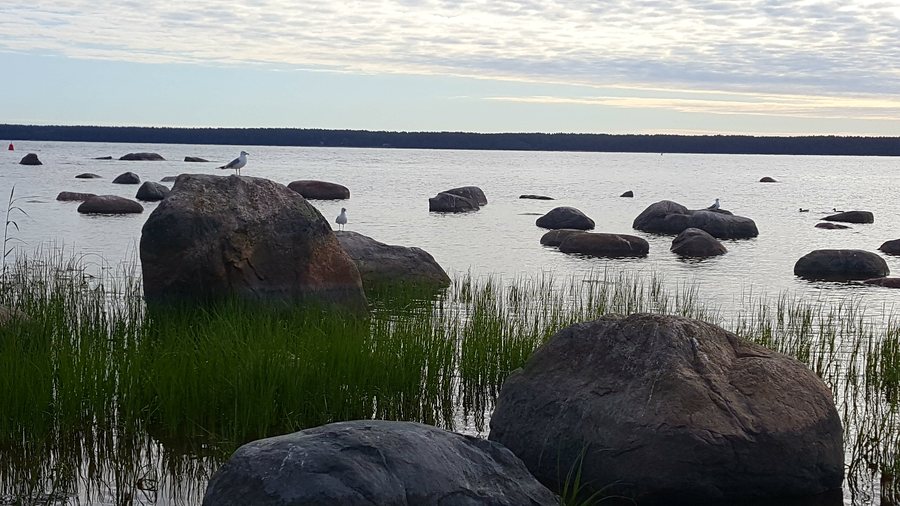
Käsmu Järv is one of the largest lakes in Lahemaa National Park. It has comparatively clean water, and rare plants such as water pepper grow there. On the nearby Käsmu hiking and cycling route, the lake is considered a unique natural and cultural heritage site.
Käsmu Järv separated from the sea about 1,500 years ago. As a result, its present-day lake landscape is connected with a long geological development. Käsmu is also home to a boulder field considered the largest boulder field in Northern Europe. The boulders there were transported to the area from Finland and Sweden by continental glaciers about 10,000 years ago.
What shapes the landscape around Käsmu Järv?
The lake is not merely a landscape feature but also a recurring reference point for exploring Käsmu. Its classification as a natural and cultural heritage site connects the natural development of the body of water with the trails and historic sites in the surrounding area. Those interested in landforms will find a second, distinctly different focal point in the boulder field: it shows how Ice Age glaciers helped shape the landscape we see today.
Käsmu Järv represents the transformation of a former marine landscape, while the boulders reached Käsmu from distant regions.
Which trails can be compared with one another?
Käsmu offers several differently designed options for walks and hikes. The nearby 15-kilometre Käsmu Hiking Trail is signposted with directional signs and coloured markings on the trees. Käsmu Järv is one of the sights along this trail. The markings provide clear orientation, and the stated length makes an important contribution to planning your day.
Another nearby hiking and cycling route in Käsmu starts at Käsmu Chapel, leads around the peninsula and returns to the starting point. This return to the starting point distinguishes the route from a trail whose beginning and end are in different places. This may be relevant to your planning if you prefer a loop route and want to experience the course around the peninsula as a continuous unit.
The nearby Käsmu nature and cultural history trail can be reached via the Tallinn–Narva road, the Liiapeksi–Loksa, Võsu–Kotka and Haljala–Käsmu roads, as well as Neeme tee. Its name already indicates the connection between landscape and history. The nearby Käsmu cycling route offers variants of 11.6 or 16 kilometres. The two distances help you choose the bike tour according to the available time frame and desired scope, without combining the different trails into a single route.
What traces of seafaring can you find in Käsmu?
The nearby Käsmu lighthouse was built in 1892 and is one of two surviving wooden lighthouses in Estonia. It therefore represents a specific architectural history as well as the importance of wooden lighthouses in the country. Another historical layer is provided by the nearby Käsmu Nautical School, which operated from 1884 to 1931.
The first records of Käsmu as a fishing site date from 1453. The nearby Käsmu cemetery is also a historic point of reference: it is protected as a historical and architectural monument.
The lighthouse, former nautical school, fishing history and protected cemetery each add a different emphasis. Together with the route around the peninsula, they create a cultural profile that is not limited to a single building or a single year. The historic sites are particularly suitable for travel planning that aims to connect short distances with stops offering varied content.
What does the Käsmu Sea Museum offer?
Since 1993, the Käsmu Sea Museum has been housed in a former tsarist border guard building and presents the history of the captains’ village of Käsmu. The exhibitions cover seafaring, fishing, smuggling, the sea as part of nature, as well as photography and fine art. The museum thus ranges from specific activities on the water to cultural and nature-related perspectives.
The museum days for children focus on the captains’ village and the Viking Age. These two themes lead from the local maritime identity to a historical era reaching further back in time.
How does Käsmu fit into your travel planning?
Käsmu is suitable as a travel destination for planning in which nature and cultural themes stand closely alongside one another without being identical in content. Käsmu Järv provides a connection to water, plants and landscape history. The hiking and cycling trails place different emphasis on length, markings and route layout. The lighthouse, cemetery, chapel, nautical school and museum complement these nature themes with architectural, local and seafaring history.
When choosing a hotel or other accommodation in Käsmu, you can therefore first decide which of these themes should shape your days. The available trail lengths make it easier to compare different excursion scopes, while the museum and historic buildings offer a different form of exploration. For a broader regional overview, in addition to the local page for Käsmu, you can also compare Vainupea, Kirikuküla, Haljala Parish, Rakvere, Väike-Maarja, Viru-Nigula and Rakke.
FAQ
Which watercraft are allowed on Käsmu Järv?
Non-motorised watercraft are allowed on Käsmu Järv.
How long is the Käsmu nature and cultural history trail?
The nearby Käsmu nature and cultural history trail is 4.2 kilometres long and begins at Käsmu Cemetery and Chapel.
When was Käsmu Chapel built?
Käsmu Chapel was built as a wooden chapel in 1863 with money from the villagers. It contains one of the oldest organs in Estonia. It was probably built by Johann Andreas Stein at the end of the 18th century.
What themes are covered during the museum days for children?
The museum days for children at the Käsmu Sea Museum cover the themes of the captains’ village and the Viking Age.
To the main travel overview: Lääne-Viru.

