
Kambja: Churches, Choirs and Nature Trails
Accommodation in Kambja
Kambja combines historic churches and places of remembrance with trails for outdoor activities. This allows you to combine cultural sightseeing and active time in a single itinerary.
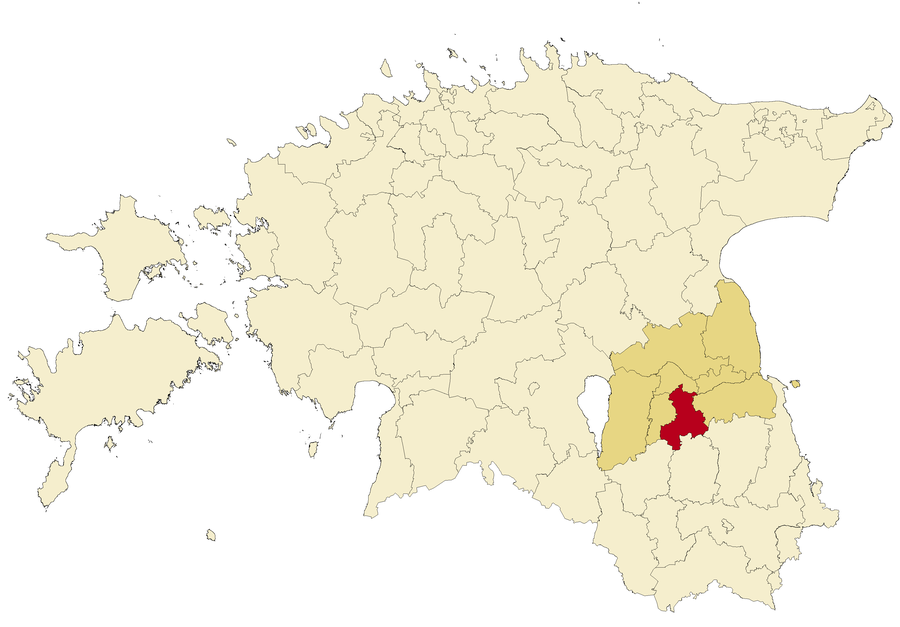
The centre of the Vaste-Kambja or Väike-Kambja estate was located in the church village of Kambja, today’s Kambja alevik. For orientation on site, the address of the Kambja Cultural Centre is also useful: it is located at Kesk 12 in Kambja alevik.
The restored Kambja Church was consecrated on 11 July 2009 and has more than 600 seats. Since 2003, it has housed an organ with 12 stops, donated by the Swedish congregation of Träslövsläge.
Public transport in Kambja is organised through municipal routes, school buses and regional bus routes. For active pursuits, there are the Kambja health trails: they offer year-round opportunities for exercise in nature and are located in the surroundings of Kopsumäe and Köstrimäe near Kambja alevik.
What history will you encounter in Kambja?
St. Martin’s Church in Kambja was originally built in the 14th century. During various wars, it was repeatedly destroyed by fire and subsequently rebuilt. Those interested in historic buildings therefore encounter here not just a single construction date, but a long succession of destruction and rebuilding.
The history of education also reaches far back. The Kambja school began operating in 1686, making it one of the first peasant schools in Estonia. In front of Kambja Church stands a monument to an Estonian folk school, erected in 1987. Near the church gates there is also a memorial to the 300th anniversary of the Estonian peasant school and a fire altar.
In 1996, a memorial plaque was unveiled in Kambja Church commemorating the New Testament, which had been published in the South Estonian language in 1686. The churchyard contains symbolic gravestones for Bengt Gottfried Forselius, Ignatsi Jaak, Andreas Virginius and Albrecht Sutor.
Which places of remembrance shape the centre of the village?
An important site for local history is Kambja Cemetery. It was consecrated in 1773 and lies on the north-western slope of a hill on rising terrain. The graves are therefore arranged in terraces. Numerous gravestones and metal and stone enclosures have been preserved.
The cemetery contains a neo-Gothic chapel connected to the main gate. Two other chapels stand east of the main gate. The spatial arrangement also makes the cemetery interesting for visitors interested in historic cemetery complexes and regional architecture.
The culture of remembrance surrounding the church includes the Kambja Monument to those who fell in the War of Independence. It was unveiled in 1929 and restored in 1989. On its reverse side is a plaque bearing 63 names. The years mark different phases in the monument’s history and give the site a clearly recognisable historical depth.
Another detail in the churchyard is the oak planted in 1932 by Swedish Crown Prince Gustav Adolf, which continues to thrive. Together with the organ donated in 2003, it points to a Swedish-Estonian connection, without requiring a dedicated walking route.
What role do choirs and culture play in Kambja?
The Kambja Cultural Centre is a specific focal point for the cultural life of the village. The mixed choir Läte is active there. Since the first Estonian Song Festival in 1869, the Kambja Läte choir has taken part in every national Song Festival. For travellers who want to experience regional musical culture not only through buildings but also through community traditions, this aspect complements the church history.
Kambja Church is also connected with several memorial markers. For your planning, you can consider these themes as individual stops rather than getting to know Kambja solely through a single building.
What can you do outdoors?
The Kambja health trails are designed for year-round exercise in nature and are suitable for cycling. They therefore cater both to walks and to active travel by bicycle. Their location in the surroundings of Kopsumäe and Köstrimäe near Kambja alevik connects the trails with the central village area without asserting a specific route.
The Kambja health run series began in 2016. In winters with heavy snowfall, the Kambja–Pangodi ski track is also prepared. This option is explicitly dependent on snow conditions and should therefore not be understood as a year-round offering.
How can you structure a stay in Kambja sensibly?
For a stay in Kambja, you can plan the cultural and landscape highlights separately or combine them. The church, churchyard, cemetery, monuments and cultural centre represent the history of the village; the health trails, cycling and the winter ski track provide a different focus. This makes the choice of how to organise the day easier to understand, especially when different interests come together in a travel group.
The choice between a hotel, holiday apartment and holiday house can also be aligned with these focal points. Kambja Church and the cemetery are more suited to a culture-focused visit to the village, while the health trails and ski track provide opportunities for activity. These destinations do not prescribe a specific type of accommodation; what matters is how you incorporate culture, nature and transport into your personal travel plan.
Public transport with municipal routes, school buses and regional bus routes is one of the practical framework conditions. Anyone considering Kambja as a starting point for their own activities should coordinate the desired combination of local history, nature trails and seasonal activity with their individual daily planning. The available facts mention types of transport, but no timetables, distances or travel times.
For a broader comparison of villages, you can also consider Tatra, Ivaste, Palumäe, Tartu, Tähtvere, Rannu, Võnnu and Puhja.
FAQ
What winter activity is available on Lake Kambja?
There is an ice-skating rink on Lake Kambja.
When was the first Estonian choir founded in Kambja?
The first Estonian choir was founded in Kambja in 1794.
How many names are on the plaque at the Kambja Monument?
On the reverse side of the Kambja Monument to those who fell in the War of Independence is a plaque bearing 63 names.
To the main travel overview: Tartu.

