
Dunapataj: Lake Szelidi and Local Culture
Accommodation in Dunapataj
Dunapataj combines nature around Lake Szelidi with distinctive cultural sites. When planning your trip, you can decide whether to focus on swimming and a nature trail, or on history and local collections.
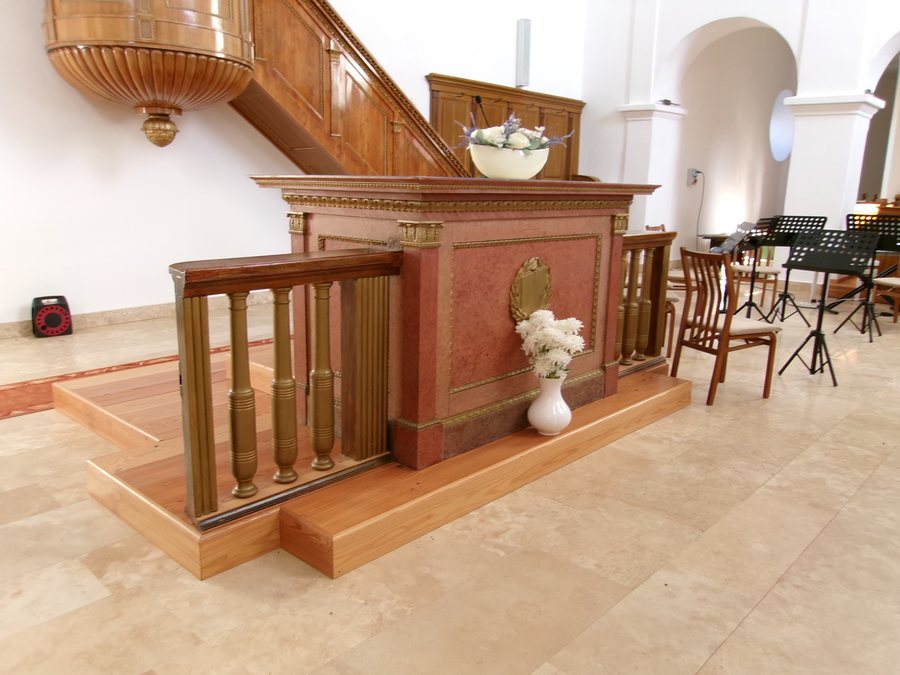 File:Abendmahlstisch, Reformierte Kirche, 2025 Dunapataj.jpg
Photo: Globetrotter19 via Wikimedia Commons, CC BY-SA 4.0
File:Abendmahlstisch, Reformierte Kirche, 2025 Dunapataj.jpg
Photo: Globetrotter19 via Wikimedia Commons, CC BY-SA 4.0
Dunapataj at a glance
- Lake Szelidi is part of Dunapataj and is about five kilometres long.
- The lake, salt meadows, and pastures have been protected since 1976 and are part of Kiskunság National Park.
- A 800-metre-long beach lies on the southern shore; the lake is suitable for swimming.
- The Kékmoszat Nature Trail is 2.4 kilometres long and has twelve stops. It can be explored on foot or by bicycle year-round.
- Cultural sites include the Kossuth Memorial, the Reformed Cemetery, and the Pataji Museum.
What makes Dunapataj a distinctive destination?
The lake and the salt meadows and pastures around it form a protected landscape. It has been part of Kiskunság National Park since 1976. Dunapataj thus brings together a lake, its distinctive surroundings, and protected areas—a defining natural feature of the town.
The measurements also help put the attractions in perspective: the lake is about five kilometres long, and the beach on its southern shore is 800 metres long. The nature trail offers another way to explore during your stay.
What experiences does Lake Szelidi offer?
The 800-metre-long beach on the southern shore and the lake’s suitability for swimming make Lake Szelidi a destination for spending time in the water. The beach operates seasonally. If you are planning a visit, check its opening times for your travel dates.
The 2.4-kilometre-long Kékmoszat Nature Trail offers a different perspective. Its twelve stops cover the development of the lake, the properties of its water, the organisms that live there, and the wildlife in the surrounding area. The trail can be explored on foot or by bicycle throughout the year. This lets you get to know the lake not only as a swimming destination, but also through its natural environment and habitats.
Where can you encounter history and culture?
The Kossuth Memorial was erected on 14 December 1894. National commemorations are held there on 15 March. If you are interested in the town’s history, the memorial connects a specific construction date with a recurring commemorative event.
Almost 200 carved, human-shaped wooden grave markers can still be seen in the Reformed Cemetery. They are considered an ethnographic curiosity. The Pataji Museum houses collections and also hosts concerts and cultural events. If you are planning to attend an event, check the specific date before your trip.
The attractions therefore offer different points of interest: the lake and nature trail provide access to nature and water-based experiences, while the memorial, grave markers, and museum showcase local history and culture. When planning your stay, you can use these interests to decide which information matters most when choosing accommodation.
How do you choose suitable accommodation?
First, consider whether you mainly want to spend time at the lake, explore the nature trail, or visit cultural sites. Then compare the specific location details of the accommodations with your travel plans, rather than relying on the town name alone as your deciding factor. This keeps your choice aligned with your priorities without treating swimming, nature exploration, and culture as interchangeable.
FAQ
Can you swim in Lake Szelidi?
Yes. The lake is suitable for swimming, and there is an 800-metre-long beach on its southern shore. As the beach operates seasonally, check its opening times before planning a visit.
How long is the Kékmoszat Nature Trail?
The nature trail is 2.4 kilometres long and has twelve stops. It can be explored on foot or by bicycle throughout the year.
What cultural sites are there in Dunapataj?
National commemorations are held at the Kossuth Memorial on 15 March. Almost 200 carved wooden grave markers can be seen in the Reformed Cemetery; the Pataji Museum houses collections and also hosts concerts and cultural events.
For the main travel overview: Kalocsai.

