
Discover Szabadszallas
Accommodation in Szabadszallas
Szabadszállás is best explored through its memorial sites: churches, collections and monuments tell the story of local history and cultural life. For your trip planning, nature in the nearby area is another option – from birdwatching at Kelemen-szék to an approximately three-hour hike in Fehérhegy.
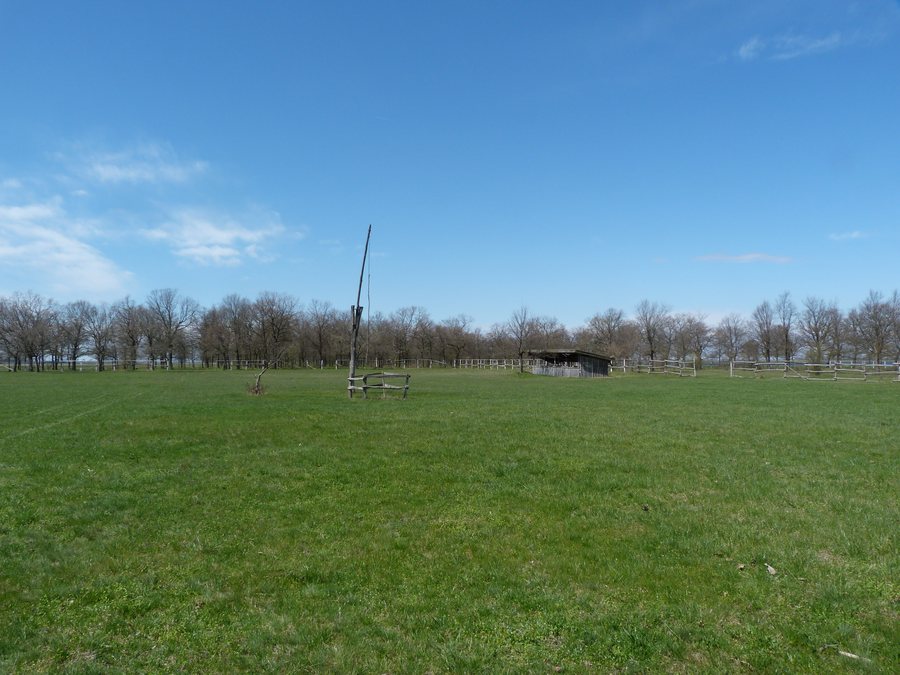 File:Nagyállás, Felső Kiskunsági Puszta - 2013.04.13 (1).JPG
Photo: Derzsi Elekes Andor via Wikimedia Commons, CC BY-SA 3.0
Szabadszállás at a glance
- The Dörmögő House is located in Pőcze Imre’s former gatehouse and serves as a memorial house and ethnographic exhibition.
- The Reformed Church is Baroque; its present visible structure was built between 1747 and 1759.
- The Local History Collection presents part of the history of Szabadszállás.
- Nearby, Kelemen-szék and Fehérhegy offer different nature experiences.
- The Upper Kiskunság Soda Lakes lie in the area around Szabadszállás and Akasztó.
Which traces of local history take centre stage?
The Dörmögő House combines the memory of József Attila with ethnographic insights. It is located in Pőcze Imre’s former gatehouse and displays period furniture and household items. It is also the only József Attila memorial site in Bács-Kiskun County. The house was inaugurated on 11 April 2005, on the poet’s 100th birthday and as part of the József Attila Memorial Year.
The Tóth Sándor Local History Collection uses a series of twelve panels to show the Petrovits family’s years in Szabadszállás and Sándor Petőfi’s connection to the town. Household items, clothing, and tools used in crop farming and livestock raising illustrate the material culture and way of life typical of the period from the late 19th to the mid-20th century. Old crafts are also presented. The tájház at 5 Mars tér preserves folk customs and traditions and presents the lives of people who lived in this area over the past century.
The Sándor Petőfi monument marks the former home of István Petrovics and Mária Hrúz, who settled in Szabadszállás in 1818. In the garden of the Sándor Petőfi City Library stands a bust of Petőfi created by Lajos Páli and installed in 1969. The collection, tájház and monuments each offer a different emphasis: from objects and crafts to traditional ways of life and the memories of specific people.
How do the churches and memorial sites differ?
The Reformed Church of Szabadszállás is a Baroque building. Its present visible structure was built between 1747 and 1759; the tower was erected in 1771. An oval memorial plaque above the tower entrance commemorates, through its inscription, the church’s construction by the Reformed community in 1770 with the approval of Maria Theresa.
The Catholic Church has its own history of construction: it was completed in 1929 to plans by architect Lajos Fridrich. Its ground plan was adapted to the shape of the plot.
The war memorials differ in purpose and date. The monument erected in 1922 honours the residents of Szabadszállás who fell in the First World War and bears 255 names. The monument to the victims of the Second World War was inaugurated in the town centre in 1992 and bears more than 200 names of military and civilian victims. A memorial plaque for Pál Rozsnyai commemorates the hussar first lieutenant who fled the imperial army during the 1848 War of Independence and later became chief magistrate of Szabadszállás.
The European Union Memorial Park is a park in the town centre, established by the town to commemorate accession to the EU on 1 May 2004. Together, the church building, memorial plaques and park represent different historical themes: architectural history, individual life stories and collective remembrance.
What nature activities are available nearby?
Near Szabadszállás, the route to Kelemen-szék on the border of Fülöpszállás offers birdwatching with binoculars from observation towers, as well as a walk along a nature trail. It also features botanical and other natural-history highlights. Fehérhegy lies on the border with Fülöpháza; an approximately three-hour hike there leads through sand dunes. The activities therefore have different focuses: at Kelemen-szék, observation and the nature trail take centre stage, while at Fehérhegy the focus is on hiking through the dunes.
Another landscape feature is the Upper Kiskunság Soda Lakes in the area around Szabadszállás and Akasztó. Their large, shallow, open waters provide suitable habitats for large numbers of waterbirds. Alongside the cultural sites, they offer a choice between local history, memorial sites and nature experiences nearby.
Discover more destinations: Apostag, Szalkszentmárton, Tass.
FAQ
What does the Tóth Sándor Local History Collection show?
A series of twelve panels covers the Petrovits family’s years in Szabadszállás and Sándor Petőfi’s connection to the town. The collection also displays household items, clothing, tools used in crop farming and livestock raising, as well as old crafts.
How many names are inscribed on the war memorials?
The memorial to those who fell in the First World War bears 255 names. The monument to the victims of the Second World War bears more than 200 names of military and civilian victims.
What nature experiences are available nearby?
At Kelemen-szék, the route offers birdwatching from observation towers and a walk along a nature trail. At Fehérhegy, an approximately three-hour hike leads through sand dunes.
For the broader travel overview: Kunszentmiklósi.

