
Szirmabesenyő: Castle History and Public Art
Accommodation in Szirmabesenyő
Public art and Szirmay Castle give Szirmabesenyő two distinct cultural landmarks. The statue of Pál Szinyei Merse stands in a park beside the Roman Catholic Church and Hősök kertje. The freestanding castle, with its four corner towers, adds a distinct architectural perspective to the area. The wider destination of Borsod-Abaúj-Zemplén offers additional nature and cultural themes of a different character.
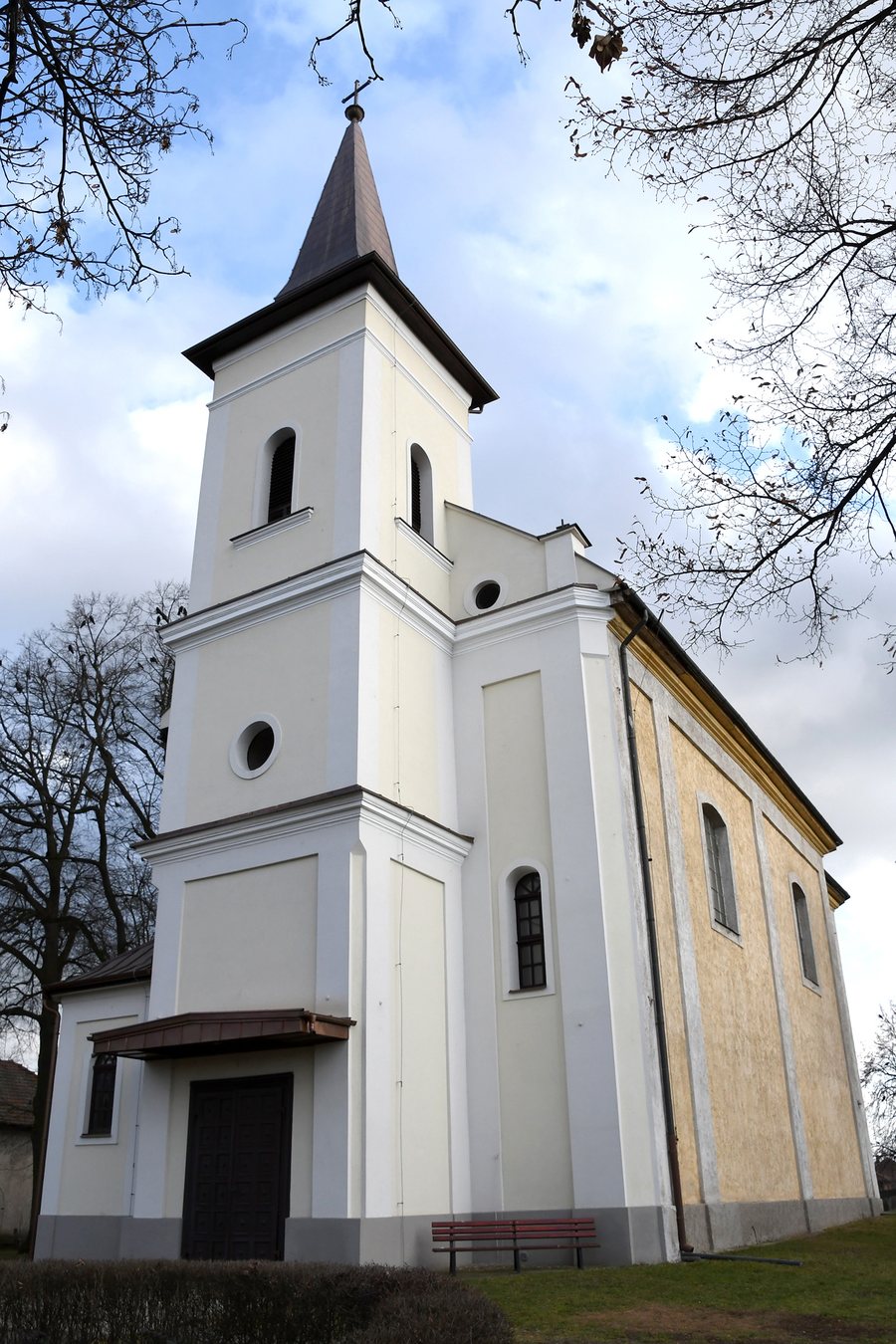 File:Szirmabesenyő, római katolikus templom 2021 02.jpg
Photo: Pasztilla aka Attila Terbócs via Wikimedia Commons, CC BY-SA 4.0
Szirmabesenyő at a glance
- The full-length public statue of Pál Szinyei Merse stands in a park beside the Roman Catholic Church and Hősök kertje.
- Szirmay Castle is freestanding, has four corner towers, and is partially basemented.
- The XIV Botanica Exotica Exhibition in 2026 featured various cacti and other exotic plants.
- The Greek Catholic Church in Szirmabesenyő celebrated its 25th anniversary in 2025.
What cultural landmarks can you find in the town?
The statue depicts Pál Szinyei Merse as a full-length public monument. It stands in Szirmabesenyő in a park bordering the Roman Catholic Church and Hősök kertje. The municipality notes that Szirmabesenyő is the only place in Hungary with a full-length public statue of the painter. This connects the artistic landmark with two immediately identifiable features of its local surroundings: the church and the garden.
Another cultural landmark tied to a specific date is the Greek Catholic Church, which celebrated its 25th anniversary in 2025. This anniversary offers a distinct perspective on the town’s recent history, alongside its connections to Pál Szinyei Merse and the castle.
What makes Szirmay Castle distinctive?
Szirmay Castle is a freestanding building with four corner towers and a partial basement. “Freestanding” describes it as a standalone structure; the four towers mark its corners. The partial basement adds a structural detail to the description of its exterior. Together, these features give a clear picture of its architecture without assuming any particular use or access.
An exhibition title also connects the castle with the painter. The exhibition and a Kastélytörténeti Élménytér point were inaugurated at Szirmay Castle. The exhibition is titled “Red Crab on the Garden Bench – Szirmay Castle in Szirmabesenyő, Where Pál Szinyei Merse Also Painted.” The connection to painting is already expressed in the name of the exhibition project.
Which plants were featured at Botanica Exotica?
The XIV Botanica Exotica Exhibition in 2026 took place at Szirmay Castle and was aimed at plant enthusiasts. Visitors could see cacti, other exotic plants, succulents, ribbon grasses, living stones, and tillandsias. The selection therefore included both cacti and succulents, as well as other, distinct groups of plants.
What kinds of experiences does the wider destination of Borsod-Abaúj-Zemplén offer?
The wider destination of Borsod-Abaúj-Zemplén offers experiences beyond the local cultural landmarks. The Baradla-Domica Cave System is part of the UNESCO World Heritage site of the Caves of the Aggtelek Karst and Slovak Karst. The short Aggtelek cave tour is one kilometre long, takes 60 minutes, and is rated easy. Its length, duration, and difficulty rating give you concrete points of comparison when distinguishing regional activities by their scope.
The nature trail at Miskolc Zoo and Cultural Park has a different profile: its stated features include a nine-metre-high observation tower and a 32-metre-long suspension bridge. The cave tour is described in terms of its length and duration, while the nature trail is distinguished by the structures along the route. The Tokaj Wine Region adds a cultural landscape to this selection. Its climate, soil quality, and slope exposure are suitable for growing wine grapes; at the same time, the region is legally designated as a protected wine-growing area.
Discover more destinations: Sajókeresztúr, Arnót, Miskolc, Emőd, Lillafüred, Felsőzsolca, Harsány, Sajószentpéter.
FAQ
Where is the statue of Pál Szinyei Merse located?
It is located in Szirmabesenyő in a park beside the Roman Catholic Church and Hősök kertje.
How does the Aggtelek cave tour differ from the nature trail at Miskolc Zoo and Cultural Park?
The short cave tour is listed as one kilometre long, 60 minutes in duration, and easy. The nature trail is distinguished by its nine-metre-high observation tower and 32-metre-long suspension bridge.
What characterizes the Tokaj Wine Region within the wider destination?
Its climate, soil quality, and slope exposure are suitable for growing wine grapes. The region is also legally designated as a protected wine-growing area.
Go to the wider destination overview: Miskolci.

