
Discover Szeged: Architecture, Nature and City Life
Accommodation in Szeged
Szeged combines striking architecture and museums with green destinations for day trips and a bathing complex described as open year-round. When planning your trip, you can first decide whether to focus on architectural history and exhibitions, nature or a range of city experiences.
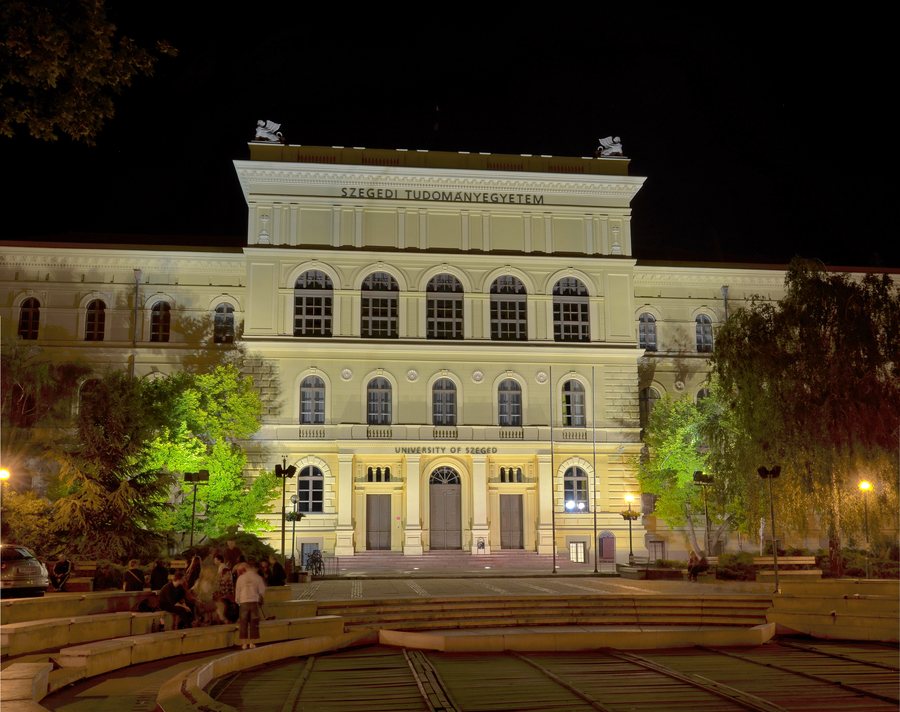 File:Szeged 2012-05-19, Esti egyetem.jpg
Photo: Kontár Csaba Attila via Wikimedia Commons, CC BY-SA 3.0
Szeged at a glance
- The Reök Palace was built by Ede Magyar in 1907 and is considered an outstanding example of Hungarian Art Nouveau.
- The Votive Church was consecrated on 24 October 1930; its architecture combines Romanesque, Gothic and Byzantine elements.
- The Botanical Garden of the University of Szeged is open to the public and combines education and research with the protection of protected plants.
- The 45-minute city tour by small train is offered in several languages.
Which architectural styles and exhibitions define Szeged?
The Reök Palace combines Art Nouveau architecture with a cultural purpose: since 2007, it has housed the Regional Arts Centre, which hosts temporary exhibitions. If you are interested in the building, it is worth considering both when it was built and its present-day role as an exhibition venue. Check which exhibitions are currently on display before your visit.
The city’s religious buildings also offer distinct architectural features. The Franciscan Church is dedicated to Our Lady of the Snows; the nearby monastery and church are among the city’s significant historic buildings. The New Synagogue has stained-glass windows painted in Manó Roth’s workshop and a symbolic glass dome. The Votive Church’s combination of Romanesque, Gothic and Byzantine elements illustrates another architectural style.
The visitor centre at Szeged Cathedral has a permanent exhibition on the construction history of the cathedral and Cathedral Square. Its permanent facilities also include an observation platform in the west tower. It takes 302 steps to reach the top and offers views over the city; check the current access conditions before your visit.
The Móra Ferenc Museum presents ethnographic, natural history and art history exhibitions related to Szeged and its surroundings, as well as extensive temporary exhibitions. Visitors can therefore explore both collections with a regional focus and changing displays. Check current opening details and the exhibition programme shortly before your trip.
Where can you focus on nature and other experiences?
The Botanical Garden of the University of Szeged serves not only education and research, but also helps protect protected plants. One of its distinctive features is a spring-fed lake where Indian lotus grows. Its outdoor population is considered the largest in Central Europe. This makes the garden a destination in its own right, alongside the city’s museums and historic buildings.
Szeged Zoo covers 45 hectares in a wooded setting and offers visitor programmes. The animals are grouped by continent, and their enclosures are designed to recreate natural environments and living conditions. You can check current programmes and visiting hours in advance. The Interactive Natural History Museum complements these nature-focused attractions with hands-on activities, demonstrations, experiments, guided tours and 3D nature films.
Napfényfürdő Aquapolis Szeged is described as a year-round bathing complex with a water surface of 4,400 m². According to the tourism information, the water slide also operates year-round. Check current operating conditions before your visit. This makes it easy to consider the garden, zoo, natural history museum and bathing complex as different activities, without confusing them with the city’s cultural attractions.
How can you explore Szeged?
A 45-minute sightseeing tour by small train passes important buildings, streets, squares and attractions, and is offered in several languages. It provides insights into Szeged’s history and an overview of different aspects of the city, while museums and individual buildings offer more in-depth themes. Check the current timetable and availability with the operator. Szeged’s public transport infrastructure is operated by two providers; up-to-date transport information is useful for planning specific routes.
The water tower at St Stephen’s Square offers another view of the city. The tower also has an exhibition on the history of physics. Check the current access conditions before visiting. You can rent bicycles in Szeged to explore the city or the surrounding countryside; check current providers and availability.
The local cuisine is also part of the city’s character: Szeged is especially known for its fish soup, though the city’s food scene is more varied.
What other destinations can you discover?
Discover more destinations: Sándorfalva, Röszke, Tiszasziget, Domaszék, Szatymaz and Algyő.
FAQ
How long does the sightseeing tour by small train take?
The tour takes 45 minutes and provides insights into Szeged’s buildings, streets, squares, attractions and history in several languages. Check the current timetable with the operator.
How many steps lead to the observation platform in the west tower?
The platform in the west tower of the cathedral visitor centre can be reached by climbing 302 steps. Check the current access conditions in advance.
What makes the Botanical Garden special?
The garden is open to the public, supports education and research, and helps protect protected plants. Indian lotus grows in the spring-fed lake; its outdoor population is considered the largest in Central Europe.
Go to the main travel overview: Szegedi.

