
Discover Vértesacsa: the church and Föngyöskert
Accommodation in Vértesacsa
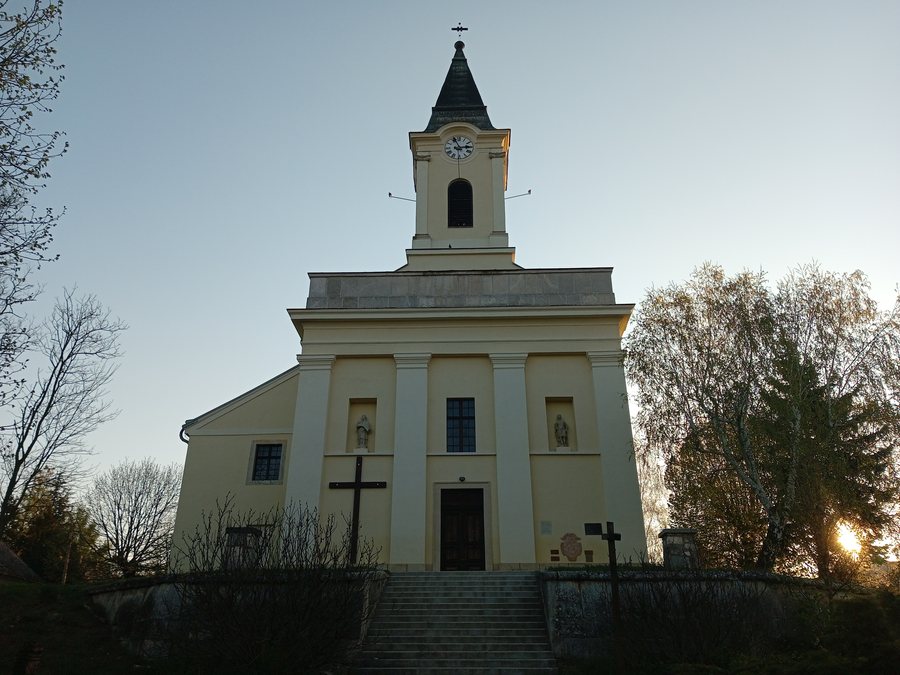
Vértesacsa offers different points of interest to consider when planning your trip: the architectural history of Szent Kereszt Church and the themes of the Föngyöskert garden.
Key facts about Vértesacsa
- The present-day Szent Kereszt Church was built between 1768 and 1780 using medieval ruins.
- The Roman Catholic church is considered Vértesacsa’s oldest and most significant architectural monument.
- Föngyöskert is at the edge of the village in the direction of Alcsútdoboz, on the hill of the former Meleg-hegy pasture, and covers just under 10 hectares.
- The educational trail covers Hungarian folk medicine and folk culture; around 250 medicinal plant species can be seen in the garden.
- The main entrance to Föngyöskert is at the Vértesacsa Szőlőhegy bus stop.
What does Szent Kereszt Church tell us about Vértesacsa?
For those interested in cultural history, the present-day Szent Kereszt Church offers a clear point of reference in time: it was built between 1768 and 1780. Medieval ruins were used in its construction. Both the construction period and the older ruins are therefore part of the history of the church building as it stands today.
Its status also makes the church a prominent cultural feature of the village: it is considered Vértesacsa’s oldest and most significant architectural monument. This description brings together two aspects that you can distinguish when exploring the building: its age relative to the village’s monuments and its architectural importance. The church is therefore a specific point of reference for your travel plans if you are interested in architectural history.
What does Föngyöskert offer?
Föngyöskert combines a garden with an educational trail about Hungarian folk medicine and folk culture. Around 250 medicinal plant species can be seen in the garden. This puts both plants and traditional cultural themes at the heart of a visit. As you consider your travel interests, you can compare this focus with the church’s historical theme.
The location is also clearly specified: the garden is at the edge of Vértesacsa in the direction of Alcsútdoboz, on the hill of the former Meleg-hegy pasture. It covers just under 10 hectares. This figure describes the size of the garden; on its own, it does not indicate how long a visit takes. For finding the entrance, the name of the bus stop, Vértesacsa Szőlőhegy, is useful, as the main entrance is located there.
If Föngyöskert is part of your plans, check in advance whether a visit is currently possible. This lets you distinguish your interest in the educational trail and medicinal plants from the question of whether you can actually include a visit during your trip.
How do the local points of interest differ?
The church and the garden appeal to different interests: at Szent Kereszt, the focus is on architecture, the construction period, and the use of medieval ruins. Föngyöskert, by contrast, focuses on medicinal plants, folk medicine, and folk culture. This comparison helps you get a sense of Vértesacsa not just through one attraction, but by weighing these two different themes when planning your trip.
As a broader landscape context, there is the wider destination of Székesfehérvár: the reed beds on Lake Velence are home to thousands of waterbirds. This natural feature belongs to the wider destination and should be distinguished from the places described in Vértesacsa.
Discover more destinations: Szár, Etyek, Mány, Bicske, Csákvár, Tabajd, Felcsút, Kajászó.
FAQ
When was the present-day Szent Kereszt Church built?
It was built between 1768 and 1780 using medieval ruins.
What topics does the educational trail at Föngyöskert cover?
It provides information about Hungarian folk medicine and folk culture. Around 250 medicinal plant species can be seen in the garden.
Where is the main entrance to Föngyöskert?
The main entrance is at the Vértesacsa Szőlőhegy bus stop.
For the broader travel overview: Bicske District.

