
Discover Pázmánd: Geology and Village Culture
Accommodation in Pázmánd
Pázmánd offers tangible points of interest for visitors interested in geology and local history: a distinctive geological outcrop and historic markers along the village walk. For trip planning, it is also worth distinguishing between the different offerings—from the trail over quartzite rocks to the stops at the church and the Tájház.
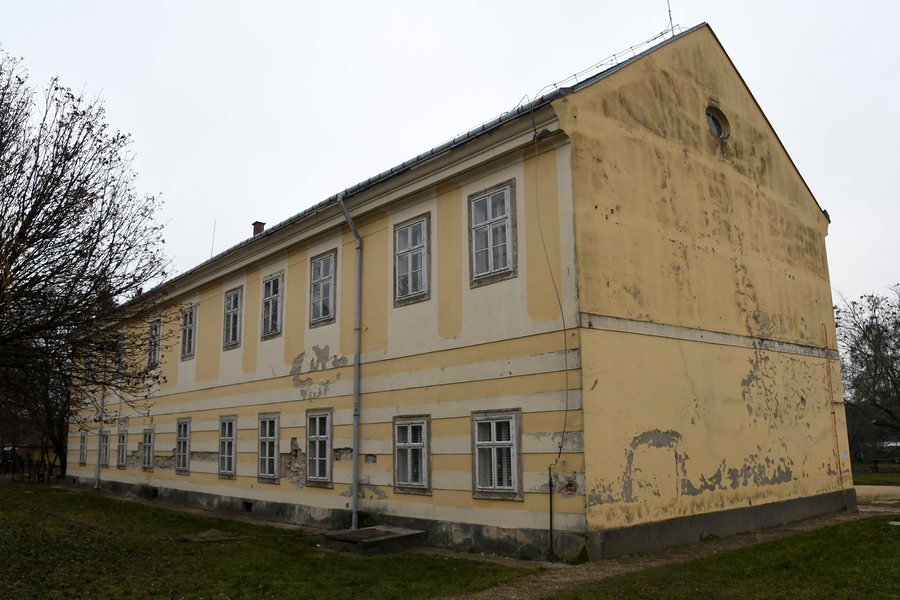 Pázmánd, Lyka-kastély (volt jezsuita rendház) 2020 02.jpg
Photo: Pasztilla aka Attila Terbócs via Source, CC BY-SA 4.0
Pázmánd at a glance
- The geological outcrop in Pázmánd is a unique exposure of the Pázmánd Metasomatite Member of the Middle to Late Eocene Nadap Andesite Formation.
- The 13-hectare Pázmándi Kvarcitsziklák Nature Reserve is located within the municipality of Pázmánd.
- A red-marked hiking trail leads from the village sign over quartzite rocks to the north-northeastern slope of Zsidóhegy.
- The Pázmándi Tájház opened in August 2005 through the joint efforts of local residents.
- On the nine-kilometre Falu-kerülő túra, teams of two to eight people compete against one another; the published route may vary from year to year.
What makes Pázmánd interesting for geology enthusiasts?
The geological outcrop is not described merely as a natural attraction in general; it is assigned to a specific rock unit: the Pázmánd Metasomatite Member of the Middle to Late Eocene Nadap Andesite Formation. This precise designation gives geological interest a clear focus. The Pázmándi Kvarcitsziklák Nature Reserve covers 13 hectares and is located within the municipality of Pázmánd.
The responsible authority describes the geological area as freely accessible. However, appropriate caution is required when exploring the quarry and its surroundings. Check local notices before your visit. This keeps both the stated access conditions and the practical need for caution in mind when planning.
What trails and experiences can you plan for?
One described route starts at the “Pázmánd” village sign and follows a red-marked hiking trail over the quartzite rocks. At the trail marker with the triple cross, it continues to the north-northeastern slope of Zsidóhegy. These landmarks help you follow the route. Check trail conditions locally before planning your hike.
Another experience is the Falu-kerülő túra through Pázmánd. On this nine-kilometre tour, teams of two to eight people visit stations run by several associations and compete in skill-based challenges. The route may change from year to year, so take the relevant edition of the route into account when planning the tour for your trip.
Several civic organizations active in Pázmánd have organized the village walk on Whit Sunday for years; residents and visitors are welcome. If you are planning for a specific year, check local announcements for details. This helps distinguish the ongoing description of the walk from information about a particular date.
What local history will you encounter on the village walk?
The village walk links several named stops that reveal different aspects of local memory. The Fehér kereszt (White Cross) is a landmark on the walk. It was erected so that the Virgin Mary would protect road users. The Szent Háromság szobor and the Mária oszlop can also be seen at the church.
The Vörös Kereszt (Red Cross) is another historic marker in Pázmánd: a family erected it so that the harvest would be protected. The stories behind the two crosses thus refer to different concerns—the protection of road users on the one hand and the harvest on the other. Together with the two stops at the church, they give the village walk a tangible cultural connection.
The Pázmándi Tájház is another stop connected with local history. It opened in August 2005 through the joint efforts of local residents. The date and the community initiative can be considered together as part of its origins: visiting the house is therefore also connected with the efforts of the local community.
What other nature-related attractions are there in the wider Székesfehérvár destination?
The wider Székesfehérvár destination offers other nature-related attractions that should not be confused with the sights of Pázmánd. The Pákozdi Ingókövek rock formations can be reached from Pákozd via several hiking trails, which can also be cycled. A geological nature trail created in 1994 connects the rock formations. At Lake Velence, reed beds provide a habitat for thousands of waterbirds. These regional attractions may interest you if you want to compare nature and landscape destinations across the wider area in addition to Pázmánd.
FAQ
What is Pázmánd’s geological feature?
The outcrop is a unique exposure of the Pázmánd Metasomatite Member of the Middle to Late Eocene Nadap Andesite Formation. The responsible authority describes the geological area as freely accessible and also advises taking appropriate care in the quarry and its surroundings.
Where does the red-marked hiking trail lead?
From the “Pázmánd” village sign, it leads over the quartzite rocks and, at the trail marker with the triple cross, continues to the north-northeastern slope of Zsidóhegy. Check trail conditions locally.
When does the Falu-kerülő túra take place?
Several civic organizations active in Pázmánd have organized it on Whit Sunday for years. If planning for a specific year, check local announcements; the nine-kilometre route may vary.
For the wider travel overview: Gárdonyi.

