
Csókakő: Castle, Nature and Wine-Growing History
Accommodation in Csókakő
Csókakő offers several distinct points of interest for planning a trip: a castle mentioned in written records as far back as 1299, an event recorded in church accounts from 1601, and a wine-growing tradition dating back to 1749. The area also includes a listed section of the National Blue Trail and a nearby cave.
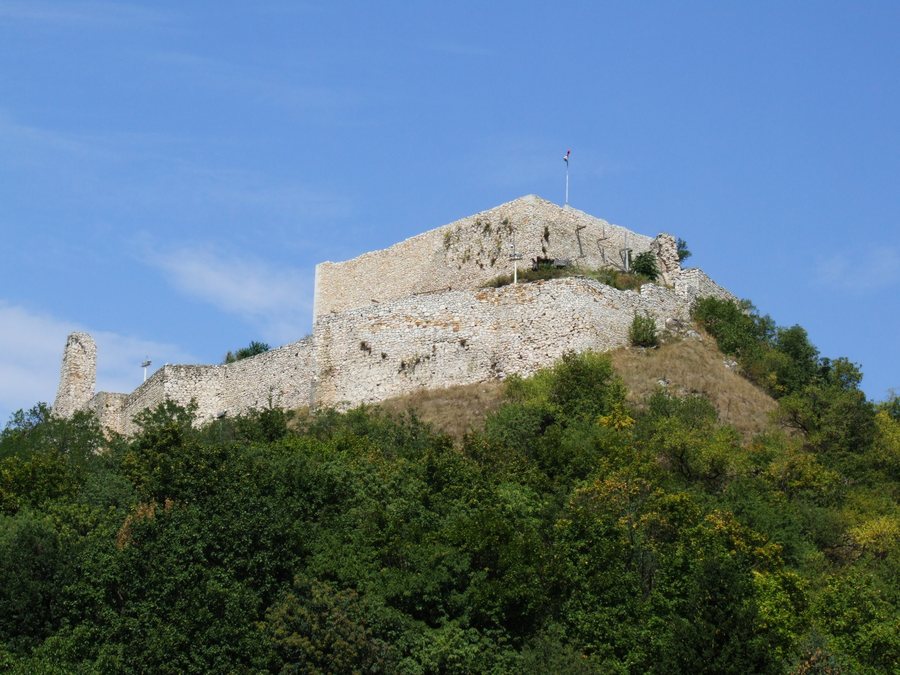
Csókakő at a glance
- Csókakő Castle is first mentioned in a Hungarian document dated September 1, 1299.
- According to church chronicles, a mass of thanksgiving was held in the castle chapel in 1601.
- Csókakő is one of the municipalities of Vértesi Natúrpark.
- Vár-völgyi Kő-lyuk Cave is 500 meters from the parking lot below the castle; the walk there is short and easy.
- The Bodajk–Csókakő section is listed as part of the National Blue Trail in Fejér.
- Csókakői Hegyközség, the wine-growing community of Csókakő, was founded in 1749.
What is the story behind the castle?
Csókakő Castle is first mentioned in a Hungarian document dated September 1, 1299. This precise date provides a clear historical reference point for the castle. Church chronicles offer a different historical perspective: according to them, on October 24, 1601, Saint Lawrence of Brindisi held a mass of thanksgiving in the castle chapel after leading a procession from Bodajk to Csókakő.
A first written mention and an explicitly recorded religious episode thus sit side by side. For travelers interested in history, they offer two distinct points of entry: the castle’s early mention and a story linking Bodajk and Csókakő through the procession.
How do the hiking trail and the cave differ?
The section listed as part of the National Blue Trail in Fejér is named Bodajk–Csókakő. It is therefore identified as a specific trail section. Nearby, Vár-völgyi Kő-lyuk Cave is another point of interest. It is 500 meters from the parking lot below the castle and can be reached via a short, easy walk.
The parking lot below the castle is the stated reference point for the cave’s distance. This makes it easy to distinguish the short walk to the cave from the named trail section. Csókakő’s inclusion among the municipalities of Vértesi Natúrpark provides a further connection to nature. The municipality’s membership and the two specific outdoor points of interest offer different ways to plan a trip.
What does the history of wine-growing tell us?
In 1749, Csókakői Hegyközség, the wine-growing community of Csókakő, was founded. This date adds another historical focus to the story of the castle: the organized history of wine-growing in the town. In chronological terms, the castle’s first mention in 1299 and the founding of the wine-growing community in 1749 mark two distinct milestones.
What nature-related highlights are part of the broader Székesfehérvár destination?
The broader destination of Székesfehérvár offers other regional connections to nature. From Pákozd, the Pákozdi Ingókövek rock formations can be reached via several hiking trails, which are also suitable for cycling. The geological educational trail, established in 1994, connects the rock formations.
At Lake Velence, the reed beds provide a habitat for thousands of waterbirds. Rock formations with an educational trail and a reed bed that serves as a bird habitat represent two distinct nature-related highlights within the broader Székesfehérvár destination.
How can you factor Csókakő into your accommodation search?
Consider what you want your trip to focus on: the history of the castle and wine-growing, or the nature and hiking highlights mentioned here. This distinction can help you choose Csókakő based on your interests and then search for hotels for your trip.
Discover more destinations: Csákberény, Fehérvárcsurgó, Bakonycsernye, Bodajk, Mór.
FAQ
When is Csókakő Castle first mentioned?
Csókakő Castle is first mentioned in a Hungarian document dated September 1, 1299.
What is recorded about Saint Lawrence of Brindisi?
According to church chronicles, on October 24, 1601, he led a procession from Bodajk to Csókakő and then held a mass of thanksgiving in the castle chapel.
How far is Vár-völgyi Kő-lyuk Cave from the parking lot?
The cave is 500 meters from the parking lot below Csókakő Castle. It can be reached via a short, easy walk.
When was the wine-growing community of Csókakő founded?
Csókakői Hegyközség was founded in 1749.
Back to the main travel overview: Mór.

