
Ebes: Culture, History and Parks
Accommodation in Ebes
In Ebes, historic buildings and a memorial site sit alongside parks with places to play. Anyone planning a stay will find points of interest here for a range of interests: architecture and history, as well as time outdoors.
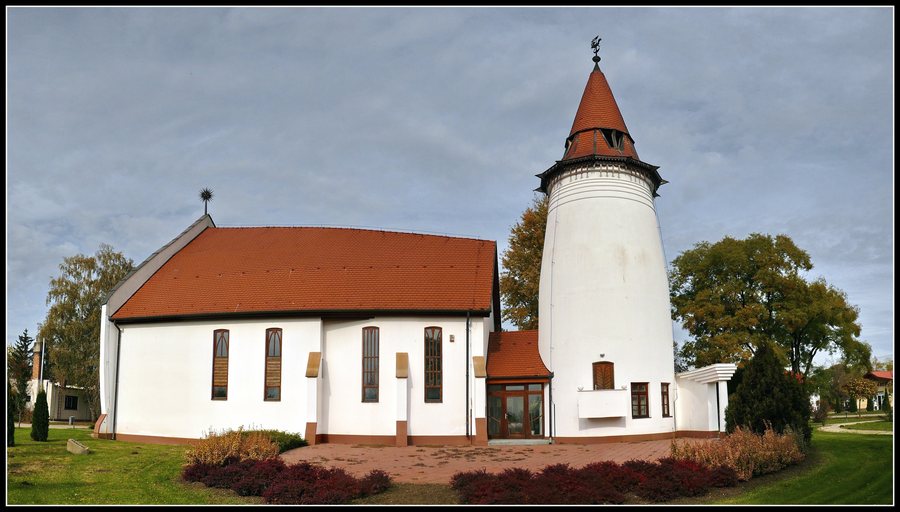 File:Ebes ReformátusTemploma Délről - panoramio.jpg
Photo: Szemes Elek via Wikimedia Commons, CC BY-SA 3.0
File:Ebes ReformátusTemploma Délről - panoramio.jpg
Photo: Szemes Elek via Wikimedia Commons, CC BY-SA 3.0
Ebes at a glance
The Görbe-Balogh manor house was built in 1922 in the Neoclassical style. In the Reformed Church, painted panels in the gallery depict biblical motifs and Reformed symbols; they were created by the painter Buka László. The station building, which is still visible today, dates from 1920 and is listed. A wooden cross in Szent-István Park commemorates the destruction of the medieval village in 1594. For time outdoors, there is Nagy Park, with play equipment, a large lawn and a fire pit, as well as two other playgrounds with play equipment.
Which historic sites shape Ebes?
The manor house and station building offer different perspectives on the history of the village. As different types of buildings, they can be compared regardless of the years in which each was built.
The Reformed Church is also described by a distinctive design detail: its painted gallery panels combine biblical motifs with Reformed symbols. Buka László created these works. Anyone interested in church art can keep this specific motif in mind when exploring Ebes.
What does the wooden cross in Szent-István Park commemorate?
The wooden cross commemorates the destruction of the medieval village in 1594. The municipality had it erected in Szent-István Park on 18 August 2011, following a civic initiative. The location, the occasion and the date of its erection are all part of the history of this memorial. The commemoration of the village in 1594 should be clearly distinguished from the later erection of the cross: 1594 marks the destruction, while 18 August 2011 marks the creation of the memorial.
What do the parks and playgrounds offer?
When planning your day, you can choose between Nagy Park and the two other playgrounds. The key question is whether, in addition to play facilities, the park’s large lawn and fire pit are important for your visit.
The places mentioned differ in character: the manor house, church and station represent architectural history and design, while the wooden cross recalls the history of the medieval village. Parks and playgrounds complement these cultural themes with opportunities to spend time outdoors. When planning, you can decide whether to focus primarily on historic buildings, a memorial or play and green spaces.
If you would like to compare other destinations, you can also find information about Nagyhegyes and Hajdúszoboszló.
FAQ
When was the Görbe-Balogh manor house built?
The Görbe-Balogh manor house was built in 1922 in the Neoclassical style.
What can be seen on the gallery panels in the Reformed Church?
They depict biblical motifs and Reformed symbols. They were created by the painter Buka László.
What play facilities are there in Ebes?
Nagy Park has play equipment; Ebes also has two playgrounds with play equipment.
For the broader travel overview: Hajdúszoboszló.

