
Bélapátfalva
Accommodation in Bélapátfalva
In Bélapátfalva, the history of a Cistercian abbey and the Bél-kő educational trail appeal to different interests. For planning your trip, the trail provides practical details about its length, stops, and duration; the abbey brings together Romanesque, Gothic, and Baroque elements.
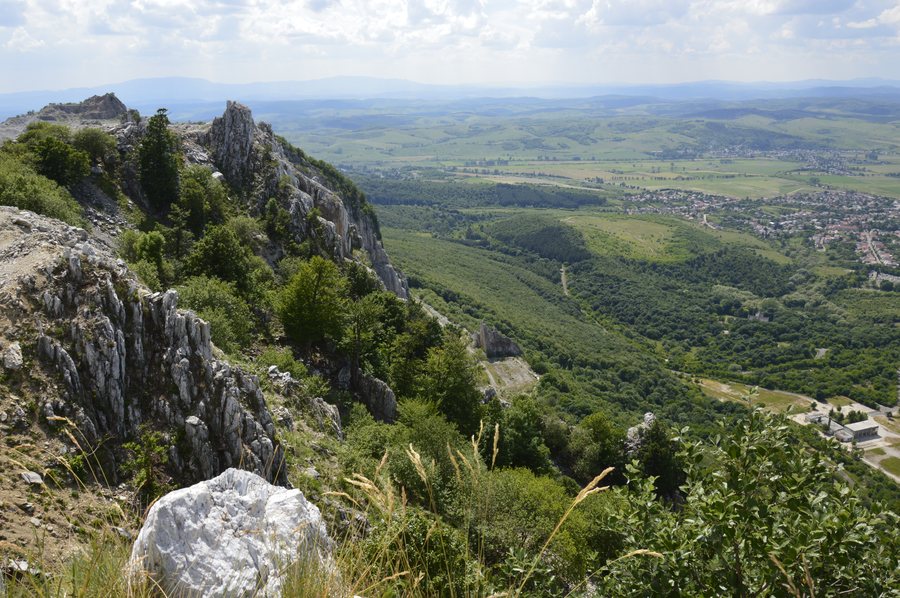 File:Rocks, Bélapátfalva, Hungary - panoramio.jpg
Photo: Mrcsifkin via Wikimedia Commons, CC BY-SA 3.0
File:Rocks, Bélapátfalva, Hungary - panoramio.jpg
Photo: Mrcsifkin via Wikimedia Commons, CC BY-SA 3.0
Bélapátfalva at a glance
The Cistercian abbey was founded in 1232 by Kilit II, Bishop of Eger, at the foot of Bélkő. The five-kilometer Bél-kő educational trail starts at the abbey, has seven stops, and leads to a viewpoint at an elevation of 816 meters. The route takes about two to three hours. Gyári-tó has been used for fishing since 1979.
What does the Cistercian abbey reveal about the history of the area?
Bélapátfalvai Ciszterci Apátság displays late Romanesque features: substantial masonry, a basilica-style floor plan, and a stepped portal. Gothic rose windows and a Baroque organ gallery add to its character. Its different architectural elements offer culture enthusiasts several points of connection with art history, and the abbey cannot be reduced to a single period.
The southern aisle houses the Saint Emeric altar, a work created in 1748 by József Hartmann, a sculptor from Košice. It is considered an outstanding example of Hungarian Rococo art. The church organ has a history of its own: it was made in 1775 by Ferenc Szabó, an organ builder from Eger, and is still functional. The altar and organ thus represent two distinct examples of the abbey’s artistic and craft history.
What can you learn on the Bél-kő educational trail?
The trail is about more than the landscape. Its seven stops also cover the cultural history of the surrounding area, the mountain’s geological structure, and its plant communities. They also provide information about the protected flora and fauna of the rocky grasslands. Bél-kő’s stepped, rocky appearance is the result of earlier mining.
The five-kilometer route and approximate duration of two to three hours help you plan how much time to allow for the outing. The elevation of 816 meters refers to the viewpoint the trail leads to. Nature enthusiasts will find topics on habitats and geology along the trail; culture enthusiasts can connect its coverage of the area’s history with a visit to the abbey.
What other cultural and nature topics are there?
The hard-stone pottery from Bélapátfalva tells a story of regional craftsmanship. Its distinctive folk decoration developed from 1866 under the direction of Sándor Dubravszky and his family. During this development, underglaze painting replaced the previously used overglaze painting.
The Hősök könyve (Book of Heroes) commemorates soldiers from Bélapátfalva who fell in the First and Second World Wars. It was handed over and consecrated in January 2017 and is on display at the Gesztenyés Kiállítóház. This memorial site complements the abbey’s art and architectural history with a commemoration of the two world wars.
Gyári-tó and its surroundings are considered a popular place for excursions and recreation among locals and visitors; the lake has been used for fishing since 1979. The nearby listed Roman Catholic Gilitka Chapel, also known as Saint Anne’s Chapel, is located in the Gilitka stream valley along a section of the Országos Kéktúra between Bélapátfalva and Szarvaskő. It was built in 1750 by Miklós Androvics, rector of the Eger Seminary.
Bábafa is also associated with regular hikes: a club organizes a hike there every year in spring during Születés Hete (Birth Week), as well as in autumn. In 2010, a small memorial in the form of a shelter was established at the edge of the clearing beside Bábafa. Information boards bearing a commemorative message are displayed on its wall. The Országos Kéktúra long-distance hiking trail also passes through Bélapátfalva.
To compare other destinations, you can also explore Bükkszentmárton, Nagyvisnyó, Bátor, Balaton, Szilvásvárad, Mónosbél, Bekölce, and Mikófalva.
FAQ
When was the Cistercian abbey founded?
Kilit II, Bishop of Eger, founded it in 1232 at the foot of Bélkő.
How long is the Bél-kő educational trail?
The route is five kilometers long, has seven stops, and takes about two to three hours. It leads to a viewpoint at an elevation of 816 meters.
What topics does the educational trail cover?
It covers the cultural history of the surrounding area, the mountain’s geological structure, plant communities, and the protected flora and fauna of the rocky grasslands.
What is there at Gyári-tó?
The lake has been used for fishing since 1979. Gyári-tó and its surroundings are a popular place for excursions and recreation among locals and visitors.
For the broader travel overview: Bélapátfalvai.

