
Oroszlány: Churches, Art and Mining History
Accommodation in Oroszlány
Oroszlány offers a range of cultural themes, from rural life at the local history museum and churches to mining history and art in public spaces. The following stops give you a practical overview of the town and its sights.
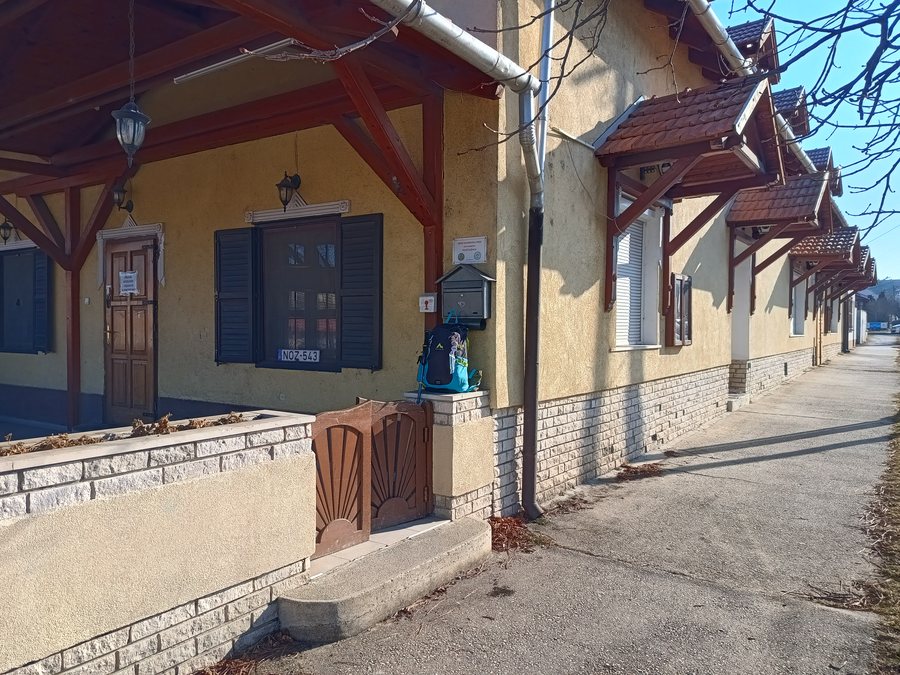 File:Közép-dunántúli Piros Túra pecsételőhely Oroszlány 23.jpg
Photo: Fúró via Wikimedia Commons, CC BY-SA 4.0
File:Közép-dunántúli Piros Túra pecsételőhely Oroszlány 23.jpg
Photo: Fúró via Wikimedia Commons, CC BY-SA 4.0
Oroszlány: Key Facts
- The Slovak Local History Museum opened in 1987 in a farmhouse dating from the late 19th century.
- The single-nave Lutheran church was consecrated in 1787; the newer Catholic church is also worth seeing.
- The Mining Museum features, among other things, a reconstructed mine tunnel and a working underground mining railway.
What can you see in Oroszlány’s museums?
The Slovak Local History Museum combines a historic building with insights into agriculture. The stable, which stands across from the courtyard’s far side, displays a cart alongside agricultural equipment. The museum opened in 1987 in a farmhouse dating from the late 19th century, so the building and exhibits offer distinct points of interest.
The Mining Museum illustrates mining with a reconstructed tunnel representing an underground mine. Inside, you can see mining faces and machinery. Other exhibits include a working mining railway used underground, a mine rescue vehicle and the viewing point on the headframe. Anyone interested in mining history will find several specific features here, rather than just a single exhibit.
Which churches and works of art shape the townscape?
The Lutheran church visible today in the old village centre is single-nave and Neoclassical. It was consecrated in 1787, five years after the Camaldolese hermitage in Majk closed. The first church of the Lutheran congregation was built in 1702 and later enlarged when it became too small. The newer Catholic church in Oroszlány is another sight worth seeing.
Art in public spaces is also part of the local scene. The town commissioned Topolyafa, also called Topolya, for the 300th anniversary of the founding of the village of Oroszlány; the work is by sculptor György Kungl. Its stylised tree centre is surrounded by smaller paving stones, one of which conceals a drinking fountain. Colourful graffiti by various artists adorns the sides of buildings set perpendicular to Oroszlány’s main street. Further artworks can be found in squares, streets and apartment blocks.
What visitor information and seasonal activities are available?
For information about Oroszlány and its surroundings, the town directs visitors to information boards at three locations and to the information office at the mayor’s office. Nearby, anglers can use the fishing spots at the thermal power plant’s cooling lake in winter. If you plan to do so, check the conditions for your visit in advance.
What else does the wider Komorn-Gran destination offer?
Other cultural and landscape attractions in the wider Komorn-Gran destination add to the overview. The Majki Kamalduli Remeteség is a Baroque monument complex with seventeen hermit cells, a church tower and a monastery. An exhibition covers the general and Hungarian history of the Camaldolese order.
The Monostori Erőd is a military monument in the Komárom fortification system. Exhibitions and staged scenes bring to life the period of the monarchy, the world wars and the Soviet occupation. The landscape attractions also include the Gerecsei Tájvédelmi Körzet, a nationally significant, individually designated landscape protection area in Komárom-Esztergom covering 8,676 hectares.
Discover more destinations: Dad.
FAQ
What can you see at the Mining Museum?
The museum displays a reconstructed tunnel with mining faces and machinery. Other exhibits include a working mining railway, a mine rescue vehicle and the viewing point on the headframe.
What is the history of the Lutheran church?
The single-nave Neoclassical church visible today was consecrated in 1787. The first church of the Lutheran congregation was built in 1702 and later enlarged.
What can you expect at the Majki Kamalduli Remeteség?
In the wider Komorn-Gran destination, it is described as a Baroque monument complex with seventeen hermit cells, a church tower and a monastery. An exhibition focuses on the general and Hungarian history of the Camaldolese order.
Back to the wider travel overview: Oroszlány.

